If you keep experiencing recurring redness on the skin or a build-up of thick scales, it is easy at first to dismiss it as, “Has my skin become sensitive?”
But if it improves and then worsens again over time, it is worth considering psoriasis rather than simple dryness.
Psoriasis is not just a problem that occurs on the skin’s surface; it is a complex chronic skin condition in which immune responses, the skin’s regeneration speed, and environmental factors all work together.
Because of this, if treatment is paused for a while, it often flares up again, and symptoms can quickly worsen with even small changes such as stress, a cold, or lack of sleep.
In particular, areas that experience frequent friction, such as the arms, legs, and scalp, can accumulate scales more quickly and spread widely in the form of red plaques, so setting a systematic treatment direction is important.
Today, I will explain step by step why psoriasis keeps recurring, the treatment approach, and daily management to help prevent relapse.
- Why psoriasis recurs
- What is the direction of psoriasis treatment?
- How can recurrence be reduced?

Why psoriasis recurs
Psoriasis is a condition in which skin cells are produced faster than normal, causing scales to build up and appear as red patches.
When an immune response becomes overactive on top of that, inflammation becomes more severe and whitish, raised scales continue to form.
As this process repeats, most people come to think of psoriasis as a condition that is difficult to cure.
Another important point is the influence of the living environment.
When stress or fatigue builds up, the immune system becomes unstable, and indoor dryness or frequent friction can irritate the scales even more. Situations in which immunity drops, such as having a cold or body aches, can also trigger a sudden worsening of symptoms.
In other words, psoriasis is difficult to correct with simple skin care alone, and stable improvement can be expected only when immunity, the skin barrier, and lifestyle habits are all considered together.

What is the direction of psoriasis treatment?
The treatment approach for psoriasis varies depending on the form of the lesions and the skin’s response.
In the early stages, red patches are visible, but as scales accumulate and the affected area expands, stronger treatment may be needed.
For mild cases or localized lesions, treatment is carried out using steroid ointments or vitamin D derivatives to reduce inflammation and control the rapid build-up of scales.
At this stage, the most important thing is to use the ointment regularly to calm the skin.
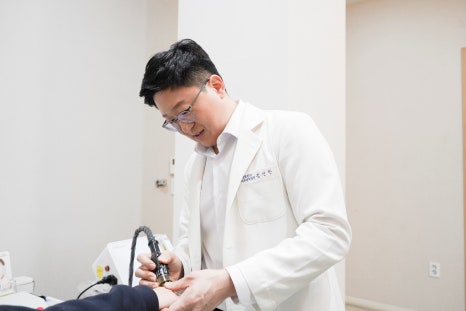
If symptoms are widespread or worsening, phototherapy may also be applied.
This involves exposing the skin to light of a specific wavelength to reduce inflammation and stabilize immune responses within the skin, and it is especially helpful when long-term treatment is needed because it places less burden on medication use.
Also, if the affected area is extensive or thick scales have accumulated, it is better to adjust the treatment intensity and intervals accordingly.
In other words, rather than insisting on just one treatment method, psoriasis should be managed by adjusting treatment according to the stage of symptoms.

How can recurrence be reduced?
Psoriasis can easily worsen again if lifestyle habits are not maintained properly along with symptom treatment.
This is because the skin barrier is weak and reacts sensitively to external stimuli.
First, it is important to minimize skin irritation. Strong scrubbing during cleansing, frequent exfoliation, and rough fabrics can all worsen psoriasis.
After showering, it is a good idea to apply moisturizer within 3 minutes so the skin does not dry out.
Also, because dryness can quickly worsen symptoms, consistently using moisturizer 2 to 3 times a day to protect the skin barrier is very helpful in preventing recurrence.
Lifestyle habits are also important. Stress, excessive drinking, and overwork are all causes that increase skin inflammation.
Stable sleep, stress management, and light exercise can help improve expected results by keeping immune balance steady.
Psoriasis is not just a problem visible on the skin; it is a chronic condition in which immune responses and the living environment interact in complex ways.
That is why, even if symptoms improve, they can come back, and the skin can be easily irritated by small changes in daily life.
However, if an early diagnosis and a tailored treatment direction are established well, it is possible to reduce the extent of symptoms and lower the number of recurrences.
Therefore, rather than being overly concerned that psoriasis keeps recurring, it can help relieve symptoms if you set a treatment plan suited to your current skin condition and also manage it through daily care.
I hope the information shared today about psoriasis symptoms, treatment, and management will be helpful for patients with psoriasis.
Thank you for reading to the end.
| This post was written for informational purposes in compliance with Article 56, Paragraphs 1 to 15 of the Medical Services Act. All treatments carry the risk of side effects and complications depending on the individual. Before treatment, please be sure to make a decision only after having sufficient consultation with experienced medical staff. |