Atopic dermatitis often starts like a mild skin irritation, but once the symptoms take hold, it is a chronic skin condition that tends to recur.
In the beginning, dryness or itching may make it seem like a temporary skin problem, but because the skin barrier weakens and immune responses become more sensitive at the same time, it is very important to establish an accurate diagnosis and treatment direction early on.
In particular, atopic dermatitis can easily worsen due to dry air, temperature changes, and stress, so in some cases it may be difficult to manage with moisturizing alone.
Today, I will explain the overall approach, from early symptoms of atopic dermatitis to ointment treatment and lifestyle management.
-
What are the early symptoms of atopic dermatitis?
-
How does ointment treatment proceed?
-
Information on moisturizing and lifestyle management
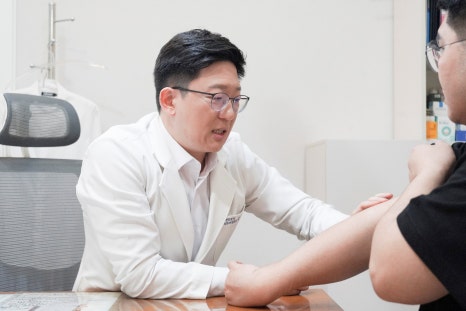

What are the early symptoms of atopic dermatitis?
Atopic dermatitis may feel as though it suddenly becomes severe one day, but in reality it often progresses gradually as various small changes appear first.
At first, a repeated feeling of tightness and dryness in the skin begins to cause discomfort in daily life.
In particular, red patches may appear on areas where the skin is thin and delicate, such as the inner elbows, neck, and around the eyes, and itching that gets worse at night may also occur.
These early symptoms may seem to calm down temporarily when moisturizer is applied, but if the skin barrier is weakened, they can quickly worsen again.
So rather than brushing it off as “it got better for a moment,” it is important to understand recurring symptoms as an early sign of atopic dermatitis and get diagnosed early.



How does ointment treatment proceed?
The most important point in atopic dermatitis treatment is to stabilize the inflammation that repeatedly occurs within the skin.
The treatment at the center of this is ointment therapy, and it is best understood not simply as a topical medicine, but as the foundation of treatment to normalize the skin condition and reduce recurrence.
When using ointment, the key is to spread an appropriate amount gently over the skin.
If too little is applied, the effect is weak; if too much is applied, irritation may occur, so it is important to apply an amount that the skin can absorb consistently.
Also, more severe areas should be applied regularly once or twice a day, while areas without symptoms or with mild symptoms should be managed mainly with moisturizing.
Ointment treatment is not something that ends after a few days of use; it should be continued steadily while adjusting the amount and frequency according to changes in symptoms.
The better this process is followed, the more it can help reduce inflammation within the skin and break the cycle of repeated flare-ups.


Information on moisturizing and lifestyle management
Because atopic dermatitis is greatly influenced by the living environment, symptom relief can be helped by combining ointment treatment with lifestyle management.
First, sufficient moisturizing is essential for restoring the skin barrier.
Apply moisturizer within 3 minutes before the skin dries after showering, and continue to reapply it 2 to 3 times a day so the skin does not become dry.
The drier the skin, the more easily inflammation can flare up, so moisturizing is as important as treatment.
It is also best to avoid habits that place excessive irritation on the skin.
Showering with hot water or rubbing the skin hard can make the skin more sensitive and worsen symptoms, so caution is needed.
Managing the living environment is also an important part.
Stress, lack of sleep, dry indoor air, and overwork are representative factors that trigger worsening of atopic dermatitis.
Regular sleep, proper rest, maintaining indoor humidity, and light exercise directly help stabilize the skin condition.
Lastly, it is not a good idea to stop treatment just because the symptoms have improved.
Since atopic dermatitis is a condition that repeatedly improves and worsens, receiving regular treatment while adjusting the intensity to match the current condition can help reduce recurrence.

Atopic dermatitis is not simply dry skin, but a condition in which skin barrier weakness, changes in immune responses, and environmental influences all act at the same time.
Even just quickly recognizing the symptoms early and proceeding with ointment treatment can help slow the progression of worsening.
If your skin is often turning red or itching repeatedly, rather than trying to solve it on your own, it may be helpful to diagnose the cause of the symptoms and establish a treatment plan.
If you are stressed by atopic dermatitis symptoms, I recommend visiting a hospital and receiving treatment.
I hope the information I shared today about atopic dermatitis was helpful to you.
Thank you for reading to the end.
| This post was written for informational purposes in compliance with Article 56, Paragraph 1 through Paragraph 15 of the Medical Service Act. All treatments carry the risk of side effects and complications depending on the individual. Before treatment, be sure to have a thorough consultation with experienced medical staff before making a decision. |