When white spots appear on the skin, most people do not think much of them at first.
Because there is usually little to no pain or itching, many people miss the chance for early treatment.
However, if the white spots seem to gradually spread over time, it may not be a simple skin change but vitiligo.
Vitiligo is a chronic skin condition in which not only the skin but also the melanocytes in the skin and the immune response are affected together.
In particular, with vitiligo, the course and prognosis can vary greatly depending on when treatment begins and what care habits are maintained after treatment.
In today’s column, I will explain why early treatment is important for vitiligo and why daily care plays a role just as important as treatment.
-Column outline from Daerim Station Dermatology-
- Vitiligo: symptoms that are easy to miss in the early stage
- Why treatment timing matters and treatment direction
- Daily care and skin care methods to reduce recurrence
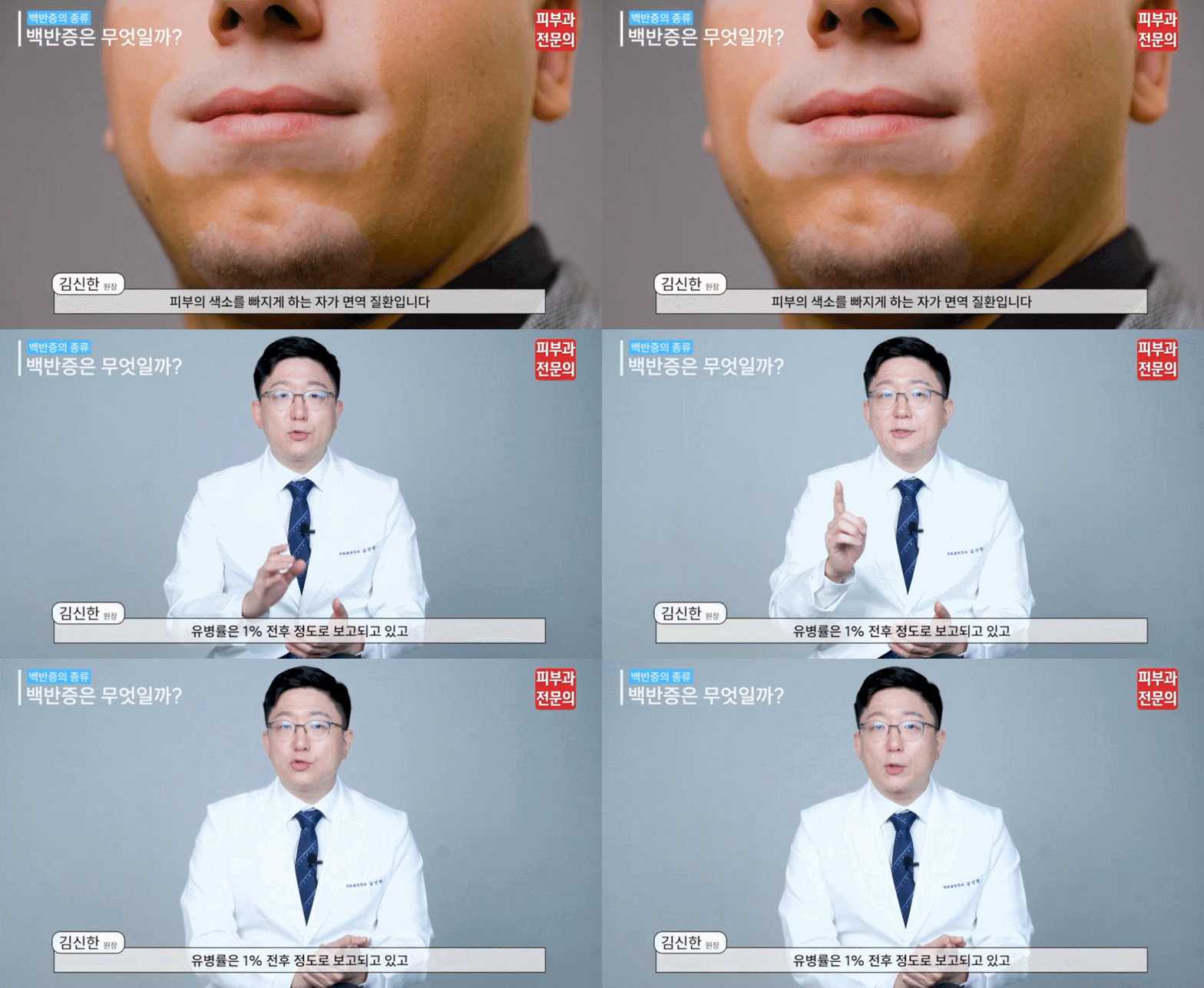
Vitiligo: symptoms that are easy to miss in the early stage
Vitiligo is a skin condition in which the function of melanocytes in the skin declines, causing the skin color in certain areas to gradually fade or appear as white spots.
The problem is that this change often progresses very slowly rather than suddenly becoming severe.
At first, it may look like the skin tone has become slightly lighter, or the color difference may be noticeable only under sunlight.
Especially during this stage, there is usually no itching or stinging, so many people do not recognize it as a skin condition and let it pass.
However, once vitiligo begins, the lesions may spread to the surrounding skin, or symptoms may worsen again when the immune system becomes unbalanced, so caution is needed.
Therefore, it is important to check the skin condition and identify the cause as soon as you feel that “the skin color seems to have changed a little.”



Why treatment timing matters and treatment direction
One of the most important factors in vitiligo treatment is timing.
Before melanocytes are completely lost, treatment tends to respond relatively well, but lesions that have been left untreated for a long time may recover more slowly or require a longer treatment period.
The goal of early treatment is to minimize the decline in melanocyte function and stabilize the environment so that the immune response no longer attacks the cells.
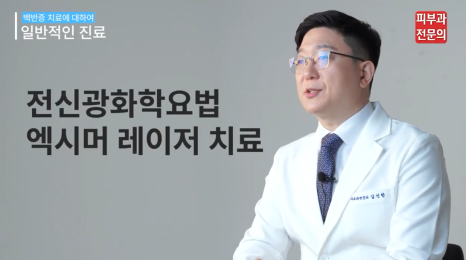
Depending on the skin condition and the extent of the lesions, ointment treatment, laser treatment, and light therapy may be carried out step by step.
In particular, for localized lesions, selective treatments such as the 308 nm excimer laser may be used. This treatment focuses energy only on the affected area, helping melanocytes recover while reducing damage to the surrounding normal skin.
The important point is that vitiligo treatment is not something that is “done after a few sessions and finished.”
The intensity and intervals are adjusted while monitoring the treatment response, and maintenance care must continue even after color recovery in order to reduce the risk of recurrence.
The earlier treatment begins and the more it is approached in a way that matches the skin condition, the lower the treatment burden and the greater the expected effect may be.

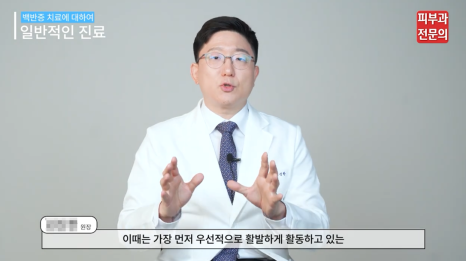
Daily care and management methods to reduce recurrence
Vitiligo is a condition in which daily care is just as important as treatment.
Even if color has recovered to some extent through treatment, if care habits do not support it, the color may fade again or the lesions may spread.
First, minimizing skin irritation is basic.
Strong friction, washing with hot water, and frequent scrubbing can irritate vitiligo lesions.
Therefore, care centered on gentle cleansing and sufficient moisturizing is needed to protect the skin barrier.
Ultraviolet management is also important.
Because vitiligo skin is sensitive to ultraviolet light, excessive exposure can cause the lesions to expand.
When going বাইরে, it is a good idea to use sunscreen consistently and avoid situations involving prolonged exposure to direct sunlight.
Also, because vitiligo is closely related to immune changes, symptoms may reappear when stress, lack of sleep, and overwork accumulate.
A regular daily rhythm and enough rest play an important role in maintaining the effects of treatment.
Even after symptoms have stabilized, continuing maintenance treatment at the necessary time through regular skin condition checks can help reduce recurrence.
Vitiligo is not a condition that ends simply as a change in skin color.
If treatment timing is missed, the course may become longer, and if care habits are lacking, it has a tendency to recur easily.
Therefore, the key to managing vitiligo is not to dismiss early symptoms lightly, to start treatment appropriate for the skin condition at the right time, and to continue daily care and skin protection consistently even after treatment.
If you notice a color change or start to worry about an existing lesion again, it may help to check your current condition accurately and make a long-term management plan.
Please remember that vitiligo is a condition in which steady care and setting the right direction are more important than rushing.
If you have any questions beyond what was covered today, please ask through the window below.
We will answer kindly.
Thank you for reading to the end.
| This post was written for informational purposes in compliance with Article 56, Paragraph 1 through 15 of the Medical Service Act. All treatments carry risks of side effects and complications depending on the individual. Before treatment, please be sure to have 충분히 consult with medical staff with extensive experience before making a decision. |