Acne that develops during adolescence is often thought of as a simple skin problem, but in reality it often occurs through the combined effects of hormonal changes and changes in the skin environment during growth.
During this period, sebum production increases rapidly and the skin’s regeneration cycle becomes unstable, making it easier for pores to clog and inflammation to recur.
The problem is that once acne starts, it is likely to keep recurring in the same area, and if it is managed incorrectly, it can lead to scarring.
Therefore, rather than simply enduring or leaving adolescent acne untreated, a step-by-step treatment strategy tailored to the skin’s condition is needed.
Today, I will explain in detail adolescent acne and treatment methods suited to different skin conditions.
-
Adolescent acne: Why is step-by-step treatment necessary?
-
Acne treatment methods according to skin condition
-
Lifestyle management methods to maintain treatment effects
Adolescent acne,
Why is step-by-step treatment necessary
Adolescent acne does not appear in just one form.
In some cases, non-inflammatory acne that appears like small bumps may be the main type, while in other cases, red and painful inflammatory acne may recur.
This difference is determined by the condition inside each person’s skin.
Because sebum production, the degree of pore clogging, the intensity of the inflammatory response, and the condition of the skin barrier differ, the treatment direction must also differ even for the same acne.
In the early stages, it may be controlled with light care, but if this period is missed, inflammation can become deeper and the risk of pigmentation or scarring increases.
That is why it is important to understand each adolescent’s unique skin condition and proceed in the proper treatment order for that stage.
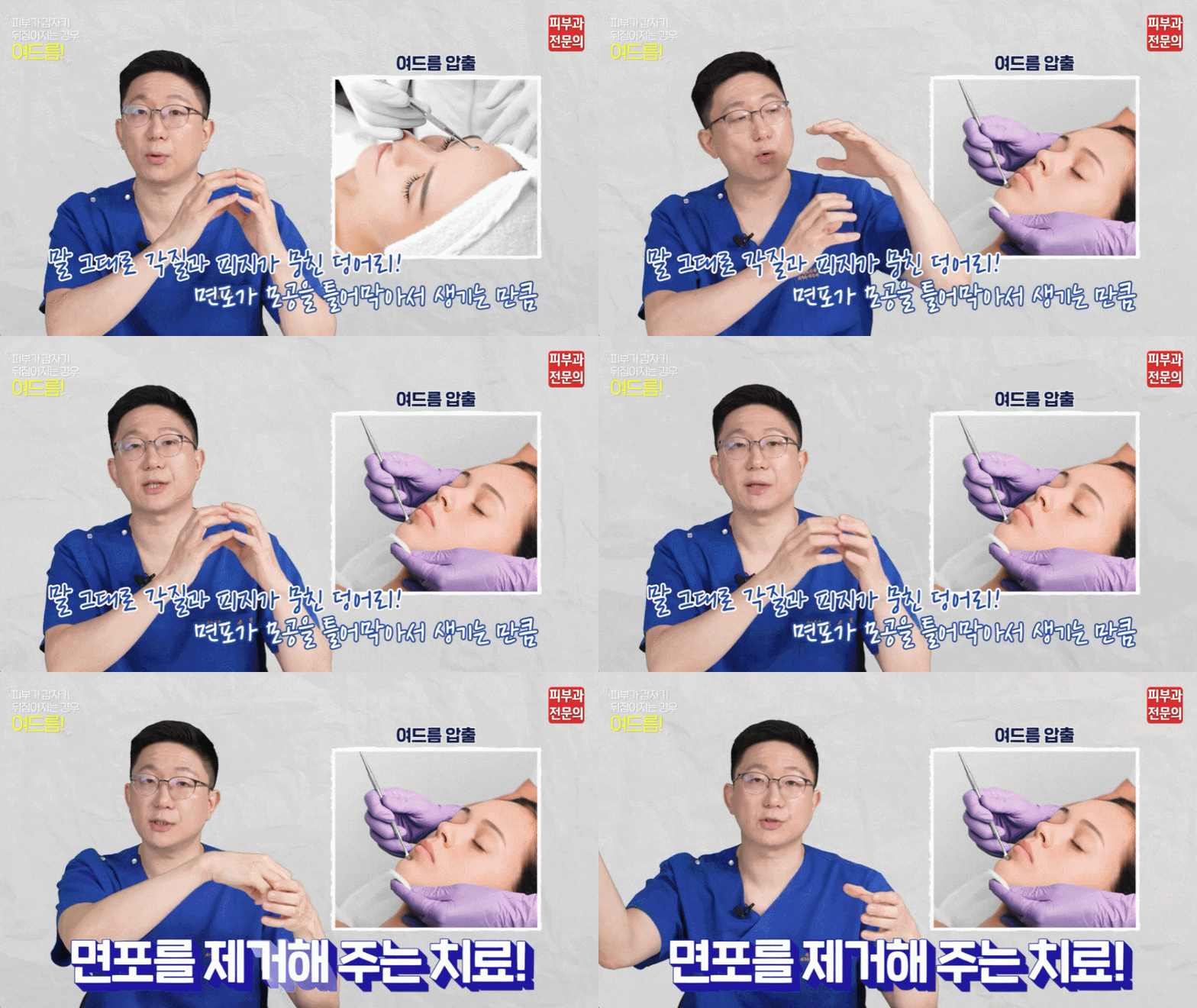
Acne treatment methods according to skin condition
The important point in treating adolescent acne is not to start with strong treatment, but to proceed while adjusting it to a level the skin can tolerate.
If non-inflammatory acne is the main type, care should first focus on reducing dead skin cells and sebum buildup inside the pores.
At this stage, the emphasis is on sebum control and clearing the pores while minimizing skin irritation.
On the other hand, if red, painful inflammatory acne keeps recurring, simple care has its limits.
In this case, treatment is needed to quickly stabilize the inflammation, and depending on the skin condition, medication treatment and, if necessary, hospital treatment may be combined.
If acne persists for a long time and leads to marks or scars, the treatment direction should be reviewed again.
Because already remaining traces are difficult to improve with simple ointment care alone, it is necessary to plan treatments that help skin recovery in stages.
As such, adolescent acne treatment methods differ depending on skin condition, and trying to solve all acne with one approach can lower the expected effect or prolong the treatment period, so caution is needed.
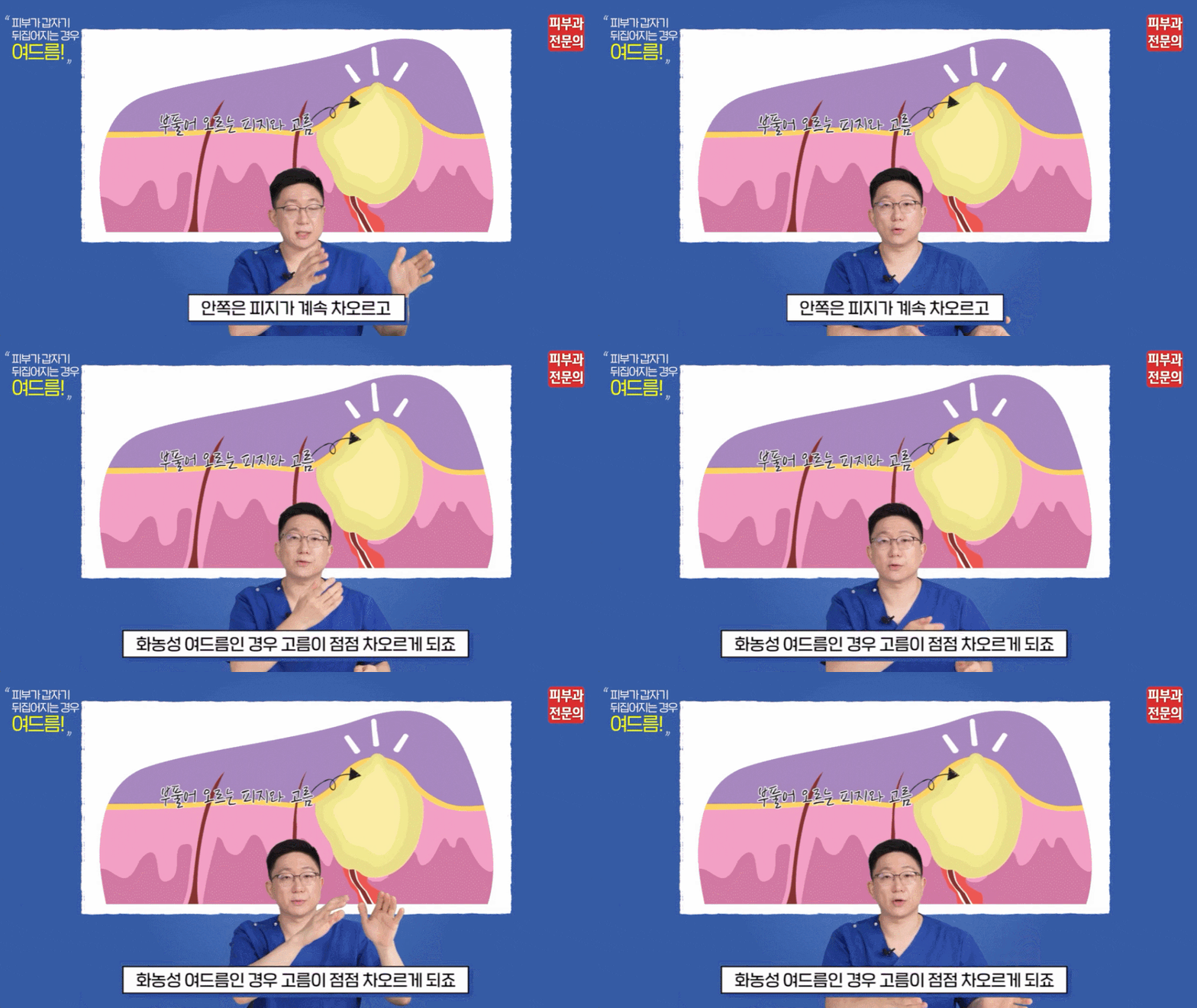
Lifestyle management methods
to maintain treatment effects
Adolescent acne is a condition in which daily care is just as important as treatment.
If lifestyle habits and skin irritation remain the same during treatment, acne may worsen again even after receiving care.
So in daily life, cleansing should not be excessive, and using a mild product about twice a day is appropriate; it is also best to avoid the habit of frequently touching your face with your hands.
In addition, lack of sleep, irregular meals, and stress directly affect sebum production and inflammatory responses, so maintaining a proper daily rhythm is helpful.
Even after treatment has progressed to some extent, it is important to regularly check the skin condition and adjust the treatment intensity or care methods as needed.
When this kind of management is done together, the possibility of acne recurrence can be reduced and skin recovery can continue more steadily.
Adolescent acne may appear naturally during the growth process, but if left untreated, it is a condition with a high possibility of leading to adult acne or scarring.
Therefore, rather than leaving current symptoms alone because they seem mild, it is important to accurately check the skin condition and set treatment stages accordingly.
Rather than treating it alone, a step-by-step approach that observes the skin’s response is helpful for long-term skin stability.
If acne keeps recurring or is becoming more severe, it is necessary to review the treatment direction that matches the current skin condition.
I hope the information shared today about adolescent acne treatment methods was helpful to you.
Thank you for reading to the end.
| This post was written for informational purposes in compliance with Article 56, Paragraph 1 through Paragraph 15 of the Medical Service Act. All treatments carry the risk of side effects and complications depending on the individual. Before treatment, please be sure to have a thorough consultation with medical staff who have extensive experience before making a decision. |