Vitiligo starts with white patches on the skin, but because there is little to no pain or itching, it is a condition that is easy to overlook in the early stages.
At first, most people tend to think it is simply due to dry skin or dismiss it as, “Did this happen because I was exposed to too much sunlight?”
However, vitiligo is an autoimmune skin condition that occurs when melanocytes do not function properly and are damaged by an immune response.
In particular, it tends to develop on frequently exposed areas such as the face, hands, and neck, so even if the symptoms are small, how you respond in the early stage can affect how quickly it progresses.
So today, I will explain what the early symptoms of vitiligo look like and why early management is important.
-Today’s column outline-
-
What are the early symptoms of vitiligo?
-
Vitiligo treatment method: excimer laser
-
Lifestyle management points to prevent recurrence
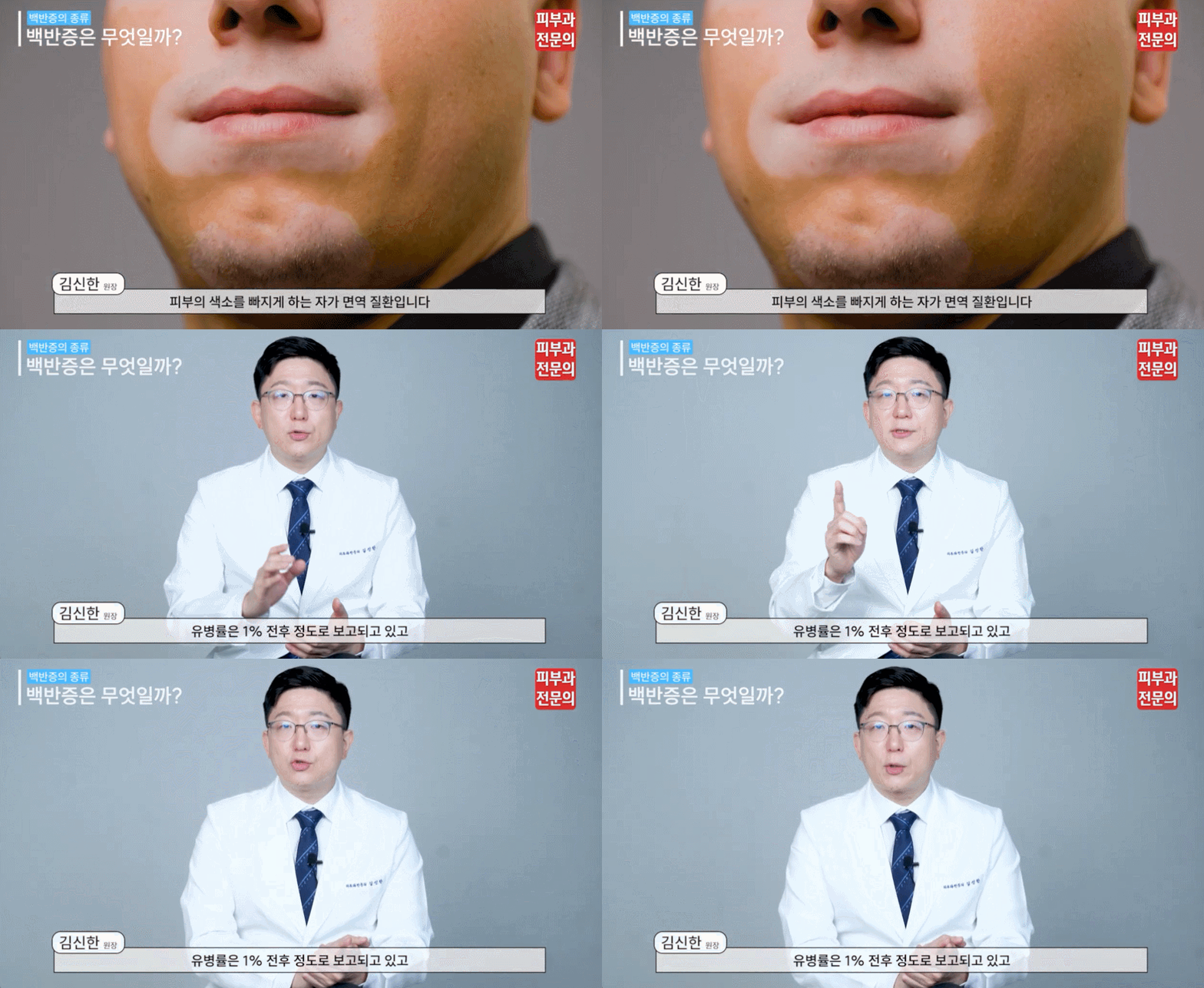
What are the early symptoms of vitiligo?
Vitiligo can seem like a sudden expansion of white patches, but in reality, many small changes often appear gradually from the early stage.
The first noticeable feature is white patches with clear borders on the skin.
In the beginning, it usually starts with one or two small patches, but as the immune response becomes more active, they may gradually spread to surrounding areas.
In particular, it tends to appear on areas that are repeatedly exposed to friction or irritation, such as around the face, fingers, elbows, and mouth.
Because vitiligo does not itch or hurt, it is often left untreated at first, but even if it looks like simple depigmentation on the surface, melanocyte function inside the skin may be weakening and the immune response may be becoming more active.
If you receive a detailed diagnosis at this stage, you may be able to slow the rate at which pigment disappears and improve treatment response, which is why checking for early symptoms is especially important.

Vitiligo treatment method: excimer laser
The most commonly used treatment in the early stage of vitiligo is the 308nm excimer laser.
This treatment works by directly exposing the affected area to ultraviolet light of a specific wavelength to stimulate melanocytes so they can regain function.
In the early stage, the laser is focused on areas where the color appears to have completely disappeared, activating the cells, and with repeated treatment over a certain period, the pigment gradually returns in a dotted pattern.
The speed of this process varies from person to person, but consistency is the most important factor.
Once some color begins to return, the treatment intensity and interval are adjusted and the patient moves into maintenance treatment.
At this point, even if the symptoms look better, treatment should not be stopped suddenly.
Because a slight recovery in visible color does not mean the internal cells have completely returned to normal, the process of gradually lengthening the treatment intervals and stabilizing the condition is essential.
The excimer laser causes little to no damage to normal skin and can selectively treat localized areas, so it may be suitable for early vitiligo.

Lifestyle management points to prevent recurrence
Vitiligo is not a condition that ends with treatment alone; managing daily habits plays a very important role in maintaining the expected results.
Even if early treatment goes well, repeated irritation in daily life can cause the color to fade again or the lesions to spread.
First and foremost, the most important thing is to minimize skin irritation.
When washing your face or showering, it is best not to rub the skin and to avoid scratching with your nails or using scrubs that create strong friction.
After showering, it is good to apply moisturizer within 3 minutes to protect the skin barrier.
Another important point is ultraviolet management.
Low levels of ultraviolet light may help treatment, but excessive sunlight can accelerate melanin damage, so sunscreen should be used carefully.
Lifestyle habits are also very important.
Lack of sleep, stress, and repeated fatigue can disrupt immune balance and make vitiligo worsen more easily, so maintaining proper lifestyle habits can often help reduce recurrence.
And one thing not to forget is regular medical follow-up.
Even if symptoms improve, stopping treatment suddenly can cause the color to fade again, so it is best to check the skin condition at regular intervals.

Vitiligo is a condition that does not cause pain and may not significantly interfere with daily life, so it is easy to leave untreated, but it is also a condition in which the extent of lesion spread can change greatly depending on how quickly it is addressed in the early stage.
If accurate diagnosis and appropriate treatment are started early, you can expect a reduced area of depigmentation and a faster recovery rate.
In addition, not only excimer laser treatment, but also small management habits such as ultraviolet control, reducing friction, maintaining moisture, and adjusting lifestyle habits can help greatly lower the frequency of recurrence.
This is not a condition that improves on its own over time; the most stable course can be expected when treatment and management are carried out together.
I hope the information shared today about vitiligo was helpful for those who suspect vitiligo or need treatment for their symptoms, and I will wrap up here.
Thank you for reading to the end.
| This post was written for informational purposes in compliance with Article 56, Paragraphs 1 to 15 of the Medical Service Act. All treatments carry the risk of side effects and complications depending on the individual. Please be sure to consult thoroughly with medical professionals with extensive experience before deciding on any treatment. |