When symptoms of itchy, red skin keep recurring, many people tend to brush them off by thinking, “Has my skin become sensitive lately?” or “Is it just because it’s dry?”
Especially when the seasons change or when there is a large temperature difference between indoors and outdoors, the skin can easily feel tight and itchy, so many people regard it as a temporary symptom.
However, if the itching does not end in just a day or two and keeps recurring in certain areas, or becomes especially severe at night, it is worth suspecting atopic dermatitis rather than simple dryness.
Atopy is not just a problem on the surface of the skin, but a chronic skin condition caused by the skin barrier and immune response.
Identifying these atopic symptoms accurately in the early stages and setting a treatment direction can help relieve symptoms later on.
In today’s column, I will organize what symptoms to look for first when itching keeps recurring, and why treatment and management need to be done together.
- Omokgyo Station Dermatology Column Order -
- Early atopic symptoms that appear when itching keeps recurring
- Why atopic itching gets worse at night
- Why atopy needs both treatment and management
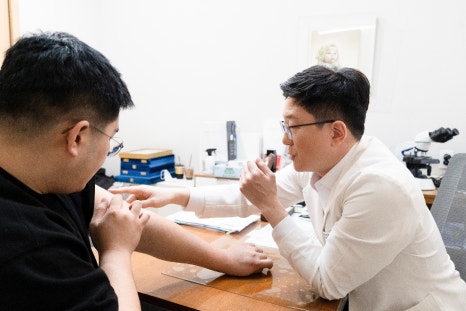
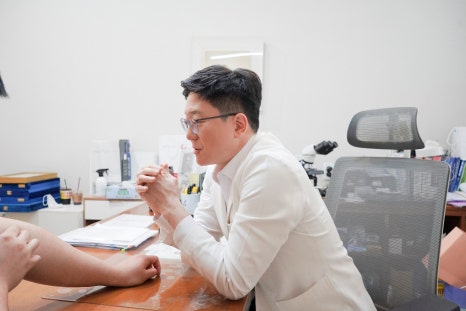
When itching keeps recurring
Early atopic symptoms that appear
Atopy may feel like a condition that suddenly gets worse, but in reality, many small changes often appear on the skin first.
A representative early change is repeated dryness of the skin, with a lingering feeling of tightness or itchiness that returns quickly even after applying moisturizer.
In addition, red patches or rough skin may appear in areas where the skin is thin and more sensitive to irritation, such as the inner elbows, behind the knees, the neck, and around the eyes.
At first, it is easy to dismiss because it seems to calm down if you do not scratch, but if the same area keeps showing symptoms, it may be a sign that the skin barrier has already become significantly weakened.
Even if the atopic skin does not look like it has a major problem on the surface, it may be in a state where it cannot properly block external irritation.


Atopic itching symptoms
Why they get worse at night
One of the most difficult symptoms for people with atopy is itching that worsens at night.
This is not just a matter of perception; it happens because the skin condition and environmental changes work together.
At night, body temperature gradually rises and skin blood flow increases, which can make inflammatory reactions relatively more active.
On top of that, the skin that has been exposed to outside irritants during the day becomes more fatigued by nighttime, and if the indoor air is dry, the itching becomes even more noticeable.
In addition, as activity around you decreases at night, awareness of itching also tends to become stronger.
As a result, people may scratch unconsciously, and the scratching stimulus further damages the skin barrier, creating a vicious cycle in which inflammation worsens again the next day.
This repetition also lowers sleep quality, and lack of sleep can again disrupt immune balance and worsen atopic symptoms.
Therefore, if itching continues at night, it may be helpful not to simply endure it, but to manage it with treatment and care.


Atopy: Why treatment and management are necessary
The most important point in atopy treatment is that ointment treatment must go together with lifestyle management.
Ointments play an important role in calming inflammation within the skin, but if the skin barrier remains weak, the symptoms will inevitably repeat.
That is why atopy care should include treatment along with moisturizing, minimizing irritation, and adjusting daily habits.
Moisturizing the skin helps protect the skin barrier and reduce the penetration of external irritants into the skin, which can help break the vicious cycle of repeated inflammation.
Also, skin irritations such as hot showers, strong friction, and frequent scratching can interfere with atopy recovery, so it is better to avoid them.
And it should not be forgotten that maintaining indoor humidity and managing stress and lack of sleep are also important factors for long-term symptom stabilization.
When these management steps are combined, the amount of ointment used can gradually be reduced, and the frequency and intensity of itching can be expected to ease over time.

Atopic dermatitis is not simply a skin problem with itching; it is a chronic skin disease that appears when the skin barrier and immune response break down together.
If itching keeps recurring and continues to come back in certain areas, there is a high chance that the skin is already sending a warning signal that it has reached its limit.
Even checking the early symptoms and setting a treatment and care plan that matches the skin condition can significantly reduce later worsening of symptoms and the frequency of recurrence.
If your current itching does not calm down easily or symptoms become worse every night, it may help to have your skin condition checked and establish a systematic treatment plan rather than managing it alone.
If you have any questions beyond what I shared today, please ask through the window below.
I will answer kindly.
Thank you for reading to the end.
| This post was written for informational purposes in compliance with Article 56, Paragraphs 1 to 15 of the Medical Service Act. All treatments carry the risk of side effects and complications depending on the individual. Before treatment, be sure to make a sufficient consultation with a medical professional with ample experience before making a decision. |