If red rashes and thick scales keep appearing on the skin, it is common at first to assume they are due to seasonal changes or simple dryness and let them go.
Especially when the symptoms improve and then become worse again, you may start wondering, “Why do they keep coming back like this?”
Psoriasis is not a temporary skin problem, but a chronic skin condition in which abnormalities in the skin renewal cycle and immune response work together.
Even if only the visible symptoms have calmed down, that does not mean the skin condition has fully stabilized, so if the direction of treatment and care is not set properly, the symptoms can easily recur.
So today, I will explain why psoriasis symptoms repeat and discuss the reasons and treatment methods.
- Column order from Dangsan-dong Dermatology -
-
Why psoriasis symptoms recur
-
How psoriasis treatment progresses
-
What should be managed together to reduce recurrence

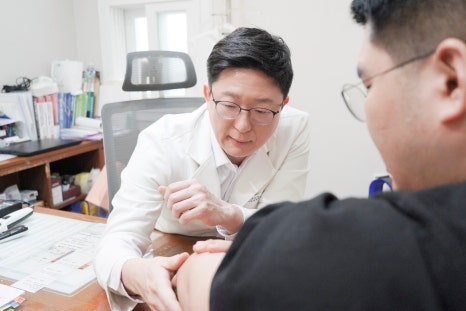
Why psoriasis symptoms recur
The biggest reason psoriasis symptoms recur is that the underlying problem in the skin and the visible symptoms are not the same.
Even if the redness or scaling on the skin surface has decreased, inflammatory reactions often still remain deep in the skin.
In psoriasis-affected skin, skin cells are produced much faster than normal.
During this process, dead skin cells are not properly shed and instead accumulate, appearing as thick scales and red rashes.
The problem is that this speed is difficult to normalize on its own without treatment.
In addition, psoriasis is a condition that is greatly influenced by the living environment.
Stress, lack of sleep, overwork, immune changes such as colds or body aches, and frequent drinking can easily disrupt the skin’s immune balance and become factors that worsen symptoms again.
That is why it is easy for the pattern of improving briefly after applying ointment and then getting worse again to repeat.
In other words, it is important to first understand that psoriasis is a condition that is difficult to stabilize if managed only when symptoms are visible.


How psoriasis treatment progresses
Psoriasis treatment is not simply about removing scales; it is about stabilizing skin inflammation and returning the abnormally rapid rate of skin renewal to the normal range.
To do this, treatment must proceed step by step depending on the skin condition and the extent of the lesions.
In the early stage, ointment treatment is usually used to reduce redness and inflammation.
At this stage, the type of ointment, the amount applied, and the number of applications are very important.
If too little is applied, the effect is insufficient, and if used excessively, it can instead irritate the skin, so adjustments tailored to the skin condition are necessary.
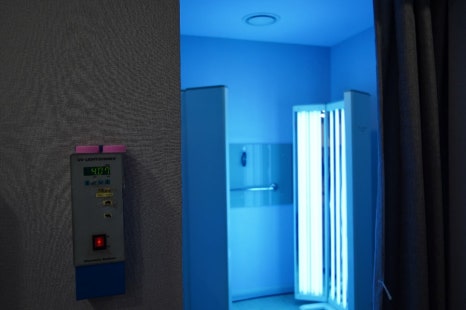
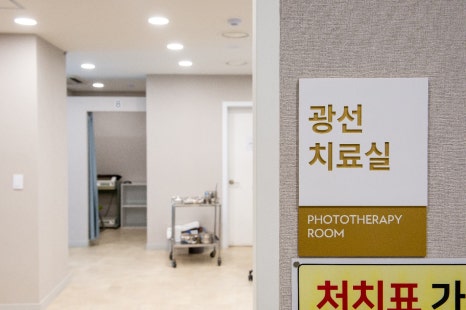
Once the symptoms have stabilized to some extent, light therapy or laser treatment may be combined depending on the size and location of the lesions.
These treatments help regulate the skin’s renewal rhythm and ease inflammatory responses, helping prevent symptoms from becoming severe again.
The important point is that psoriasis treatment is not something that ends in a short period of time.
Rather than stopping treatment immediately once the symptoms improve, it can be more effective for reducing the chance of recurrence to adjust the intensity and intervals while observing the response and continue with maintenance treatment.

What should be managed together to reduce recurrence
Psoriasis is a condition in which daily care is just as important as treatment.
No matter how well treatment is carried out, symptoms can return if skin irritation and lifestyle management are not supported.
First, minimizing skin irritation is essential.
Taking long showers with hot water or frequent scrubbing can burden the skin.
After showering, it is good to apply a generous amount of moisturizer before the skin dries to protect the skin barrier.
Also, the drier the skin becomes, the easier it is for inflammation to worsen.
Keeping up with moisturizing about 2 to 3 times a day can help reduce the excessive buildup of scales.
Lifestyle management is also essential.
When lack of sleep or stress accumulates, immune responses can become unstable and psoriasis can worsen again.
A regular daily rhythm and sufficient rest play an important role in maintaining the expected benefits.

Psoriasis is not simply a disease in which scales form on the skin, but a chronic skin condition in which skin renewal and immune responses are intertwined.
The reason symptoms repeat is often not that treatment is insufficient, but that the nature of the condition requires consistent management.
Rather than judging only by the visible symptoms, it is important to continue treatment and care while also observing the overall pattern of the skin condition and recurrence.
If symptoms are repeating, rather than managing them alone, reviewing the treatment direction that suits the current skin condition may help with long-term stability.
I hope the information shared today helps those who are struggling with psoriasis symptoms understand the direction of treatment.
Thank you for reading to the end.
| This post was written for informational purposes in compliance with Article 56, Paragraph 1 through Paragraph 15 of the Medical Service Act. All treatments carry a risk of side effects and complications depending on the individual. Before treatment, please be sure to have a thorough consultation with a medical professional with extensive experience before making a decision. |