Skin aging is often thought of simply as the appearance of wrinkles or sagging skin, but in reality, it often begins with structural changes within the skin.
On the surface, it may look like elasticity is declining, but this is because changes are also taking place in the dermis, the layer that supports the skin.
In relation to this, Dr. Kim Shin-han of Gyephi Dermatology appeared on the JTBC Documentary Plus Q broadcast on January 7, 2025, and explained the role of the dermis and how a decrease in collagen affects skin aging.
Today, based on the broadcast content, I would like to talk about why dermal restoration is important and the process by which a decrease in collagen leads to skin aging.

Why does skin aging begin in the dermis?
When people talk about skin aging, the first things many think of are visible changes on the skin’s surface, such as wrinkles or sagging.
However, these changes are more like the result, and the real starting point is often structural changes occurring in the dermis within the skin.
The skin is broadly divided into the epidermis and the dermis. Among these, the dermis makes up most of the skin’s thickness and plays the central role in supporting the skin.
The dermis contains densely distributed structural proteins such as collagen and elastin, which help the skin maintain elasticity and keep it from collapsing easily under external irritation.
However, as we age, the dermis gradually changes.
The ability to produce collagen slowly decreases, and as a result, the skin can no longer be supported as it once was, becoming more easily stretched and sagging under gravity and facial movements.
These changes are not limited to the skin simply becoming thinner.
As the dermal structure weakens, the overall support of the skin decreases, affecting even the epidermis. Fine lines increase, skin texture can look rougher, and the recovery speed may gradually slow down.
In other words, skin aging does not begin on the outside; it can be seen as the process by which changes in the dermis appear on the surface.
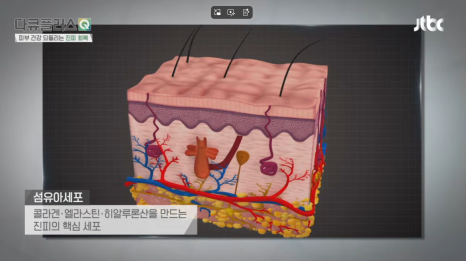
How decreased collagen affects skin aging
Collagen is the most important structural protein in the skin’s dermis, acting like pillars that firmly support the skin.
When collagen is sufficient, the skin remains elastic and can maintain resilience, returning relatively quickly to its original state even after being pressed or stretched.
However, when collagen decreases, this balance begins to break down. The skin becomes easier to press, loses resilience, fine lines increase, and over time this can lead to deeper wrinkles.
In addition, as skin density decreases, pores may appear more prominent and the skin can give an overall sagging impression.
This decrease in collagen also affects the skin’s moisture retention.
The healthier the dermis, the better it can retain moisture, but when collagen decreases, the skin’s ability to hold moisture also declines.
As a result, the skin can become easily dry and may respond more sensitively to changes in the external environment.
In particular, factors such as UV exposure, smoking, lack of sleep, and stress are known to accelerate collagen breakdown.
Therefore, when managing skin aging, it is important not only to focus on changes that appear after wrinkles form, but also to understand the structural change of collagen loss.
Why dermal restoration is important
The importance of dermal restoration does not simply mean making the skin look firmer.
Dermal restoration can be seen as a process of rebuilding the basic environment that allows the skin to support its own structure and respond to irritation.
When the dermis is kept healthy, the skin can maintain elasticity and recovery speed remains stable as well.
Even when small irritations or temporary skin troubles occur, the skin gains the strength to return to normal relatively quickly.
On the other hand, when the dermis is weakened, the skin can break down more easily, and inflammation or damage may last longer even from minor irritation.
Because of this, skin aging may feel faster, or the effects of care may not last as long.
For dermal restoration, daily care is important.
Sun protection is essential for reducing collagen damage, and sufficient sleep and a balanced diet help maintain the environment for skin regeneration.
In addition, reducing habits that overly irritate the skin and protecting the skin barrier through moisturization are also important factors that help dermal restoration.
Depending on the condition of the skin, treatments that stimulate the dermis and help collagen production may also be considered through professional diagnosis.
Skin aging involves a great deal of structural change within the skin, so it is not something that can be viewed simply as a natural change that comes with age.
In particular, the changes that begin with a decrease in collagen in the dermis can lead to various signs of aging such as reduced elasticity, wrinkles, sagging, and dryness.
That is why, when understanding skin aging, it is important to look at the condition of the dermis and the process of collagen loss rather than only the visible changes on the surface.
Dermal restoration is not merely cosmetic care; it can be said to be a key management element for maintaining the skin’s structure in a healthy state.
When care suited to the skin’s condition is carried out in daily life, it may help slow the pace of skin aging and maintain a more stable skin condition.
I hope today’s information was helpful for those of you who are concerned about skin aging, dermal restoration, and collagen management.
Thank you for reading to the end.
| This post was written for informational purposes in compliance with Article 56, Paragraphs 1–15 of the Medical Service Act. All treatments carry risks of side effects and complications depending on the individual. Before treatment, please be sure to make a thorough consultation with medical staff with extensive experience before deciding. |