If dead skin cells keep building up repeatedly on the skin and red rashes do not easily subside, many people think, “If I apply an ointment, it will probably get better.”
In fact, because psoriasis often goes through periods when symptoms worsen and then temporarily improve, it is easy to think that only the symptoms need to be managed as they appear.
However, during consultations, we often see cases where symptoms worsen again due to small habits in daily life, even while receiving treatment.
This is because psoriasis is not simply a problem that appears on the surface of the skin, but a chronic inflammatory skin disease in which immune responses and abnormalities in the skin renewal cycle work together.
That is why treatment itself is important for psoriasis, but lifestyle management must also be carried out together in order to maintain the expected effects and reduce recurrence.
Today, I will explain why psoriasis treatment and lifestyle management are important.
-Column order from Daerim Station Dermatology-
-
What kind of skin disease is psoriasis?
-
Why treatment alone is not enough for psoriasis
-
Lifestyle management points needed along with psoriasis treatment

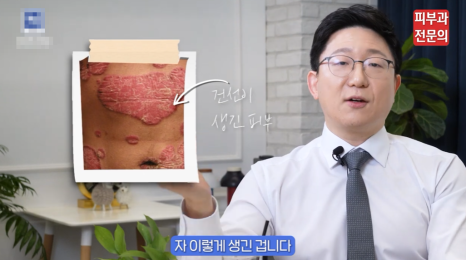

What kind of skin disease is psoriasis?
Psoriasis is a chronic inflammatory skin disease in which red rashes and thick scales repeatedly appear on the skin.
Because white scales build up on the surface of the skin, it is often mistaken for simple dryness or a scaling problem, but in reality, abnormalities in the skin renewal cycle and immune responses work together.
Normally, the skin goes through a regular cycle and dead skin cells naturally shed, but in psoriasis, the renewal process speeds up abnormally, so the dead skin cells do not shed properly and instead accumulate on the skin.
During this process, inflammatory reactions within the skin continue, and red rashes, scaling, and itching can appear together.
Symptoms often recur especially in areas that experience frequent friction, such as the elbows, knees, scalp, and around the waist, and they may also show a pattern of repeated improvement and worsening.


Why treatment alone is not enough for psoriasis
The goal of psoriasis treatment is to control inflammatory reactions and stabilize the skin renewal rate.
In many cases, symptoms improve noticeably through ointment treatment or phototherapy, but treatment alone does not solve everything.
The reason is that psoriasis is not simply a problem on the surface of the skin, but a disease that is also influenced by immune responses and the living environment.
Even if inflammation subsides through treatment, symptoms may worsen again if skin irritation is repeatedly caused in daily life or if an environment that easily disrupts immune balance is maintained.
In fact, even among people who responded well to treatment, we often see symptoms becoming severe again as sleep deprivation, stress, drinking, and frequent skin friction continue.
In this way, psoriasis is not a disease that is managed only while receiving treatment; stable progress can be expected only when management to maintain the effects of treatment is carried out together.

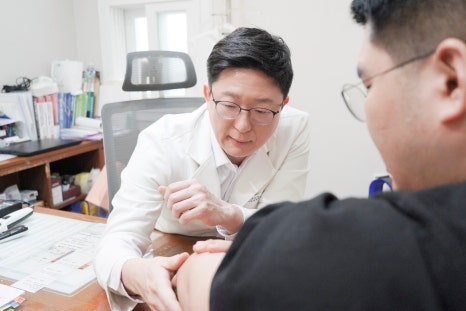
Lifestyle management points needed along with psoriasis treatment
One of the most important parts of lifestyle management in psoriasis care is minimizing skin irritation.
Roughly rubbing the skin during showering or washing your face, or forcibly removing scales, can instead stimulate inflammatory reactions and worsen symptoms.
After showering, applying enough moisturizer before the skin dries can help protect the skin barrier.
In addition, excessive exposure to ultraviolet rays may be helpful in some cases, but too much can lead to skin irritation, so caution is needed.
Managing daily habits is also important.
Sleep deprivation and stress are known as representative factors that disrupt immune balance and worsen psoriasis symptoms.
Also, if drinking or consuming irritating foods is frequent, inflammatory reactions in the skin may become more sensitive.
Most importantly, even if symptoms improve, treatment or care should not be suddenly stopped.
Because psoriasis is a disease that repeats improvement and worsening, it is necessary to regularly check the skin condition and adjust the intensity of care according to the current state.

Psoriasis is a disease in which inflammatory reactions within the skin may continue even during periods when symptoms are not visible, as well as when symptoms are visible.
Therefore, if lifestyle management is not carried out together with treatment, symptoms may repeat or the frequency of recurrence may increase.
Psoriasis is not a disease that ends in the short term, but one that requires long-term management of the skin condition, so it is important to check whether your current lifestyle habits and care methods are suitable for your skin.
I hope the information shared today was helpful in organizing a direction for care for those who are struggling with psoriasis symptoms.
Thank you.
| This post was written for informational purposes in compliance with Article 56, Paragraphs 1 to 15 of the Medical Service Act. All treatments carry the risk of side effects and complications depending on the individual. Before treatment, please be sure to make a full consultation with experienced medical staff before making a decision. |