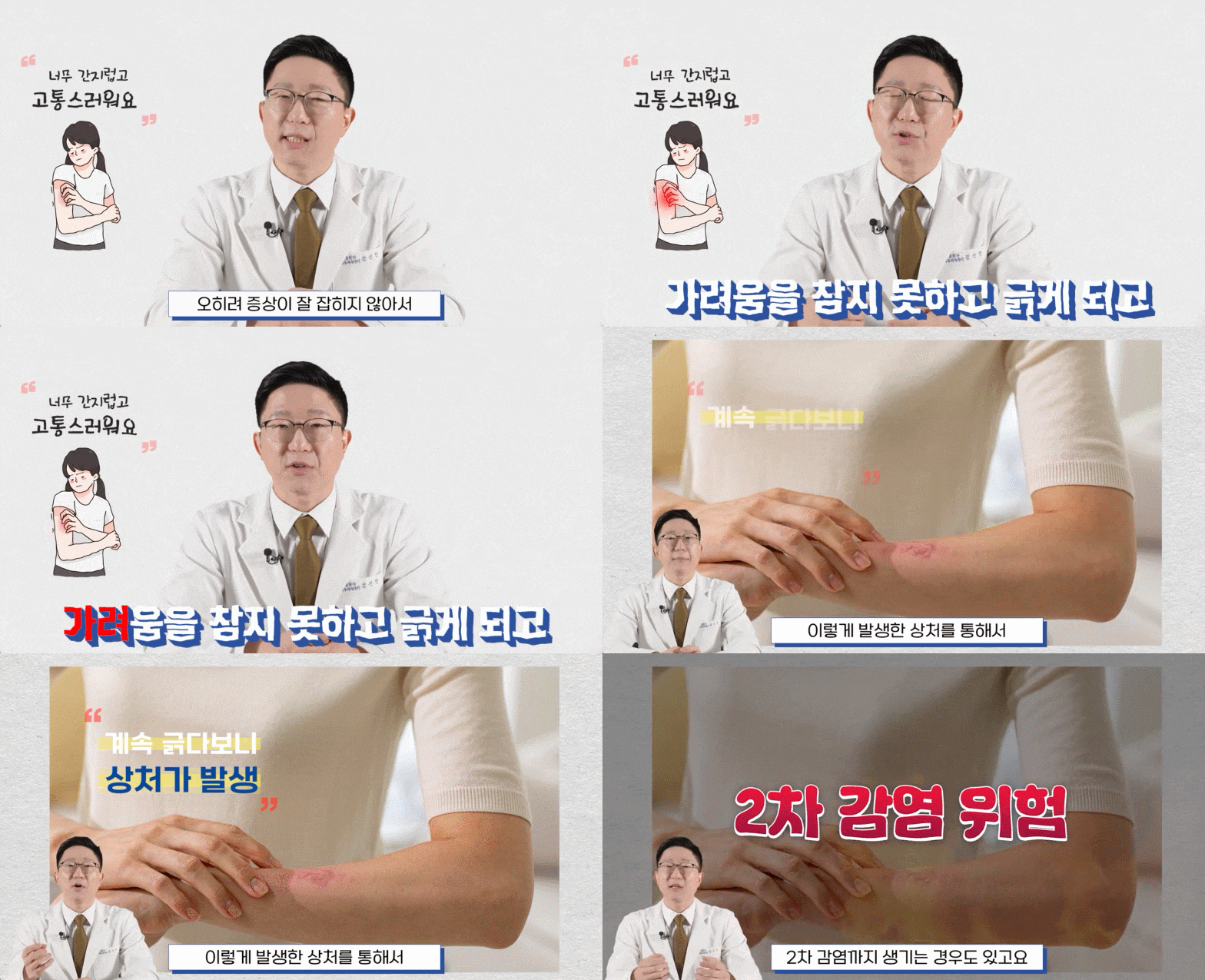
Among the patients who visit for atopic dermatitis, there are quite a few who say, "It hasn’t spread badly, but the itching keeps bothering me."
Even if the noticeable redness, oozing, or prominent lesions seem to have decreased, if itching repeats at certain times of day or the skin feels unusually sensitive, it can be difficult to see it as simply a lingering symptom.
Atopic dermatitis is a condition in which it is important to look not only at the visible changes, but also at the state of the skin and the repeated irritants encountered in daily life.
Today, I will explain the overall aspects of atopic dermatitis, including management methods and what to check when itching persists.
- Yeouido Station Dermatology Column Outline -
- Characteristics of atopic skin when itching repeats
- Situations in daily life that worsen itching
- Key points not to miss in atopic dermatitis care
Characteristics of atopic skin when itching repeats
In atopic dermatitis, when itching does not easily go away, it is often because the skin barrier has not sufficiently recovered.
When redness or oozing decreases through treatment, the symptoms may seem stable on the surface.
However, inside the skin, its ability to retain moisture may still be weakened, or it may remain in a state that reacts easily to external irritation.
In this condition, it is easy for itching to become noticeable again when the skin dries out or when temperature and humidity change.
In particular, if itching persists only in certain areas, or symptoms worsen in specific situations such as at night or after showering, it can be seen as a sign that the skin has not yet fully reached a stable stage.
Situations in daily life that worsen itching
Itchy symptoms caused by atopic dermatitis are closely linked not only to the skin condition itself, but also to changes in the daily environment.
- When stress has accumulated
- When sleep patterns have become irregular
- When the skin remains dry for a long time
These factors can place a burden on the skin’s ability to maintain balance on its own.
In addition, frequent cleansing, showering with hot water, and clothing or bedding environments that involve a lot of friction can repeatedly irritate the skin and easily bring itching back.
As these small changes in the living environment build up, the skin may continue to remain sensitive even if there are no major lesions visible on the surface.

Key points not to miss in atopic dermatitis care
Atopic dermatitis care should not be limited to treatment only when symptoms are severe; it should continue as a process that helps the skin maintain a stable condition.
It is important to examine together what stage the skin is currently in, under what situations the itching repeats, and what irritants exist in daily life in order to establish a management direction.
Also, during the treatment process, symptoms may improve and then seem to pause for a while, or the itching may decrease and then appear again.
This can be understood as one of the characteristics of atopic dermatitis, and as a process in which skin recovery is gradually taking place.
Therefore, in the management process, it is necessary to continue treatment appropriate for the skin condition at a consistent pace while also reducing irritants in daily life.

Persistent itching in atopic dermatitis can be a sign that the skin has not yet fully reached a stable state.
Even if the visible lesions are not severe, if itching continues to recur, it is necessary to look at both the skin condition and the living environment.
Understanding what stage the skin is currently in and setting a management direction accordingly can help manage atopic symptoms more steadily.
If the itching keeps bothering you, rather than simply putting up with it, I recommend checking your skin condition at least once.
If you have any questions other than those above, please leave them in the comment box below.
I will kindly respond to them.
Thank you for reading to the end.
| This post was written for informational purposes in compliance with Article 56, Paragraphs 1 through 15 of the Medical Service Act. All treatments carry the risk of side effects and complications depending on the individual. Before treatment, please be sure to make a sufficient consultation with medical staff who have extensive experience before making your decision. |