Psoriasis is a condition in which thick scales build up on the skin and red patches appear repeatedly, but once the symptoms subside, it is easy to think, "Am I already fully recovered?"
In particular, when the redness and scaling noticeably decrease through ointment treatment or phototherapy, many people feel that the treatment is finished.
However, psoriasis is a chronic inflammatory skin condition that is difficult to regard as completely gone simply because the inflammation has calmed down in the short term.
Care after the visible symptoms decrease actually plays an important role in reducing recurrence.
So today, I will explain why daily care is needed after receiving psoriasis treatment.
- Jangseungbaegi Station Dermatology Column Outline -
-
What is the skin condition after psoriasis treatment?
-
How do everyday irritants affect recurrence?
-
What care approach helps reduce recurrence?
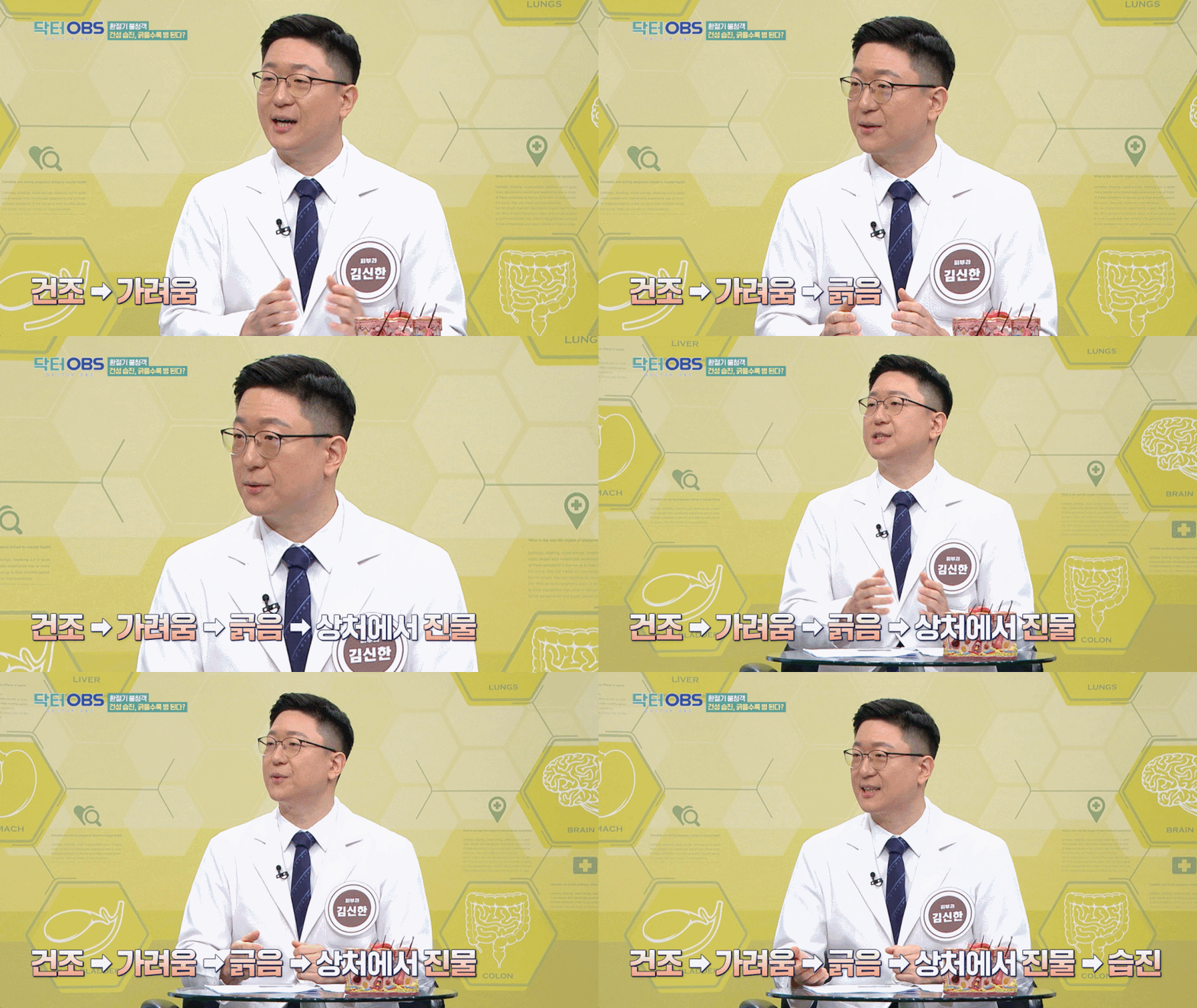
What is the skin condition after psoriasis treatment?
The goal of psoriasis treatment is to stabilize the active inflammatory response in the skin.
When redness and thick scaling decrease through ointment treatment or phototherapy, the skin may appear to have recovered significantly on the surface.
However, even if the skin’s appearance has improved, it is difficult to conclude that the inflammatory response inside the skin has completely disappeared.
This is because psoriasis is a chronic condition related to immune responses and has the potential to become active again depending on external irritants or changes in physical condition.
Therefore, it can be helpful to understand the period after treatment as a stage that needs to be kept stable.
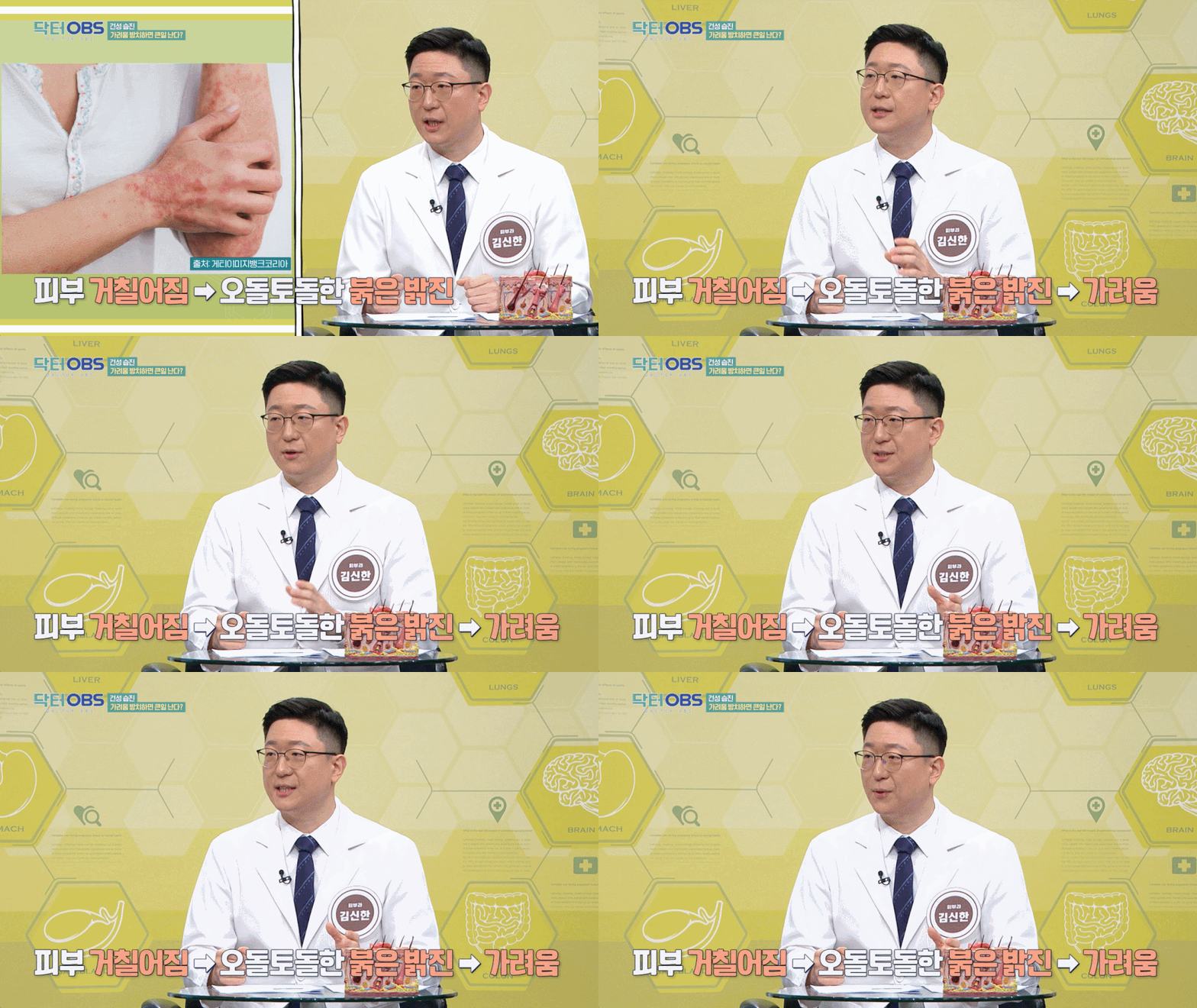
How do everyday irritants affect recurrence?
Psoriasis has the characteristic of the skin reacting sensitively to irritation.
- When the skin is excessively dry
- When stress has built up
- When sleep becomes irregular
- When a cold or a decline in physical condition continues
many people experience symptoms flaring up again.
In addition, psoriasis lesions may newly appear on areas where repeated friction or wounds have occurred.
Because small irritants in daily life or changes in lifestyle rhythm can trigger the skin inflammation to become active again, care after treatment becomes even more important.

What care approach helps reduce recurrence?
After psoriasis treatment, daily care should be approached in a way that reduces the burden on the skin.
First, maintaining adequate moisture is fundamental.
If the skin remains dry for a long time, scales can thicken more easily and the skin may become more sensitive to irritation.
Second, it is necessary to reduce repeated friction or irritation to the skin.
It is best to avoid showering with water that is too hot or habitually rubbing the skin hard.
Third, sleep and stress management are also important.
This is because if the immune balance is disrupted, the inflammatory response in the skin may rise again.
Also, even during periods when symptoms are barely visible, it can be helpful to regularly check the skin condition and, if necessary, continue maintenance treatment.
Even if symptoms noticeably improve after psoriasis treatment, that point is not the end of care.
Psoriasis is a condition in which care after inflammation subsides can affect the interval between recurrences and the severity of symptoms.
When the skin condition is stable, adjusting moisturizing, irritation control, and lifestyle rhythm together can help maintain a more stable skin condition.
If symptoms repeatedly appear in the same area even after treatment, rather than judging on your own, it is better to check your current skin condition again through consultation.
I hope the information shared today was helpful for those who are considering the direction of psoriasis care.
Thank you.
| This post was written for informational purposes in compliance with Article 56, Paragraph 1 through Paragraph 15 of the Medical Service Act. All treatments carry the risk of side effects and complications depending on the individual. Before treatment, be sure to make a sufficient consultation with medical staff with extensive experience before making a decision. |