Atopic dermatitis is one of the 대표적인 chronic skin conditions that cause inconvenience in daily life as itching and dryness 반복됩니다.
Even when the symptoms seem severe, many people also experience difficulty with management because the skin remains sensitive or the itching continues even during relatively stable periods.
In particular, even if redness and inflammation improve through ointment treatment, persistent dryness or intermittent itching can lead to confusion about whether the treatment is insufficient or whether the care routine is lacking.
Atopic dermatitis may require an approach that considers not only calming inflammation, but also the condition of the skin barrier and the irritants in daily life.
Today, I will explain the characteristics of atopic dermatitis symptoms, why skin care is still necessary after ointment treatment, and the management points that should also be considered in daily life.
- Boramae Station Dermatology column order -
-
Why itching continues
-
Why ointment treatment alone is not enough
-
Daily atopic dermatitis care points
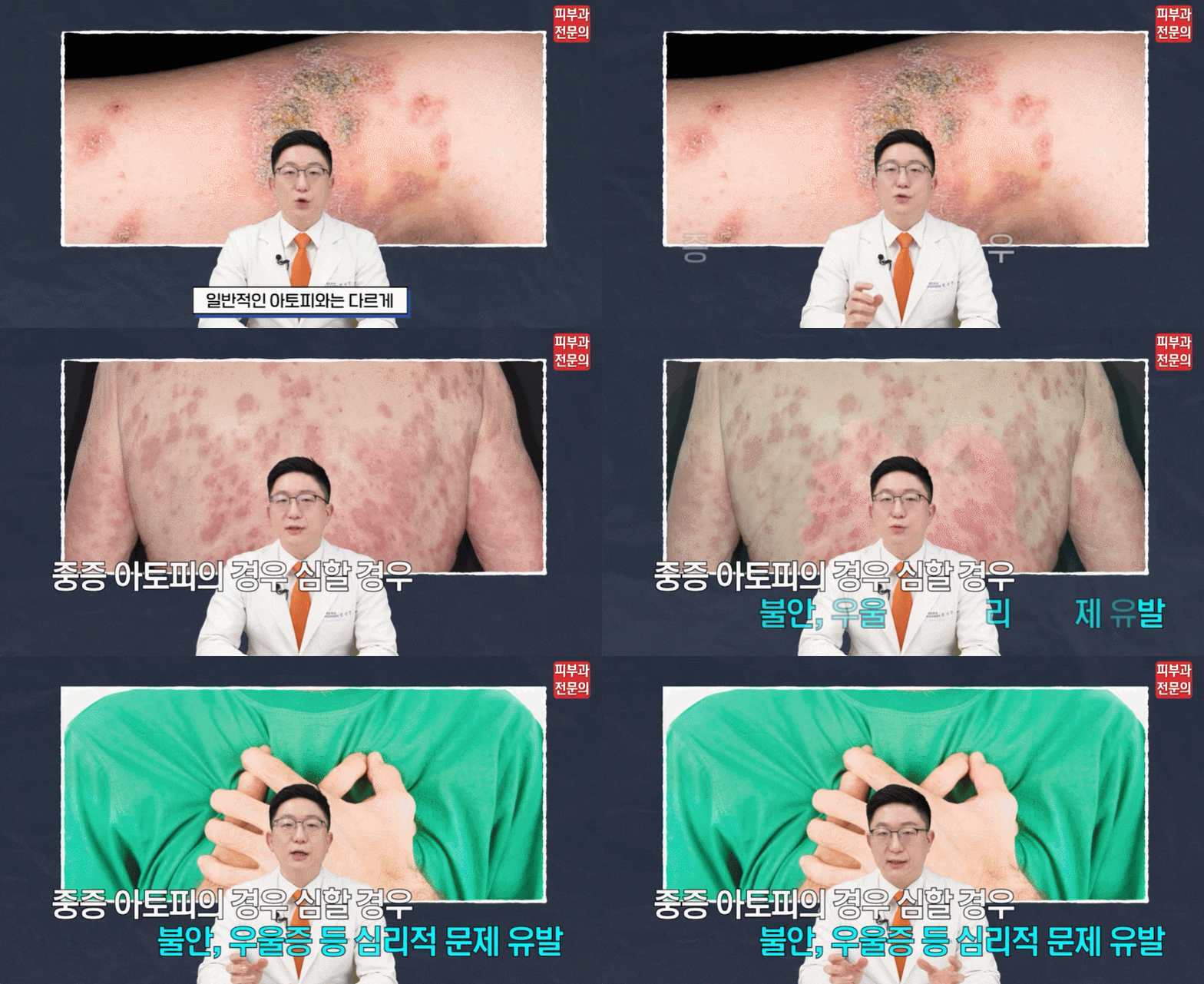
Why itching continues
Atopic dermatitis can present with visible changes such as red rashes, oozing, or flaking, but in many cases the first symptom that causes discomfort is itching.
Even when the symptoms do not look severe from the outside, itching may repeat at certain times of day, or the skin may continue to feel stinging and sensitive.
This itching often occurs because the skin barrier has become weakened and the response to external stimuli has become excessive.
In particular, if itching becomes worse at night or stands out after sweat, temperature changes, or friction, the skin may not be fully stable yet.
Therefore, rather than assuming treatment is complete simply because visible inflammation has decreased, it is important to look at the frequency of itching and the skin’s sensitivity together.

Why ointment treatment alone is not enough
Ointment treatment is an important treatment method that can help quickly relieve inflammation and reduce itching in atopic dermatitis.
However, if dryness or sensitivity remains after the inflammation has eased, the skin barrier may not have recovered sufficiently.
When the skin barrier is weakened, even minor irritation can easily bring back itching or lead to repeated symptom flare-ups.
For this reason, it is important to combine ointment treatment with moisturizing care and minimizing irritation.
If the skin remains dry for a long time, itching can easily start again, and repeated scratching can create a vicious cycle that worsens inflammation.
Therefore, ointment treatment should be understood as a process of calming inflammation, and care that helps restore the skin barrier should also be carried out to support a more stable condition.

Daily atopic dermatitis care points
Atopic dermatitis is a condition that can be greatly influenced not only by the skin itself, but also by the living environment.
People may experience worse itching when stress builds up, sleep becomes irregular, or the skin is exposed to a dry environment for long periods.
In addition, sweat, frequent friction, harsh cleansing habits, and temperature changes can increase skin irritation and affect the persistence of symptoms.
Therefore, even after treatment, it is important to carry out daily care such as
-
Avoiding excessive cleansing
-
Maintaining skin moisture
-
Minimizing friction and irritation
-
Managing sleep and overall condition
If these habits are maintained even during relatively stable periods, they can help reduce worsening of symptoms and support a more stable skin condition.
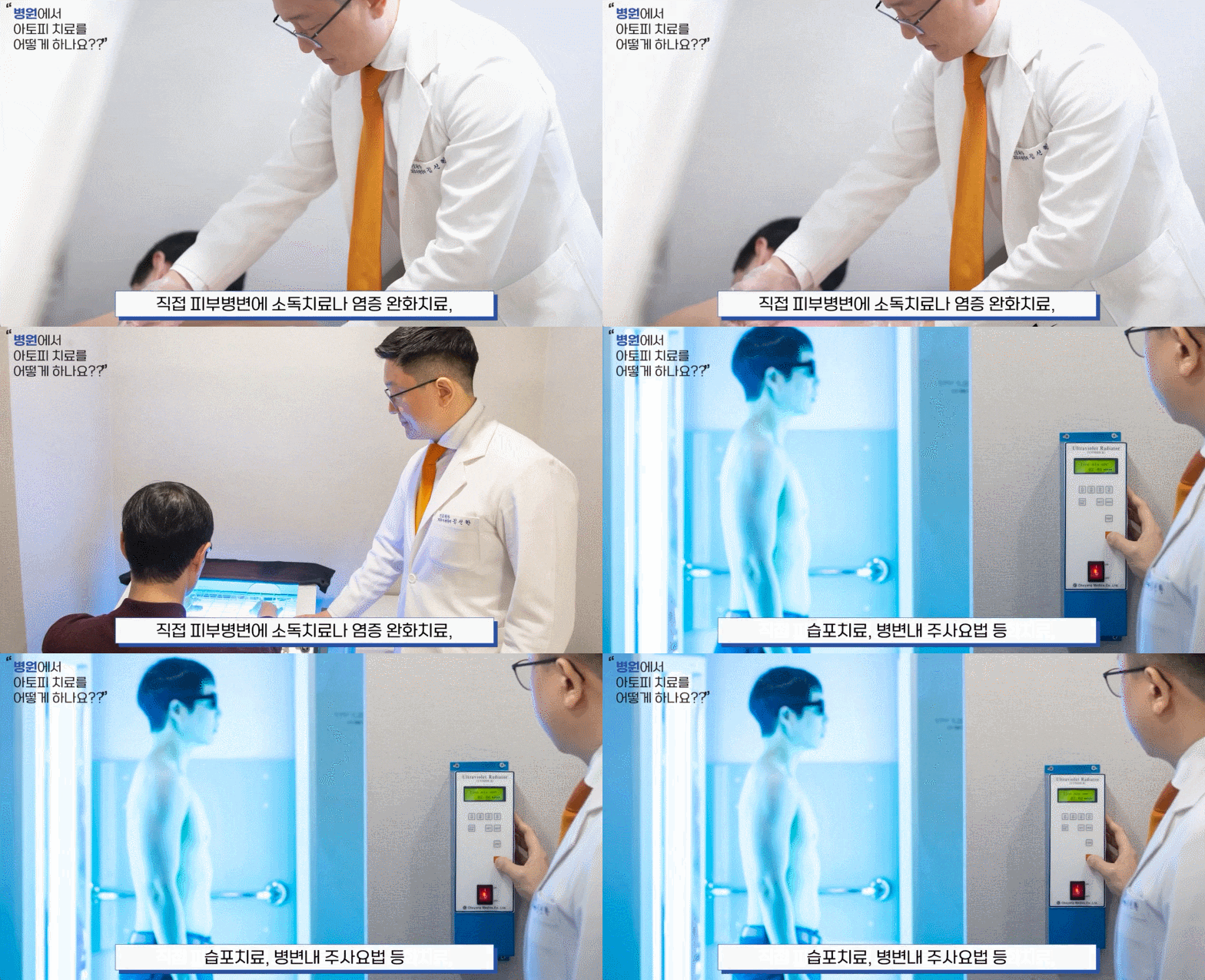
Atopic dermatitis is often not a condition that ends completely after short-term treatment; instead, it often requires ongoing care while monitoring changes in symptoms and skin condition.
Even if inflammation improves through ointment treatment, itching or dryness can repeat if the skin barrier has not recovered sufficiently, so it is important to approach treatment and care together.
In particular, looking at the frequency of itching, the level of skin dryness, and irritants in daily life together may help reduce worsening of symptoms and maintain a stable skin condition.
Because atopic dermatitis can vary depending on each person’s skin condition and living environment, if discomfort continues, it may also be helpful to discuss with a medical professional the care approach that suits your skin condition.
I hope today’s information was helpful for those who are dealing with atopic dermatitis symptoms or preparing for treatment.
Thank you.
| This post was written for informational purposes in compliance with Article 56, Paragraph 1 through 15 of the Medical Service Act. All treatments carry a risk of side effects and complications depending on the individual. Before treatment, be sure to make a thorough consultation with a medical professional with extensive experience before making a decision. |