Hello.
Recently, we had the opportunity through a broadcast to talk about skin health and how skin conditions should be viewed when setting a treatment direction—something many people have likely wondered about in everyday life.
As a dermatologist, it was a meaningful time to share these thoughts through a broadcast rather than in the clinic.
In this program, rather than simply introducing visible symptoms or trendy care methods, we focused on what should be looked at first in the treatment of skin conditions and what standards should take priority when deciding on treatment.
However, due to the nature of broadcasting, there were limits to how fully everything could be explained within a short amount of time, and it was also difficult to convey all of the detailed differences that can vary depending on each person’s skin condition.
Even so, we approached the broadcast with the hope that it would help organize the 기준 for looking at skin concerns and provide some direction for those who are experiencing unnecessary anxiety or trial and error due to misinformation.
Today, based on what was explained in the broadcast, I will go into a little more detail about what a specialist actually looks at first when treating skin conditions.
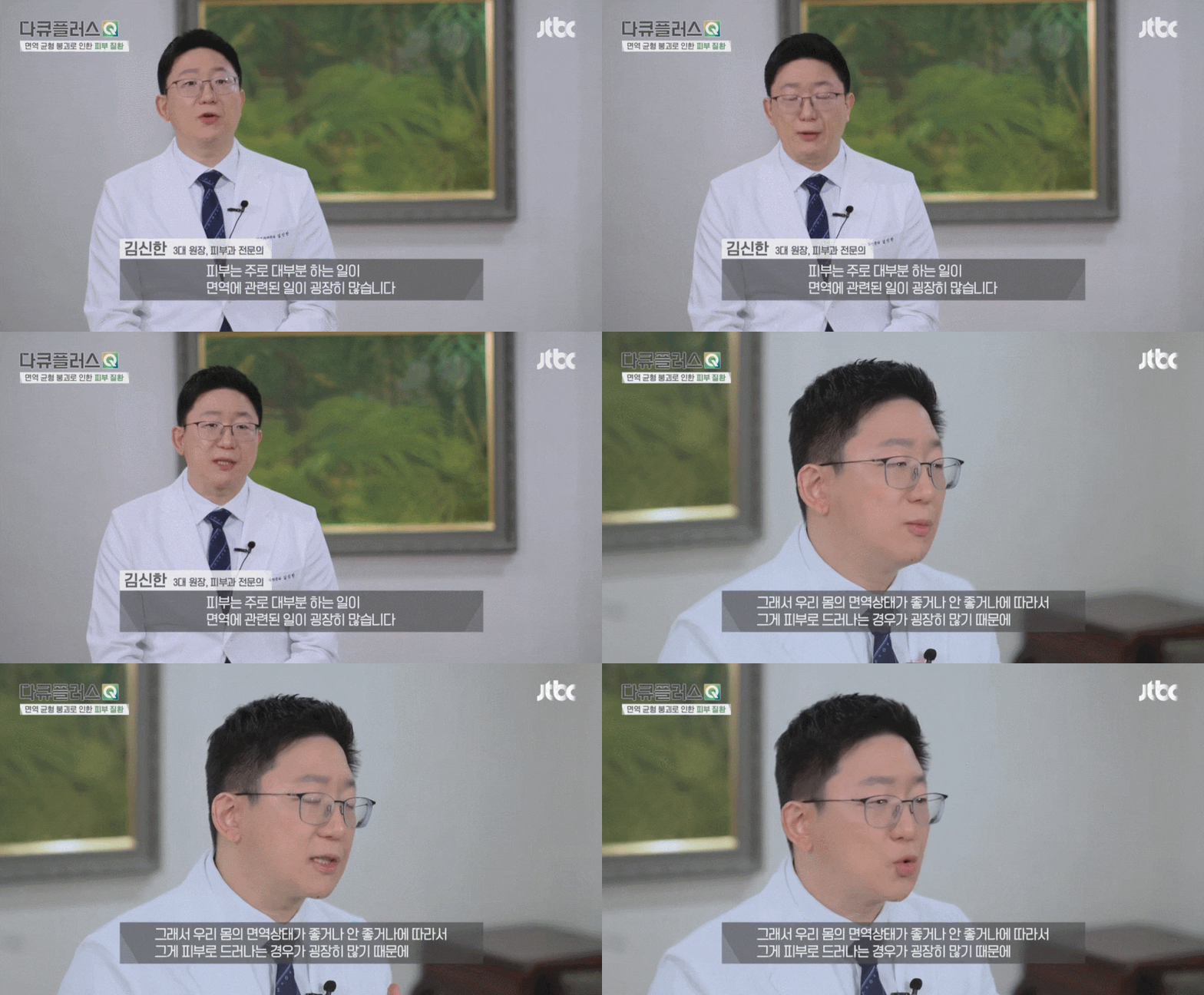
The starting point for treating skin conditions
is not appearance
Among those who visit for skin conditions,
there are many who say, "The visible symptoms aren’t severe, but it still feels uncomfortable," or "It gets better for a while when I apply ointment, but then it keeps coming back."
The skin is an organ where changes become noticeable relatively quickly, but in many cases, the actual onset of a condition progresses first beneath the skin surface.
For example, behind symptoms such as redness, scaling, or changes in color, factors like a weakened skin barrier, repeated inflammatory reactions, and shifts in immune balance may all be working together.
That is why, in the treatment of skin conditions, a specialist does not judge based only on the symptoms currently visible on the surface, but also looks at how these changes have developed and how often they have recurred.
Information such as when the symptoms started, whether there is a pattern of improvement and recurrence, and whether they keep appearing in specific areas are important clues when setting a treatment direction.


Treatment aims for a state that can be maintained,
rather than just calming things down quickly
When starting treatment for a skin condition, the question many people are most curious about is, "How long until it gets better?"
Of course, quickly easing symptoms is important, but from a specialist’s perspective, the more important point is creating a state in which the skin can hold up without becoming unstable again.
If symptoms temporarily subside but then worsen again depending on changes in the living environment or physical condition, it cannot be said that treatment has been sufficiently completed.
So treatment for skin conditions is not just about suppressing symptoms; it is closer to a process that helps the skin maintain its own balance.
In this process, treatments suited to the current skin condition are applied step by step, and the treatment intensity and direction are adjusted while checking the skin’s response along the way.
Even if visible changes feel slow, going through this process can help achieve a relatively stable condition even after treatment.
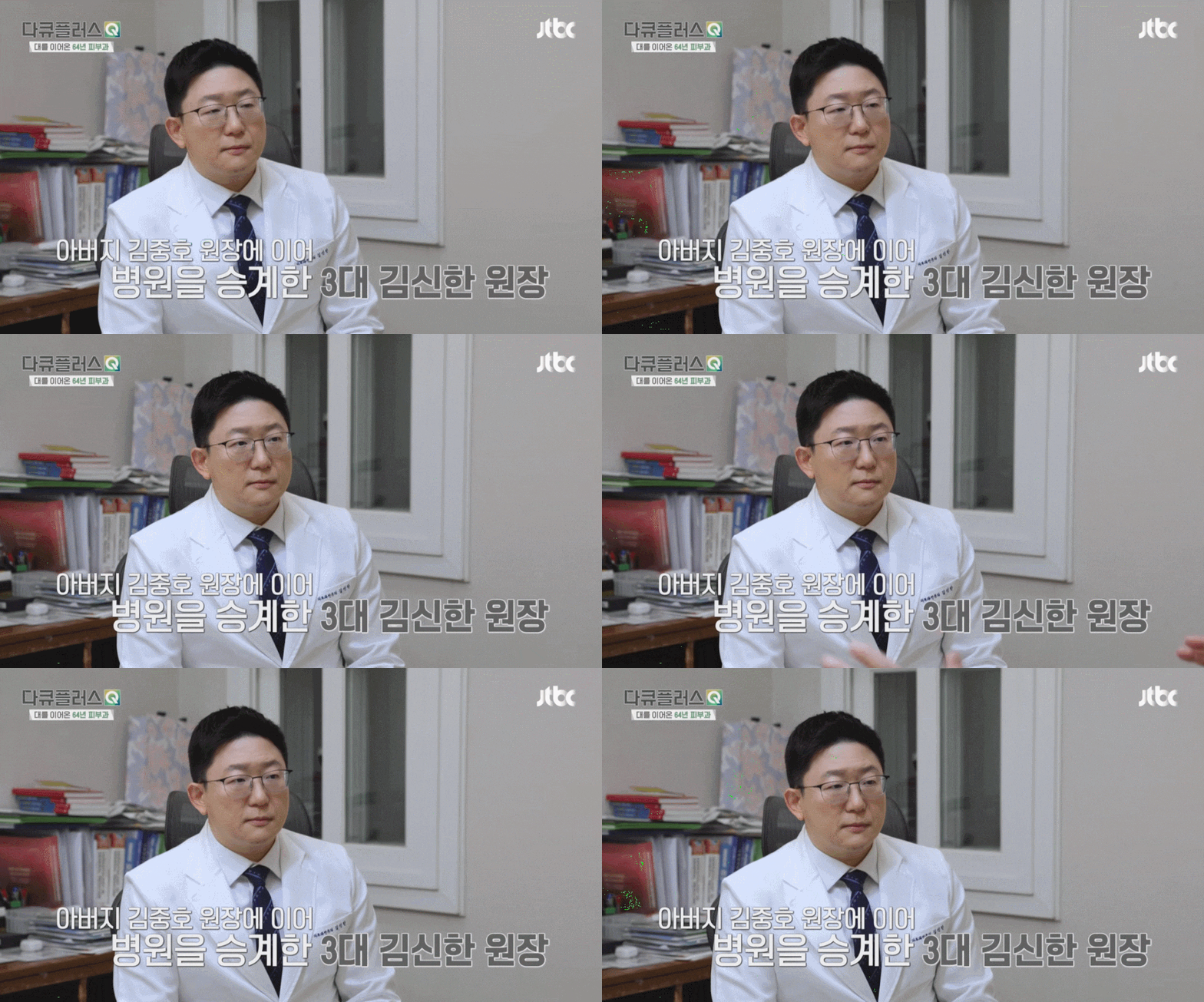

The skin condition is affected by
living environment factors together with treatment
In many cases, skin conditions are not something that can be resolved by treatment alone.
That is because the environment in which the skin lives day to day also has a significant impact on the course of treatment.
Some of you may have experienced symptoms becoming noticeable again when stress builds up,
when your sleep rhythm is disrupted,
or when your skin remains dry for long periods.
These factors do not act alone; rather, they add strain when the skin is already in a sensitive state.
So while treatment is underway, a specialist also checks what repeated stimuli are being applied to the skin and whether there are any elements in daily life that interfere with skin recovery.
This process is not meant to restrict the patient’s daily life, but to create an environment where the effects of treatment can last longer.



What a specialist values most in treating skin conditions is not simply removing symptoms, but looking at why those symptoms keep recurring and how to keep them from becoming unstable again.
Skin conditions require a process of calmly understanding the current state and the course they have taken so far, rather than judging them in a short amount of time.
Rather than rushing to conclusions based only on what is visible, properly understanding the skin condition and setting a treatment direction can help reduce unnecessary trial and error.
I hope today’s summary serves as a useful reference for those of you who are considering the direction of treatment for skin conditions, and I will end here.
Thank you.
| This post was written for informational purposes in compliance with Article 56, Paragraphs 1–15 of the Medical Service Act. All treatments carry the risk of side effects and complications depending on the individual. Before treatment, be sure to have a thorough consultation with experienced medical staff before making a decision. |