Psoriasis is a condition in which, even after the plaques and thick scales have improved through treatment over a certain period, symptoms may appear again in similar areas after some time.
Especially after phototherapy, when the skin looks much more settled, it is easy to assume that treatment has ended.
However, psoriasis is not a condition that is fully resolved in a short period of time; rather, it tends to be a condition in which the skin can repeatedly improve and worsen.
Phototherapy can help control inflammatory responses and skin cell proliferation, but the frequency of recurrence may vary depending on how the skin is cared for afterward.
So today, I will explain how to understand the skin condition after psoriasis phototherapy and what parts of daily life should be managed together to help reduce recurrence.
- Column order from the Saetgang Station dermatology clinic -
- What is the skin like after psoriasis phototherapy?
- Why can psoriasis return?
- What lifestyle management points help reduce recurrence?
What is the skin like after
psoriasis phototherapy?
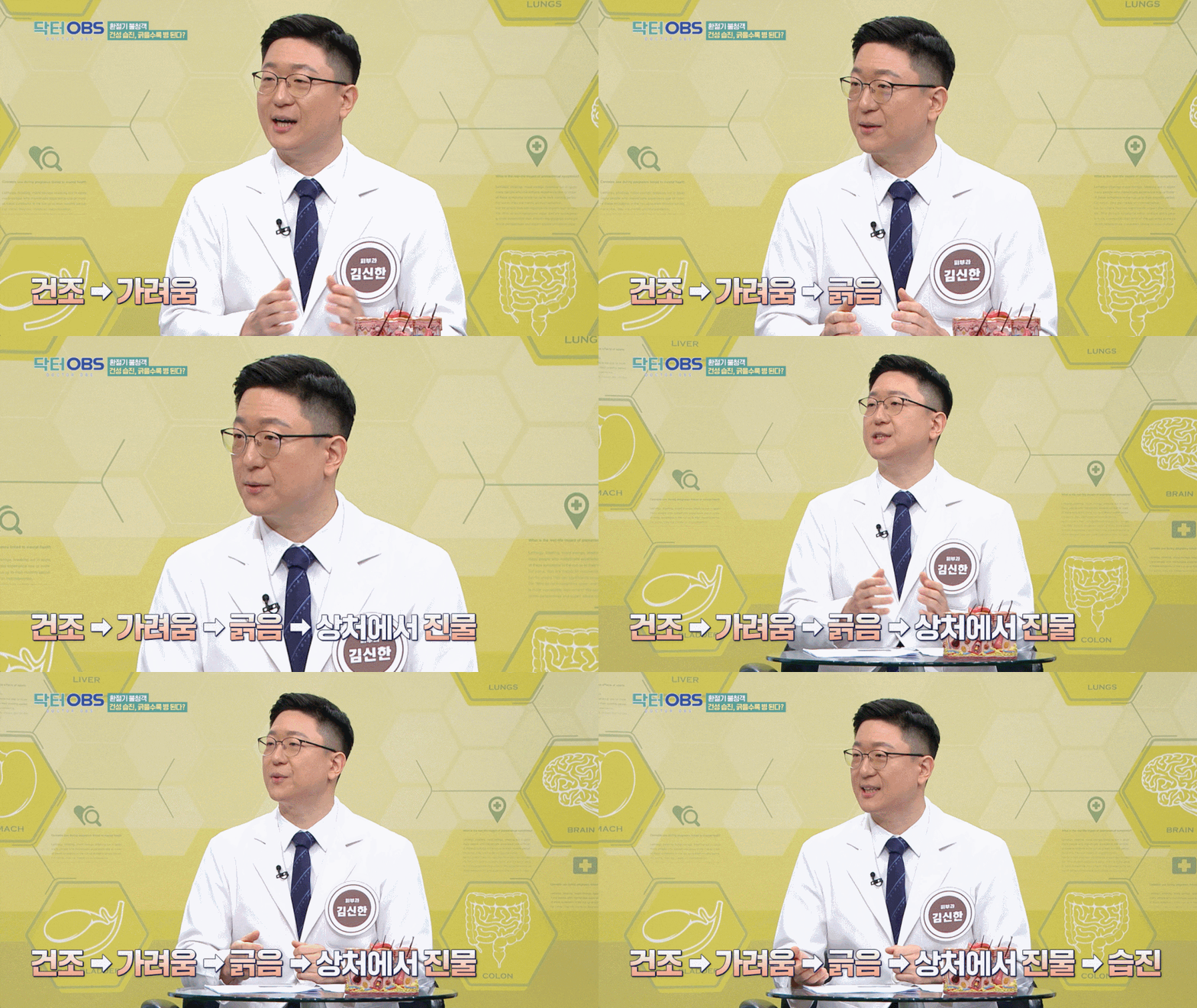
After phototherapy, the redness of the skin may decrease and the thick scales may become thinner, so the skin surface may look relatively more settled.
At this stage, many people feel that their symptoms have improved.
However, unlike the visible changes, the skin barrier may still be in the process of recovery.
After phototherapy, the skin may temporarily become dry or sensitive.
It is also a period when the skin may become red more easily or feel tighter than usual from the same kind of stimulus.
At this time, even if scales are visible, strongly removing them or repeatedly using irritating care methods can instead make the skin unstable again.
Even if the appearance has improved, minimizing irritation may be necessary until the skin’s internal environment becomes sufficiently stable.
After phototherapy, for a certain period, it is often helpful to understand this as a stage of stabilizing the skin rather than simply reducing symptoms.
Why can psoriasis return?
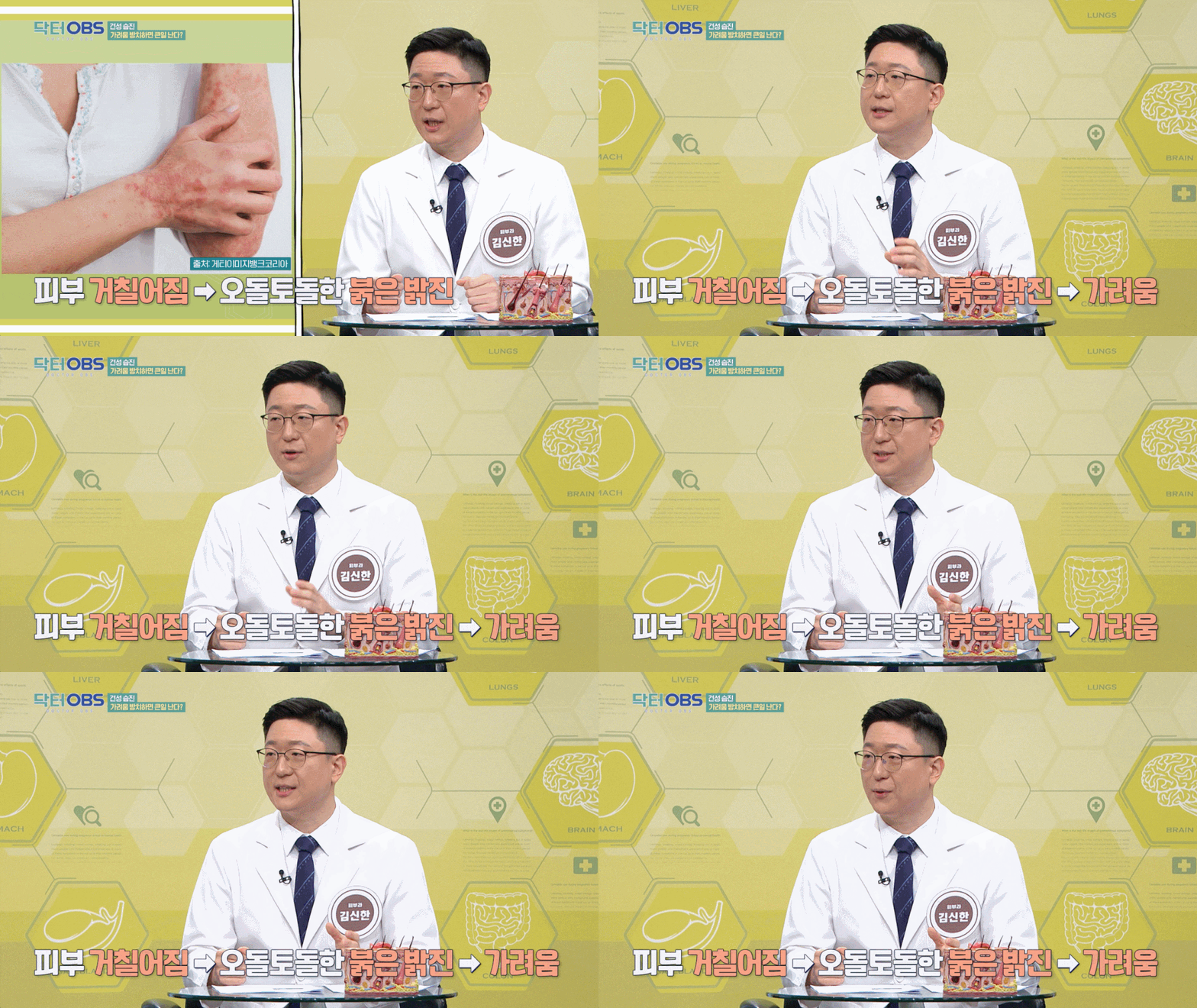
Psoriasis is known to be related to immune responses.
Even if inflammation improves through treatment, symptoms may recur if the immune balance becomes disrupted again.
In particular, when stress accumulates, sleep becomes irregular, or overall physical condition declines, the skin may react first.
If the skin remains dry for a long time, or in areas where friction is repeated, an environment may be created in which scales and red patches become more noticeable again.
Seasonal changes can also have an effect.
During dry weather, skin moisture loss increases, and symptoms may flare up again.
When these factors overlap, it often leads to the feeling that the condition has returned even after treatment.
So rather than viewing psoriasis recurrence simply as a lack of treatment, it can sometimes be more appropriate to understand it as the result of both the living environment and the skin condition being destabilized together.
What lifestyle management points
help reduce recurrence?
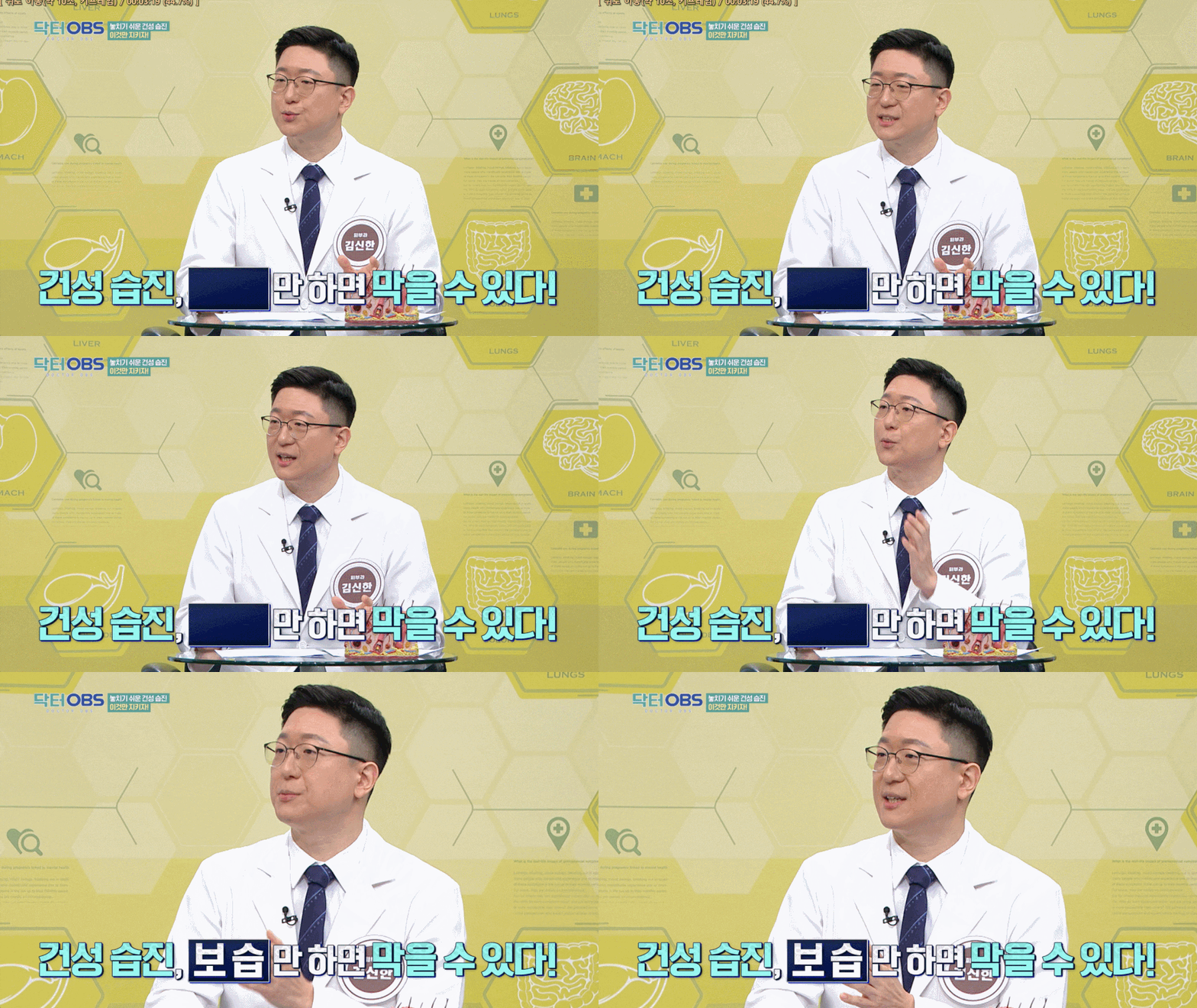
The most basic care element after phototherapy is moisturizing.
It is important to keep the skin sufficiently hydrated so that the skin barrier can remain stable.
In particular, after showering, skin moisture can evaporate quickly, so applying moisturizer immediately after patting the skin dry may be helpful.
Also, it is best to avoid habits such as excessively rubbing the skin or trying to remove scales forcefully.
Even if the scales are noticeable, repeatedly irritating the skin during the process of forcibly removing them can reactivate inflammatory responses.
Maintaining a regular daily rhythm is also important.
Adequate sleep and stress control can affect the maintenance of immune balance.
If your condition has recently declined significantly, it may also be helpful to keep in mind that your skin may become unstable during that period as well.
It is also necessary to periodically check the condition of the skin even after the symptoms have stabilized.
If small changes repeat, making adjustments promptly can help with long-term management.
Even if symptoms improve through phototherapy, psoriasis is a condition that still requires careful management afterward.
Treatment is a process of controlling inflammation, and after that, lifestyle care that helps the skin remain stable should be carried out together.
Moisturizing, minimizing irritation, and maintaining regular habits may help reduce recurrence.
Rather than thinking that management is over once the visible symptoms decrease, it is necessary to understand it as a process of helping the skin maintain a stable pattern.
I hope the information shared today was helpful in organizing the direction of care after psoriasis phototherapy.
Thank you.
| This post was written for informational purposes in compliance with Article 56, Paragraphs 1 to 15 of the Medical Service Act. All treatments carry the risk of side effects and complications depending on the individual. Before treatment, be sure to consult thoroughly with experienced medical staff before making a decision. |