If a skin area looks lighter than the surrounding skin or turns white, many people wonder whether it is simply a change or a sign of a skin condition.
Especially when spots with clear borders begin to appear, it is not uncommon to worry, "Will it return over time?" or "Will it keep spreading?"
Vitiligo, one of the chronic skin conditions, is known as a disorder in which the function of melanocytes that produce skin color weakens or decreases, causing parts of the skin to become lighter.
Because it often starts as a small spot, some people may think it is just a simple pigment change and overlook it.
However, if similar changes repeat over time, or if the color of the same area gradually becomes lighter, it may be necessary to take a closer look at the skin condition.
So today, I will explain how the early symptoms of vitiligo appear and how it is helpful to understand the direction of treatment and management.
-Column order from the Yeouido Station dermatology clinic-
- What do early symptoms of vitiligo look like?
- In what direction can vitiligo treatment proceed?
- Skin care points to consider in vitiligo management
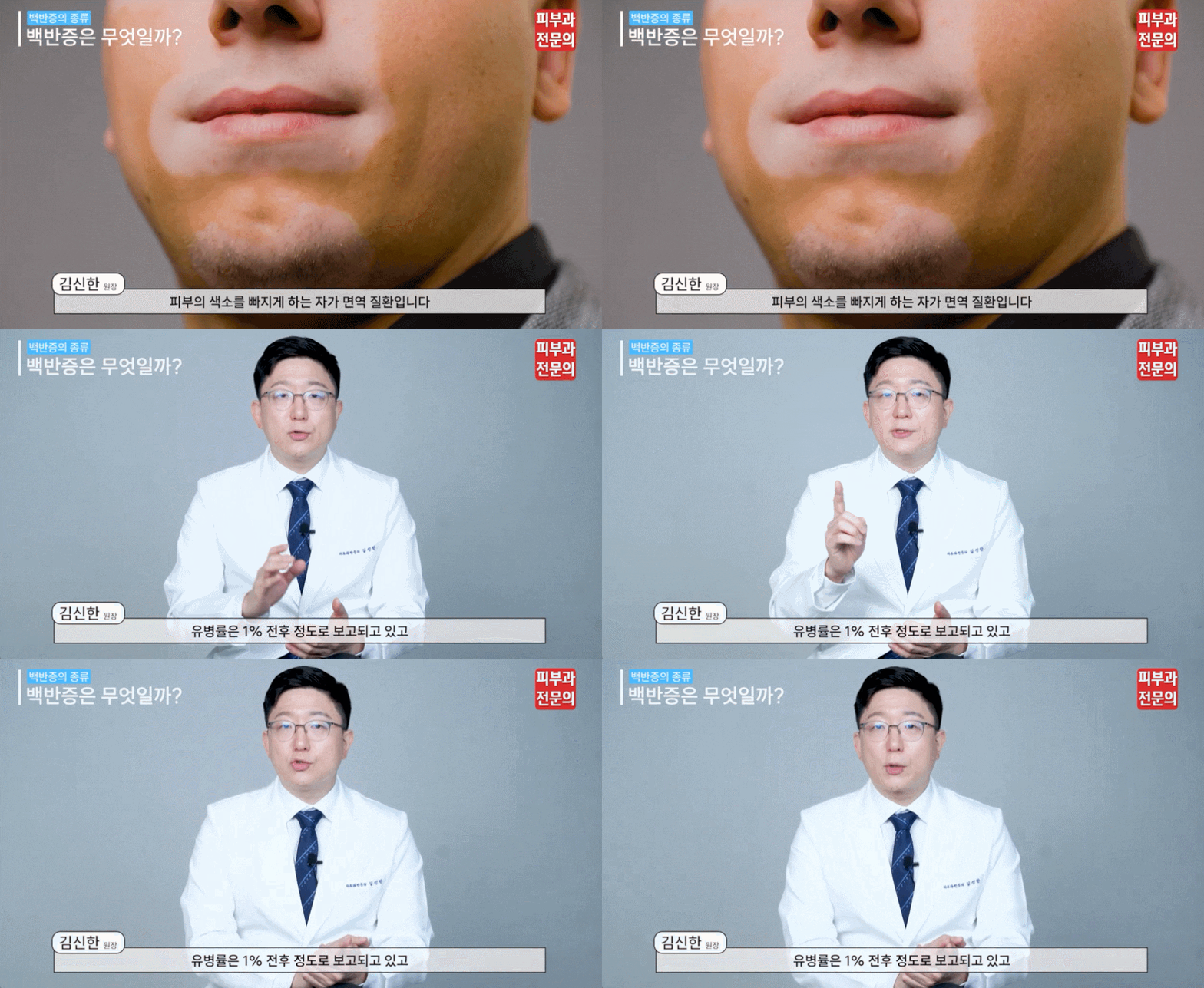
How do the early symptoms of vitiligo
appear?
Vitiligo often begins as skin becoming lighter than the surrounding area.
At first, it may appear as a small spot or feel like the skin tone has become slightly paler.
In particular, if a spot with a relatively clear border appears or the color of the same area continues to become lighter, it may be worth considering the possibility of early vitiligo symptoms.
It is also relatively common for it to be found first on exposed areas such as the face, the backs of the hands, or the arms.
In addition, changes may first appear in areas that are frequently rubbed or repeatedly irritated.
For example, spots may be found in locations where skin irritation is repeated, such as the fingers, elbows, or knees.
However, not all skin pigment changes lead to vitiligo, so it may be necessary to distinguish whether it is a simple pigment change or a change related to a condition.

How can vitiligo treatment
proceed?
Vitiligo treatment often proceeds in a direction that helps restore melanocyte function and maintain stable skin condition, rather than simply trying to bring back skin color.
Therefore, depending on the patient's skin condition, the extent of the lesions, and the rate of progression, the treatment method may vary.
Treatments that help melanocyte activity, such as topical ointment treatment or phototherapy, may be considered.
In particular, when treatment is started at an early stage, there may be cases where a relatively stable skin condition can be expected.
Therefore, when skin color changes are suspected, it may be helpful to check the skin condition rather than thinking of it as just a simple pigment issue.
Also, vitiligo treatment is often not something that shows change in a short period of time, but rather proceeds gradually over a certain period.
It may be necessary to adjust the treatment direction while checking the current skin condition and the pattern of change together.

Skin care points to consider
in vitiligo management
In vitiligo management, it may be important to keep the skin environment stable along with treatment.
This is because in environments where skin irritation is repeated, the color difference may appear more noticeable.
Strong friction or repeated irritation can affect the skin condition, so lifestyle habits that reduce irritation as much as possible may be helpful.
Also, if the skin remains dry for a long time, the skin barrier may weaken, so moisturizing care is also an important consideration.
In environments with a lot of sun exposure, the difference in skin color may appear more pronounced.
Therefore, being mindful of sun protection when going outside can also help with management.
Vitiligo is a condition in which the progression can vary from person to person.
So even after treatment, it may be necessary to periodically check changes in the skin condition and adjust the direction of management accordingly.

Vitiligo is a condition that appears as skin becoming lighter, and it often starts as a small spot in the early stages.
At first, it may not feel like a major change, but because color changes may continue over time, it can be important to observe the skin condition carefully.
Vitiligo treatment is often not a process of changing skin color in a short time, but rather one that proceeds in the direction of restoring melanocyte function and maintaining a stable skin condition.
Along with treatment, the process of reducing skin irritation and managing the living environment may also be helpful.
I hope the information shared today was helpful in understanding the early symptoms of vitiligo and the direction of management.
Thank you.
| This post was written for informational purposes in compliance with Article 56, Paragraph 1 through Paragraph 15 of the Medical Service Act. All treatments carry the risk of side effects and complications depending on the individual. Before treatment, be sure to have a thorough consultation with experienced medical staff before making a decision. |