Hello.
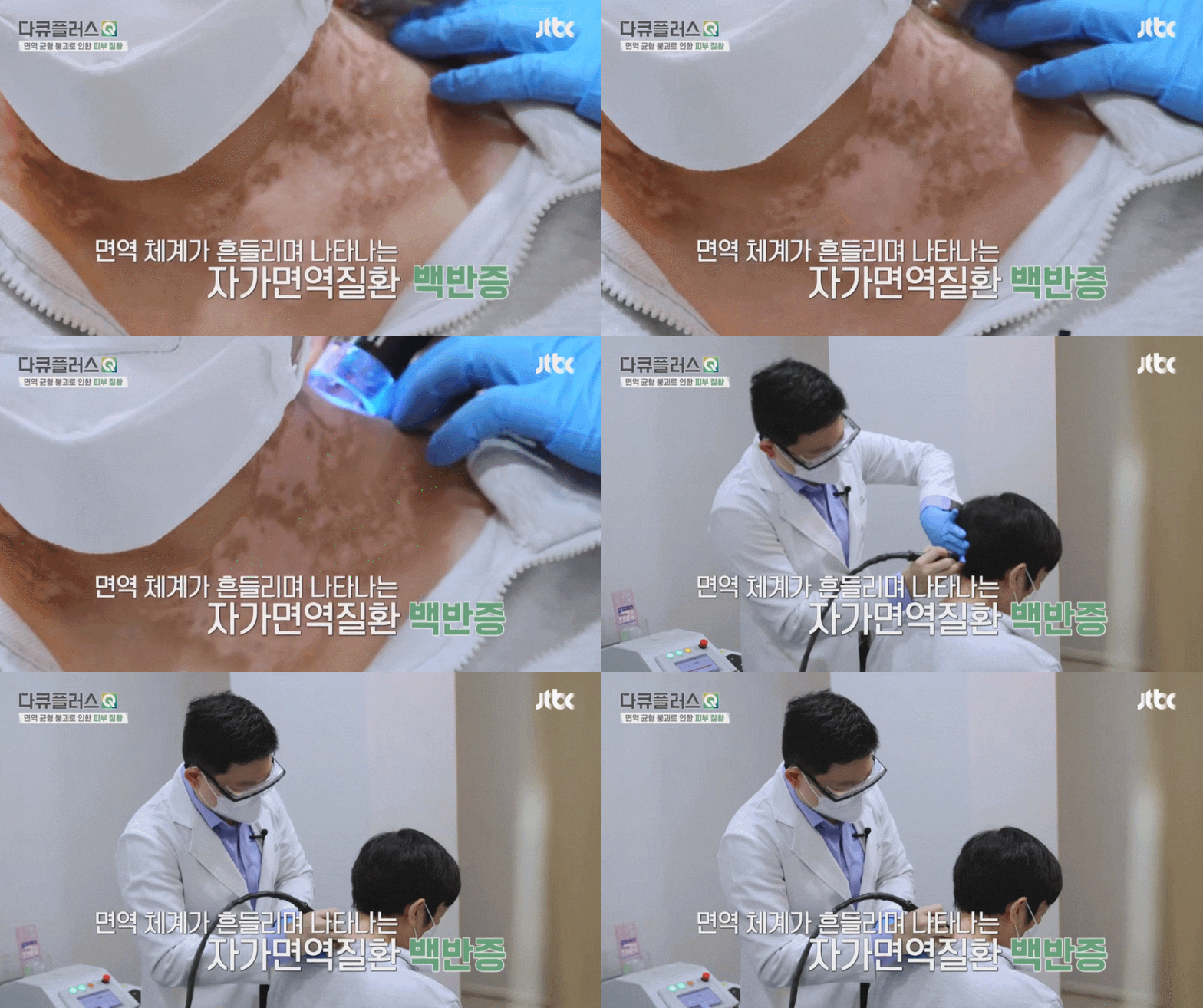
Recently, through the JTBC Docu Plus Q broadcast, I had an opportunity to explain vitiligo treatment and management.
Because vitiligo is a condition that begins with changes in skin color, treatment is often judged based on visible changes.
However, in reality, there are many cases in which it is difficult to determine the condition based on how much skin color has returned alone.
In this broadcast, I focused on these points and talked about how vitiligo should be understood and what direction to take in treatment.
Today, based on what was shared in the broadcast, I will explain the treatment direction and management criteria for vitiligo.

What is the more important skin condition trend than color changes in vitiligo treatment?
Vitiligo appears as skin color lightens as melanocyte function weakens.
On the surface, it may seem like a simple pigment change, but in reality, the skin environment and immune response often affect it together.
Even if treatment makes it seem as though color has returned in some areas, there are cases where new changes appear in other areas or existing lesions progress again.
If this pattern continues, it is difficult to say that the skin condition has reached a sufficiently stable stage.
In this way, in vitiligo treatment, it is important to look not only at the results visible now, but also at how the symptoms are progressing and how stably the skin condition is being maintained.

How can the treatment approach change depending on each person’s skin condition?
Vitiligo treatment is not determined by just one method, but can vary depending on the skin condition and the extent of the lesions.
Ointment treatment and phototherapy may be used together, and a method focused on specific areas may also be considered.
These differences arise because each person’s skin condition and disease progression are different.
Even with the same vitiligo, some cases show a relatively stable pattern, while others continue changing quickly.
The treatment direction naturally differs depending on these differences.
That is why, when choosing a treatment, it is important to judge not only the method itself but also what approach is needed for the current skin condition.
The importance of ongoing skin care and lifestyle management criteria that continue after treatment
Vitiligo is one of the conditions in which changes may continue depending on the skin condition even after treatment.
Therefore, how the skin condition is maintained after treatment becomes an important management criterion.
If skin irritation is repeated or the skin is affected by the external environment, color changes may become more noticeable again.
In particular, in environments where irritation such as friction or ultraviolet exposure continues, the skin condition may become unstable.
For this reason, along with treatment, care to reduce skin irritation and maintain the skin barrier is considered important.
Basic care such as moisturizing and sun protection can also help keep the skin condition stable.
In the end, vitiligo treatment should be understood not as something that ends with the treatment itself, but as a process that also includes management to help maintain a stable skin condition afterward.

Vitiligo treatment is not simply a process of quickly restoring skin color.
Visible changes are important, but even more important is how stably the skin condition is being maintained.
In actual practice, rather than considering treatment finished once some color has returned, there are many cases where maintaining stability afterward is regarded as more important.
Through the broadcast, Director Kim Shin-han of Gye Skin Clinic explained that the standard for treatment lies in a direction where the skin condition continues to remain stable rather than in rapid change.
However, it is also true that, because it was a broadcast, there were limits to how fully everything could be conveyed.
So if today’s content helped you understand it a little better, I hope that was useful.
Because vitiligo is a condition that shows different patterns of progression and skin conditions from person to person, it is important to go through the process of organizing a direction that fits your own skin condition.
Going forward, Gye Skin Clinic will continue to make an effort to provide more accurate and helpful skin information based on real clinical experience.
Thank you.
| This post was written for informational purposes in compliance with Article 56, Paragraphs 1 to 15 of the Medical Service Act. All treatments carry the risk of side effects and complications depending on the individual. Before treatment, be sure to have a thorough consultation with medical staff who have extensive experience before making a decision. |