Many people think acne is a skin concern that only appears during the teenage years, but in reality, it is one of the skin problems that can occur across a wide range of ages.
Especially after becoming an adult, some people experience acne that keeps recurring and trouble that continues to appear in certain areas.
When small breakouts on the skin repeatedly appear and subside, it can lead to questions such as, “Why do similar symptoms keep happening?” or “Is my skincare method wrong?”
This kind of acne often develops as sebum production, pore conditions, and skin type all affect one another.
So in acne care, rather than simply reducing the visible breakouts, it can be important to look at the current skin condition and skin type together.
Today, I will explain what acne looks like and how care methods can differ depending on skin type.
-Order of the column with Jangseungbaegi Station Yeokskin-
-
Features of a skin environment where acne keeps recurring
-
Acne care that can vary depending on skin type
-
What to look at in skin care after acne treatment
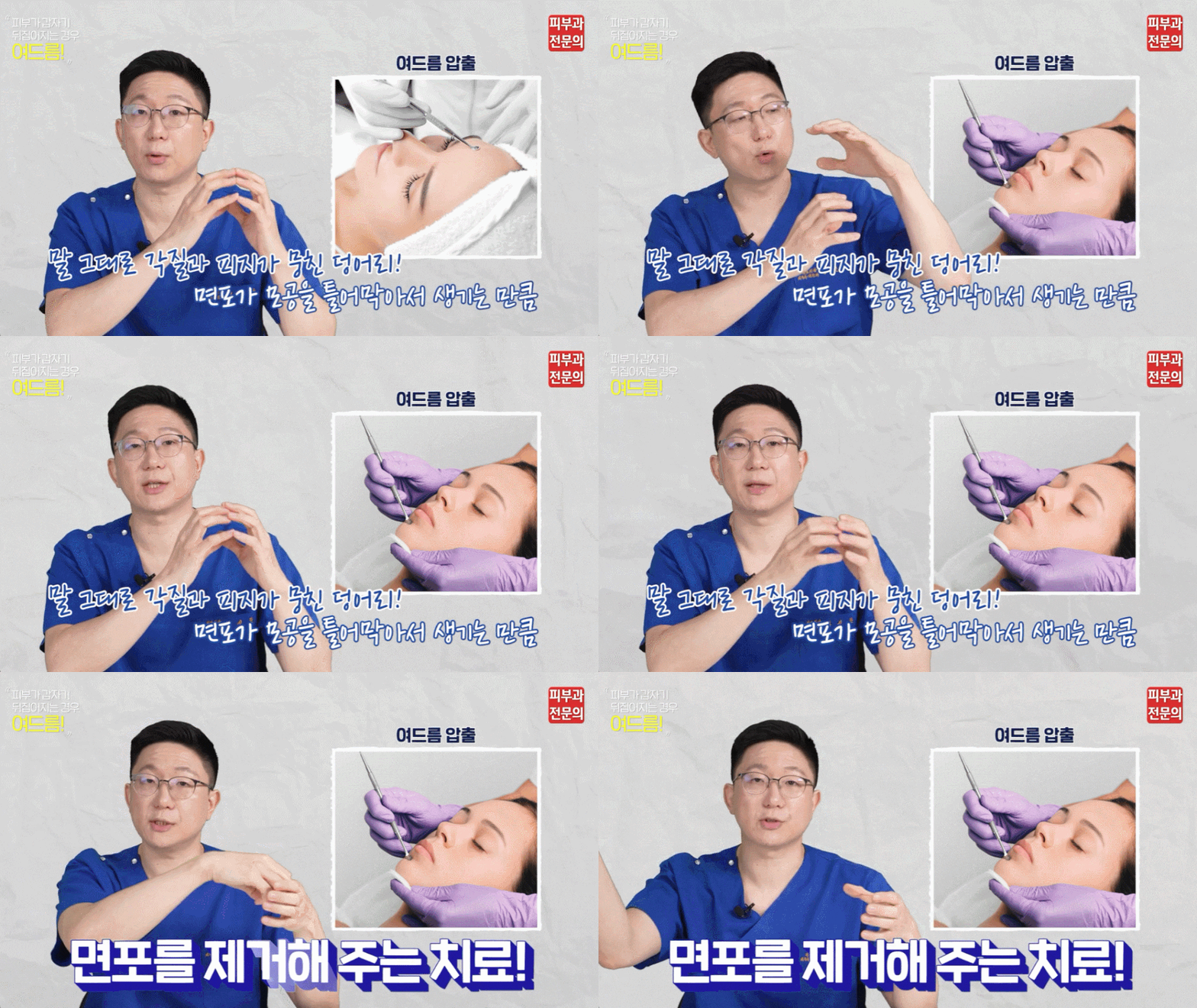
Features of a skin environment where acne keeps recurring
Acne often occurs when sebum and dead skin cells build up inside pores.
When sebum production becomes more active or the dead skin around pores thickens, an environment that blocks pores can be created.
If this environment continues, acne can develop, and over time it may also progress to an inflammatory form.
In particular, recurring acne is relatively common in skin with a lot of sebum production.
That is because when oil builds up on the skin surface, it can create an environment where pores are easily blocked.
In addition, repeated skin irritation can worsen acne in that environment.
Touching breakouts with your hands or forcefully squeezing them can make the inflammatory response more severe.
If this kind of irritation continues, it can also affect the skin’s recovery process.
So in acne treatment, it may be necessary to take an approach that looks not only at the visible breakouts, but also at the pore environment and overall skin condition.



Acne care that can vary depending on skin type
Acne care methods can differ slightly depending on skin type.
Even if the symptoms look like the same type of acne, the care direction can change depending on skin condition and the degree of sebum production.
For example, in oily skin with a lot of sebum production, care that helps clear sebum and dead skin inside pores may be useful.
A process that manages the pore environment while clearing away dead skin built up on the skin surface may be needed.
On the other hand, when acne appears in dry skin, it is important to consider the condition of the skin barrier as part of the care.
That is because if the skin becomes too dry, sebum production may instead become more active.
In combination skin, acne may also keep recurring only in certain areas.
In such cases, rather than treating the entire face the same way, it may be helpful to look at the skin condition of each area separately.
Because the direction of care can differ depending on skin type, it is important to fully check your own skin condition before organizing a care plan.

After acne treatment
What to look at in skin care
Even after acne treatment, the process of maintaining stable skin condition can be very important.
That is because even if inflammation subsides through treatment, acne may recur if the skin environment becomes worse again.
For example, in an environment where skin irritation keeps happening, inflammatory reactions may appear again.
Touching breakouts with your hands or repeatedly squeezing them can cause skin irritation, so reducing skin stimulation as much as possible may be helpful.
Cleansing habits can also affect skin condition.
Using overly strong cleansing products or washing too often can weaken the skin barrier, so it may be better to maintain cleansing habits that suit your skin condition.
In addition, if the skin does not retain enough moisture, the skin barrier function can weaken, so moisturizing care is also an important part to consider.
In this way, in acne care, when treatment is combined with daily skin care, it may help keep the skin environment more stable.

Acne may look like a simple skin breakout, but it often develops as sebum production, pore conditions, and skin type all influence one another.
So rather than managing it only based on visible symptoms, it can be important to look at the current skin condition as well.
In particular, because care methods can differ depending on skin type, it may be helpful to fully understand your own skin condition before deciding on a care direction.
I hope today’s information was even a little helpful in understanding acne care and skin condition.
Thank you.
| This post was written for informational purposes in compliance with Article 56, Paragraphs 1 to 15 of the Medical Service Act. All treatments carry a risk of side effects and complications depending on the individual. Before treatment, please be sure to have a thorough consultation with a medical professional with ample experience and make your decision afterward. |