Our skin may seem to maintain the same color every day, but in reality, it is constantly changing under the influence of many different factors.
For example, if you are exposed to sunlight for a long time, your skin can become darker, and if your skin is irritated, color may remain behind.
Most of these changes naturally recover over time.
However, not all color changes return to normal.
But what if part of the skin seems to have lost its color?
If distinct white patches appear, different from simple pigment changes, it is worth considering vitiligo as a possibility.
In particular, if the area gradually becomes wider over time, it may be a condition that requires a more systematic approach.
At first, it may look like a simple skin change, but as symptoms progress, the treatment approach can change, so it is important to begin treatment early.
So today, I will explain everything from the causes of vitiligo to excimer laser treatment, and what needs to be checked to improve treatment effectiveness.
- Mullae Station Dermatology Column Order -
- Vitiligo: Why does it occur?
- What is excimer laser treatment for vitiligo?
- What is important for improving treatment results?

Vitiligo: Why does it occur?
Our skin contains melanocytes.
These cells create skin color and protect our skin from ultraviolet rays.
Normally, when the skin is in a healthy state, melanocytes steadily produce pigment and help keep the skin tone even.
However, if there is an abnormality in the immune system, the body recognizes these melanocytes as enemies and attacks them.
As a result, melanocytes are destroyed, and white patches that look like the color has been lost appear on parts of the skin. This condition is the skin disease called vitiligo.
Vitiligo is not simply a problem on the skin surface, but a condition closely connected to the body's internal immune system.
Because of this, various factors such as stress, lack of sleep, overwork, ultraviolet exposure, and skin irritation can affect the onset and progression of symptoms.
In particular, repeated irritation or inflammation can trigger new lesions, so daily management is also an important factor.
Therefore, an approach that considers not only the visible changes but also overall physical condition and habits is needed.

What is excimer laser treatment for vitiligo?
One of the representative treatments used for vitiligo is excimer laser therapy.
This treatment uses ultraviolet light at a wavelength of 308 nm to reactivate the function of melanocytes.
Simply put, it is a treatment that helps weakened pigment cells wake back up and perform their role again.
Through this process, a gradual return of color can be expected in depigmented areas.
In addition, because the excimer laser delivers energy selectively only to the lesion area, it has the characteristic of having less impact on the surrounding normal skin tissue and reducing unnecessary irritation.
The relatively short procedure time and minimal disruption to daily life are also among the factors many people consider.
However, vitiligo is not a condition that improves quickly; rather, changes appear gradually over time.
Therefore, treatment needs to be repeated at regular intervals while monitoring progress, and the treatment period and number of sessions may vary depending on the individual’s condition.

What is important for improving treatment results?
Vitiligo shows different treatment responses depending on the time of onset, speed of progression, location of lesions, and skin type.
For example, the rate of response can differ depending on the area, such as the face or the hands and feet.
That is why, rather than simply proceeding with laser treatment, it is important to first accurately determine which area is affected and how far it has progressed, then adjust the treatment intensity, interval, and number of sessions accordingly.
Post-treatment care can also have a major effect on the results.
If sunscreen use is neglected or skin irritation repeats, treatment effectiveness may decrease, so it is necessary to combine treatment with daily habits such as sun protection when going out, moisturizing care, and minimizing skin irritation.
In the end, what matters most is whether the treatment has been designed to fit my condition.
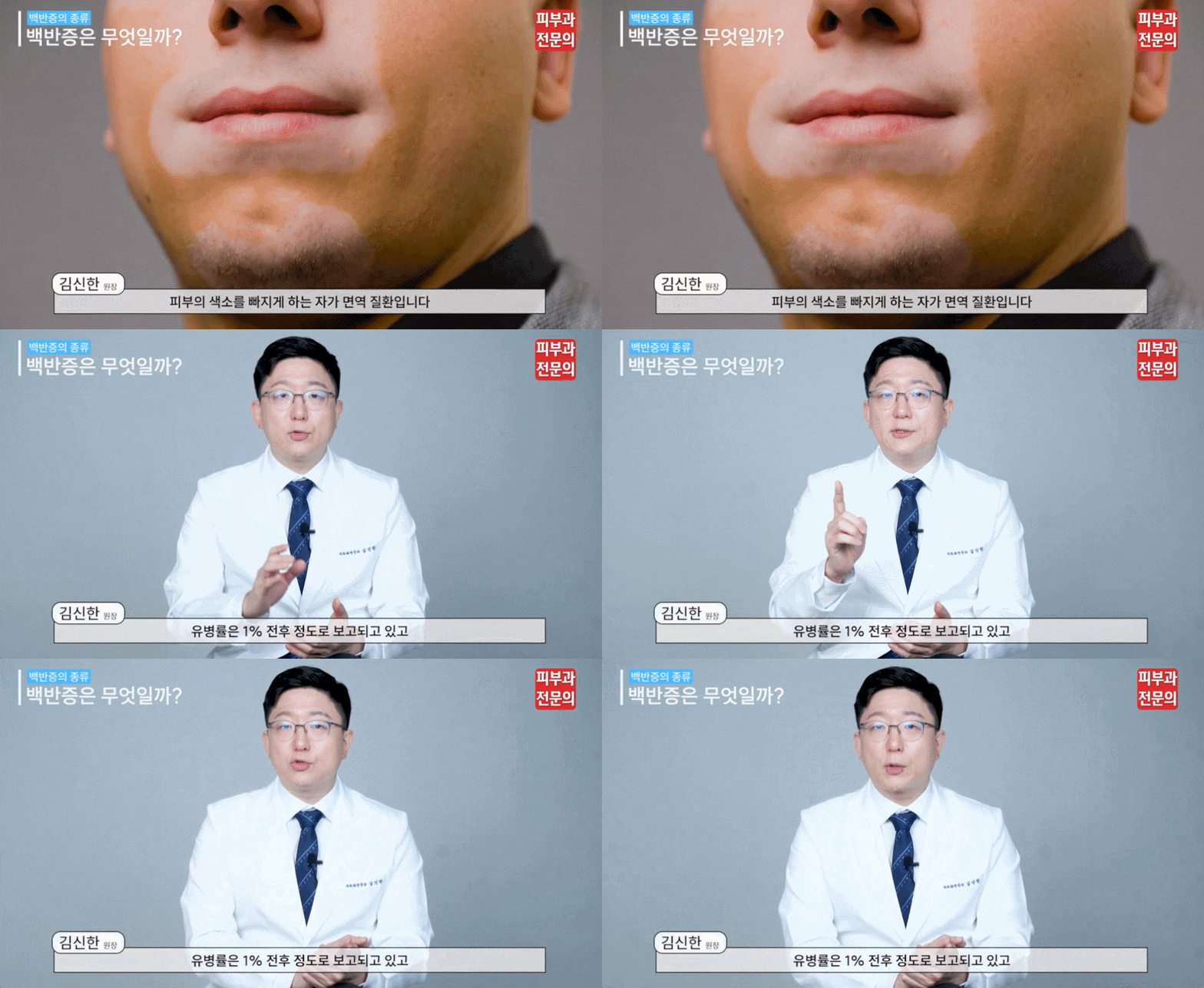
Today, we took a broad look at vitiligo and excimer laser treatment.
As explained, vitiligo is a condition that can spread over a wider area over time, but if treatment is started at the right time and managed consistently, improvement can still be expected.
In particular, excimer laser treatment is one of the methods widely used to help restore melanocyte function.
However, treatment results can vary depending on the individual's condition and management, so an accurate diagnosis and treatment plan are more important than anything else.
I hope today’s information has been of some help to those who are concerned about vitiligo.
If you have any questions, please leave them in the comment box below.
Thank you for reading to the end.
| This post was written for informational purposes in compliance with Article 56, Paragraphs 1–15 of the Medical Service Act. All treatments carry a risk of side effects and complications depending on the individual. Before treatment, be sure to consult thoroughly with a medical professional with extensive experience before making a decision. |