These days, when the temperature difference between day and night is large and there are many environmental changes, the skin can easily become sensitive, and symptoms such as redness, flaking, and itching often recur.
In particular, if redness appears on the face or scalp along with flaking and itching, you may want to suspect seborrheic dermatitis.
Seborrheic dermatitis is not something that simply appears temporarily and disappears; it often improves and then recurs, causing considerable discomfort in daily life as well.
That is why it is important not just to cover up the symptoms, but to establish a treatment direction that matches your current skin condition.
Today, I will explain what characteristics seborrheic dermatitis has and why treatment needs to be applied differently from person to person.
-Yeouido-dong Dermatology Clinic Column Outline-
-
Seborrheic dermatitis: why does it recur
-
Why treatment for seborrheic dermatitis differs
-
Treatment direction tailored to skin condition

Seborrheic dermatitis, why does it recur
Seborrheic dermatitis is one of the representative chronic skin diseases that appears mainly in areas with active sebum secretion.
It can occur not only on the face, eyebrows, and scalp, but also on the chest and around the ears, and is often accompanied by red patches, flaking, and itching.
The problem is that this condition does not simply appear once and end there; it tends to repeat cycles of improvement and worsening.
This is because multiple factors such as sebum secretion, lifestyle habits, stress, and environmental changes act together.
In particular, when rest is insufficient or the skin is repeatedly irritated, symptoms can worsen more easily.
Because these various causes act together, it is often difficult to keep symptoms stable with simple care alone.

Why treatment for seborrheic dermatitis differs
Even though the outward symptoms of seborrheic dermatitis may look similar, the pattern can differ depending on the skin condition.
In some cases, redness or a feeling of heat becomes more noticeable, while in others flaking or itching may be more prominent.
In addition, the approach can also vary depending on whether the skin is dry or producing a lot of sebum.
Because each person’s condition differs in this way, even when the same treatment is applied, the response can vary.
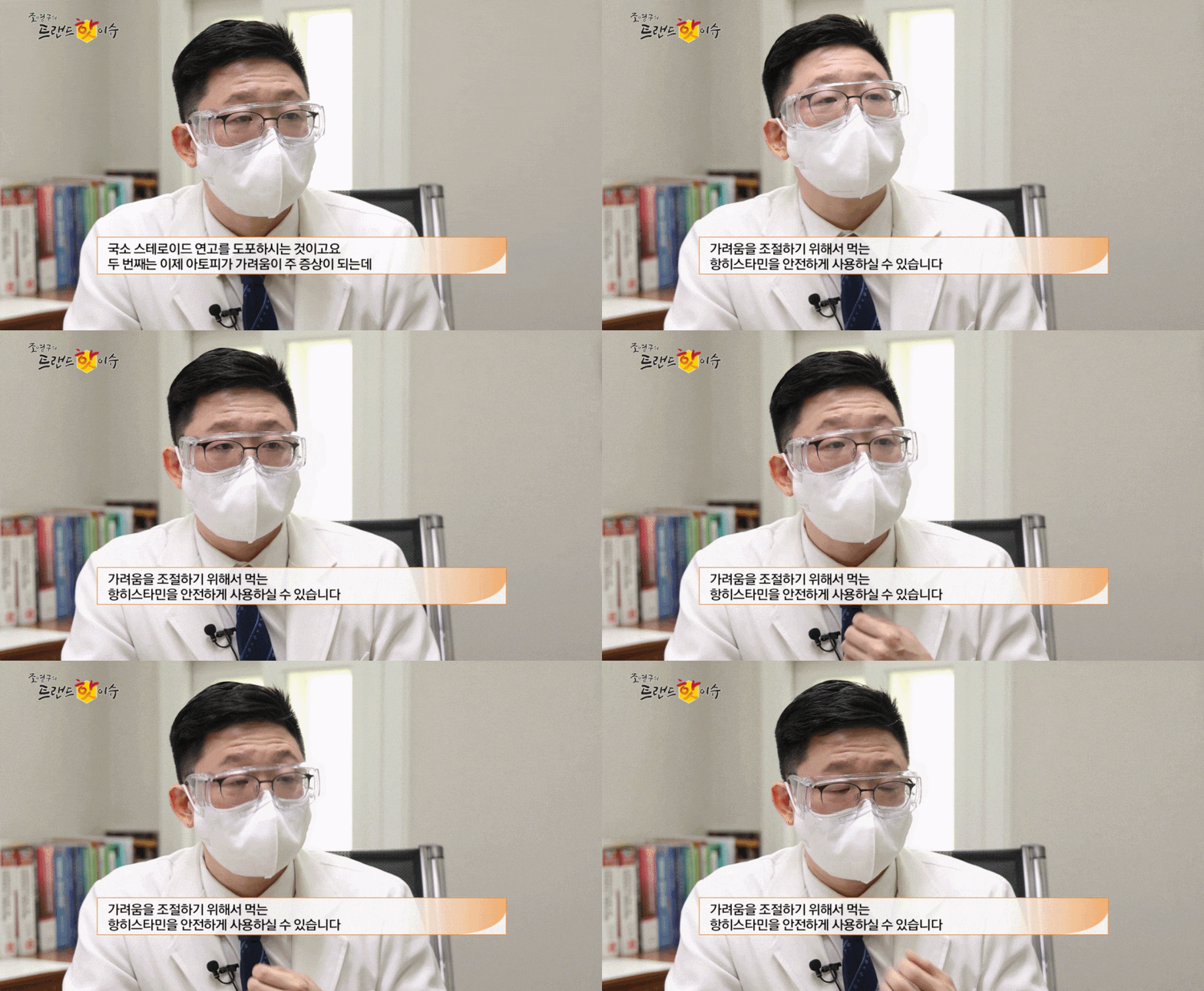
In particular, steroid ointments can help quickly relieve inflammation, but if the instructions for use or the treatment period are not followed, they can instead burden the skin.
Therefore, rather than judging based only on symptoms, a treatment plan that also considers the current skin condition and the degree of progression is necessary.
Treatment direction tailored to skin condition
The key to treating seborrheic dermatitis is to understand the current skin condition in detail.
During periods of severe inflammation, it is important to reduce irritation first and stabilize the skin, and then manage it in a way that helps reduce recurrence.
In general, inflammation may be controlled through ointment treatment, or if itching is severe, treatment to relieve symptoms may be used alongside it.
Also, if symptoms recur or are difficult to control with ointment treatment alone, laser treatment or methods that help support skin regeneration may be considered together.
In this way, rather than trying to solve seborrheic dermatitis with a single method, it is important to flexibly adjust the treatment direction according to the skin condition and timing.

Seborrheic dermatitis is not a simple skin issue, but a chronic skin disease that repeatedly recurs and worsens.
That is why, rather than responding each time symptoms appear, it is important to establish both treatment and care directions that match the current skin condition.
In particular, with ointment treatment, it is necessary to follow the proper usage guidelines, and indiscriminate use should be avoided.
If you are experiencing discomfort from seborrheic dermatitis as introduced today, I hope you can maintain a more stable skin condition through a diagnosis and treatment plan suited to you.
Thank you.
| This post was written for informational purposes in compliance with Article 56, Paragraphs 1–15 of the Medical Service Act. All treatments carry the risk of side effects and complications depending on the individual. Before treatment, please be sure to consult thoroughly with experienced medical staff before making a decision. |