Have you ever tossed and turned at night because of itching before falling asleep?
Especially in adolescence, atopic dermatitis often goes beyond simple skin discomfort and can disrupt daily life itself.
It can make it hard to concentrate in class, cause fatigue from not sleeping properly, and even lead to stress about appearance.
That is why many people look for steroid ointment to quickly calm the symptoms.
However, in this process, many people think more about how to use it than whether they can just apply it.
Today, I will explain the key points you should know when using steroid ointment for teen atopic dermatitis.
-Singil Station Dermatology Clinic Column Outline-
- Why teen atopic dermatitis is more sensitive
- Why steroid ointment is needed
- The one standard you must follow when using ointment
Why teen atopic dermatitis is more sensitive
Adolescence is a time when skin condition is difficult to keep stable.
This is because hormonal changes repeatedly occur along with physical growth, making skin condition easy to fluctuate.
When the skin barrier function becomes weaker during this period, its ability to block external irritation drops, and as a result, an environment where itching and inflammation repeat can develop.
If academic stress or lack of sleep is added on top of that, the skin’s recovery speed can also slow down.
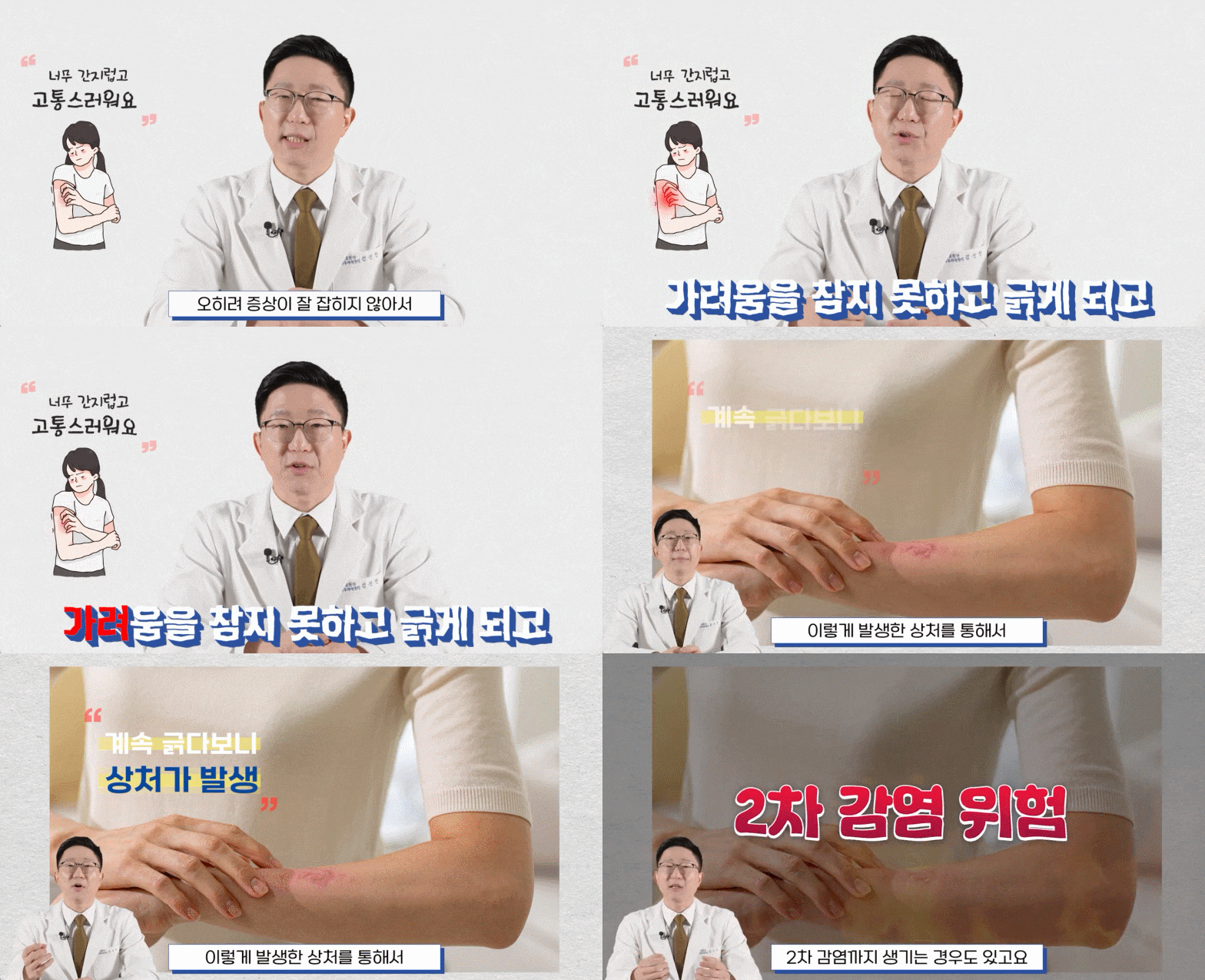
In particular, during this period many people cannot tolerate the itching and scratch repeatedly, and there are not a few cases in which the skin damage becomes deeper or spreads wider.
In the end, simple moisturizing care reaches its limits, and treatment to control the symptoms becomes necessary.

Why steroid ointment is needed
Atopic dermatitis is one of the chronic skin diseases in which inflammatory reactions repeatedly occur inside the skin.
If this inflammation continues, the skin gradually becomes more sensitive and may easily react even to small irritations.
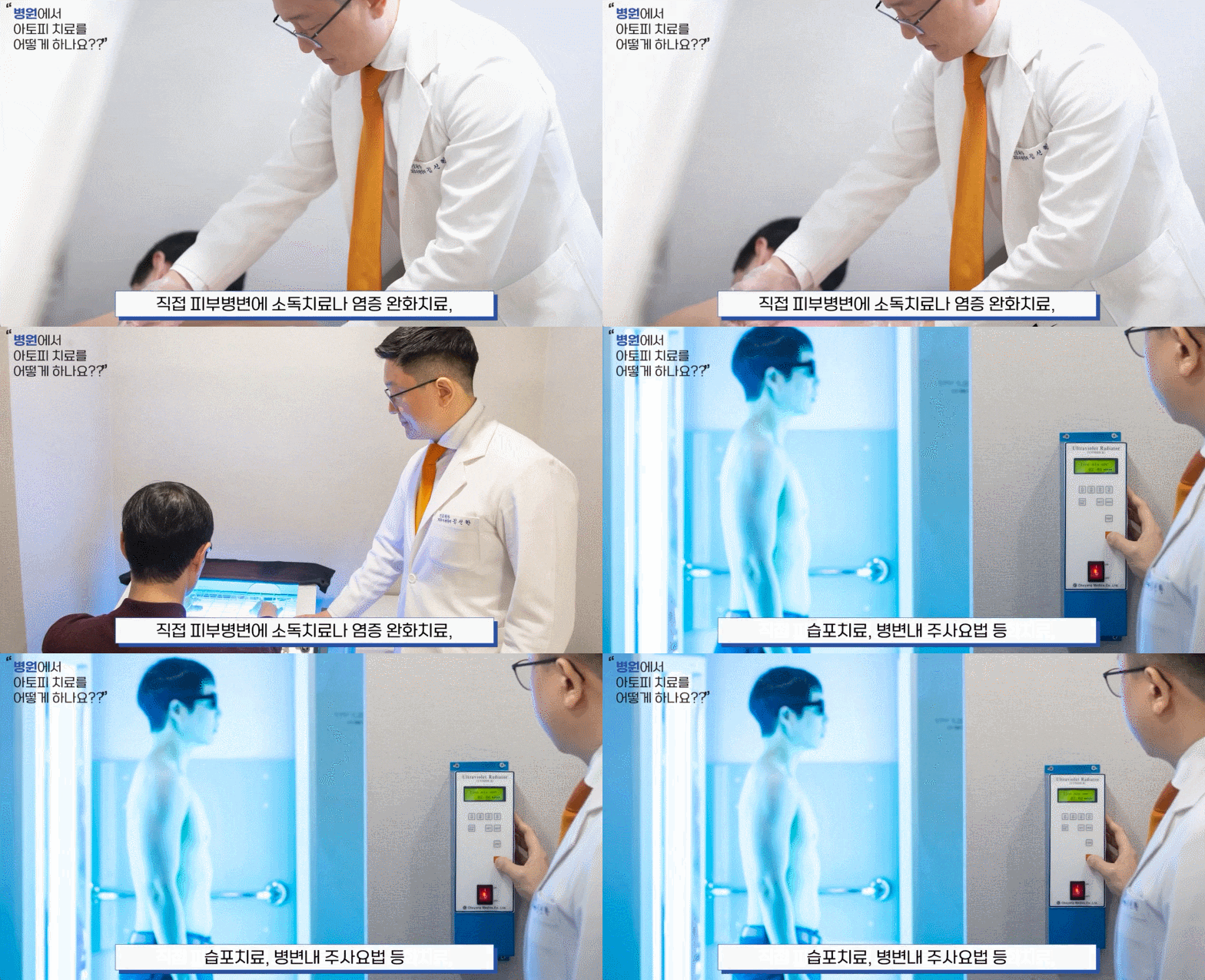
At this time, steroid ointment plays a role in quickly reducing the inflammatory response and stabilizing the skin condition.
When itching decreases, scratching behavior also decreases, and as a result, skin damage is reduced as well.
In addition, you can also expect improvements such as reduced redness and softened thickened skin.
However, steroid ointments have different strengths and usage standards, so even the same product may require a different application method, which means caution is needed.
In other words, because the usage method can differ depending on age, area, and symptom severity, it should be used according to your condition rather than simply applied.
The one standard you must follow when using ointment
The most important part of treating teen atopic dermatitis is not stopping the ointment suddenly.
When symptoms improve, you may want to stop using it right away, but if you quit too abruptly, the skin condition can become bad again.
Even if it looks better on the outside, in many cases the inflammation inside the skin has not yet been fully cleared.
If you stop the ointment in this state, itching may return or the symptoms may spread more widely.
That is why, in the early stage of treatment, it is important to use the ointment sufficiently to stabilize the inflammation, and then gradually reduce the frequency or amount of use so the skin can maintain a stable condition.
Going through this process helps reduce repeated flare-ups and allows for more stable management.
Basic lifestyle management should also be done alongside ointment treatment.
When showering, it is important to use lukewarm water rather than water that is too cold or too hot, and after showering, to care for the skin so it does not become dry.
When this kind of daily care is carried out together, the expected effects of ointment treatment can also be maintained more steadily.
Teen atopic dermatitis, which I explained today, is a condition that can affect daily life as a whole, beyond being a simple skin problem.
Therefore, rather than leaving symptoms untreated when they appear, it is important to carry out management and treatment that fit the current skin condition.
If you are experiencing discomfort due to atopic dermatitis, I hope you can maintain a stable condition through proper diagnosis and a management plan.
I hope today’s information was helpful.
Thank you.
| This post was written for informational purposes in compliance with Article 56, Paragraphs 1–15 of the Medical Service Act. All treatments carry the risk of side effects and complications depending on the individual. Before treatment, be sure to have a thorough consultation with medical staff with extensive experience before making a decision. |