Recently, JTBC Docu Plus introduced vitiligo and changes in skin color.
It was emphasized that although vitiligo may look like a simple change in skin tone on the surface, there can actually be entirely different causes behind it.
In fact, changes in skin color are often overlooked more lightly than expected.
One day, while looking in the mirror, you may notice that one side of your skin looks unusually lighter, or that its color feels slightly different from the surrounding area.
In particular, areas that appear whiter than the existing skin tone may show up as small spots or spread faintly, so many people think it is only a temporary change and let it pass.
But if the color does not return over time, or the border becomes clearer and the area expands, you may begin to realize that it may not be a simple skin change.
Unlike the visible color change, other changes may also be taking place inside the skin.
A representative example is vitiligo.
Vitiligo is not simply a problem of color change, but a condition in which changes in the skin itself occur as well.
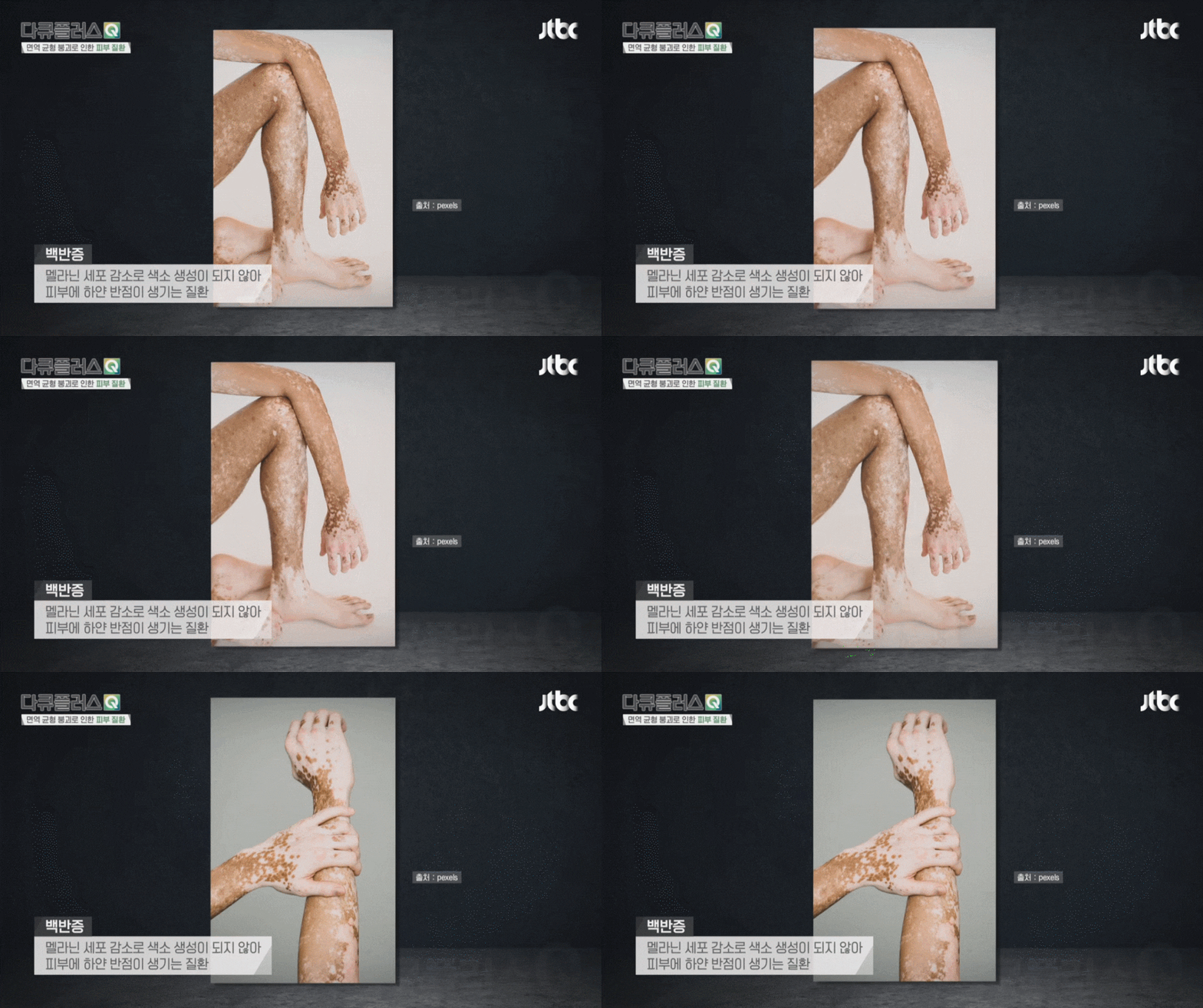
Vitiligo,
Why It Is Hard to See It as a Simple Color Change
Vitiligo is known as a condition in which skin color is lost, but in reality it is centered on a decrease in or loss of melanocyte function.
On the surface, it looks like a lightening of skin color, but beneath that, the skin’s ability to produce color itself is impaired.
Therefore, rather than judging it only by the result of a color change, it is necessary to also check why that change appeared.
In some cases, immune responses affect melanocytes and the condition may progress in a way that damages the cells themselves.
In such cases, it may be difficult to expect sufficient improvement with methods that simply compensate for color.
Also, in the early stages, color changes may not be obvious or the borders may appear blurred, making it easy to mistake them for a temporary skin tone change.
However, as time passes, the area of pigment loss can gradually widen, so it is important to accurately assess the early stage.
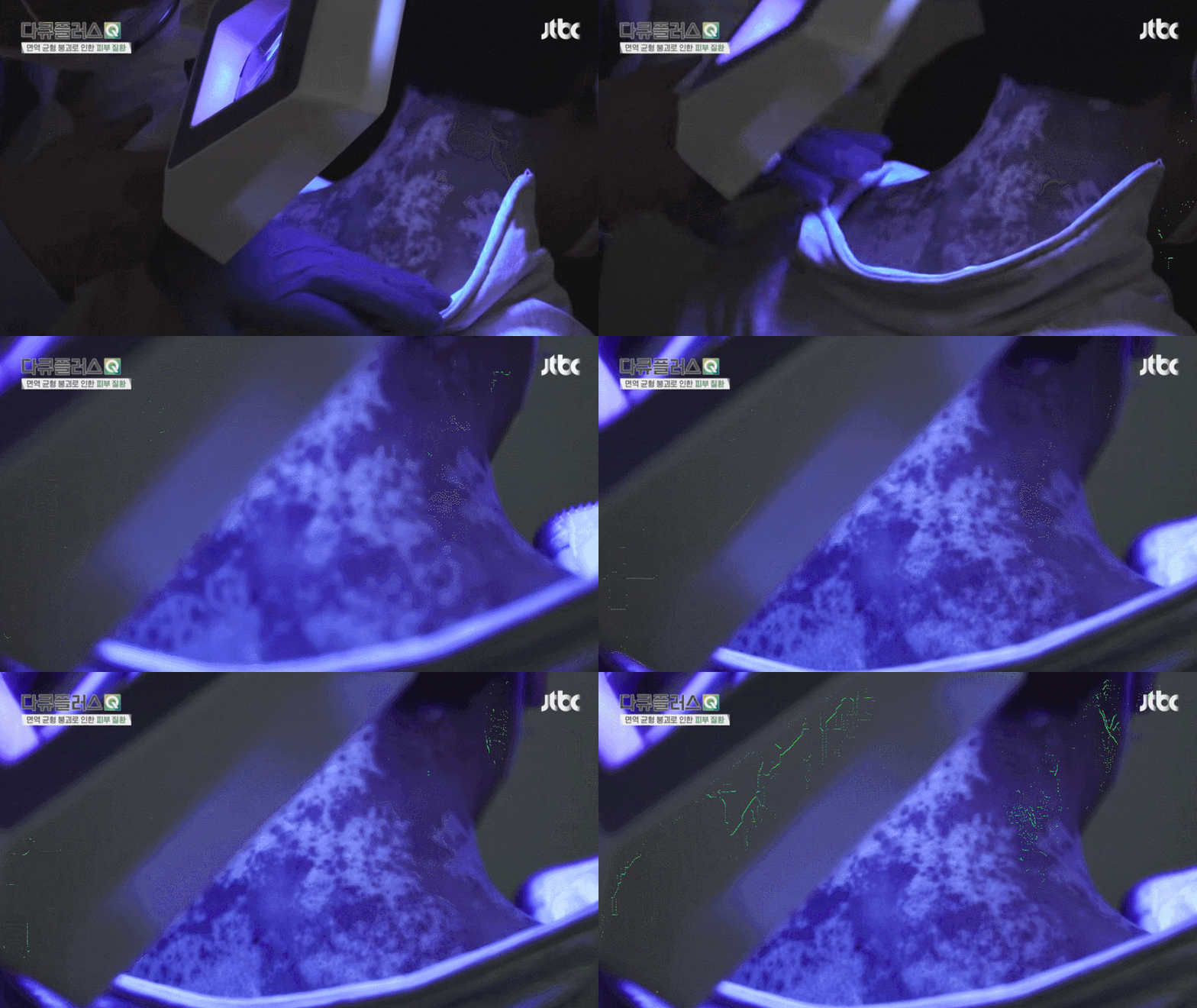
Treatment Directions That Change Depending on Skin Condition
Vitiligo treatment should not be applied in the same way with a single method; it is necessary to take an approach that differs depending on the current skin condition.
The treatment direction changes depending on whether the symptoms are progressing or whether they are in a stable stage.
If the condition is progressing, suppressing further spread is considered first, while in a stable state, treatment to induce pigment recovery becomes the focus.
In this process, phototherapy or excimer laser treatment is used, helping stimulate melanocyte activity so that pigment can be produced.
However, even with the same treatment, there are individual differences in skin response and recovery speed, so it is important to adjust the treatment direction while monitoring the course.
Also, depending on the location and extent of the lesion, the appropriate treatment method can differ, so more important than the treatment method itself is an approach suited to the current condition.
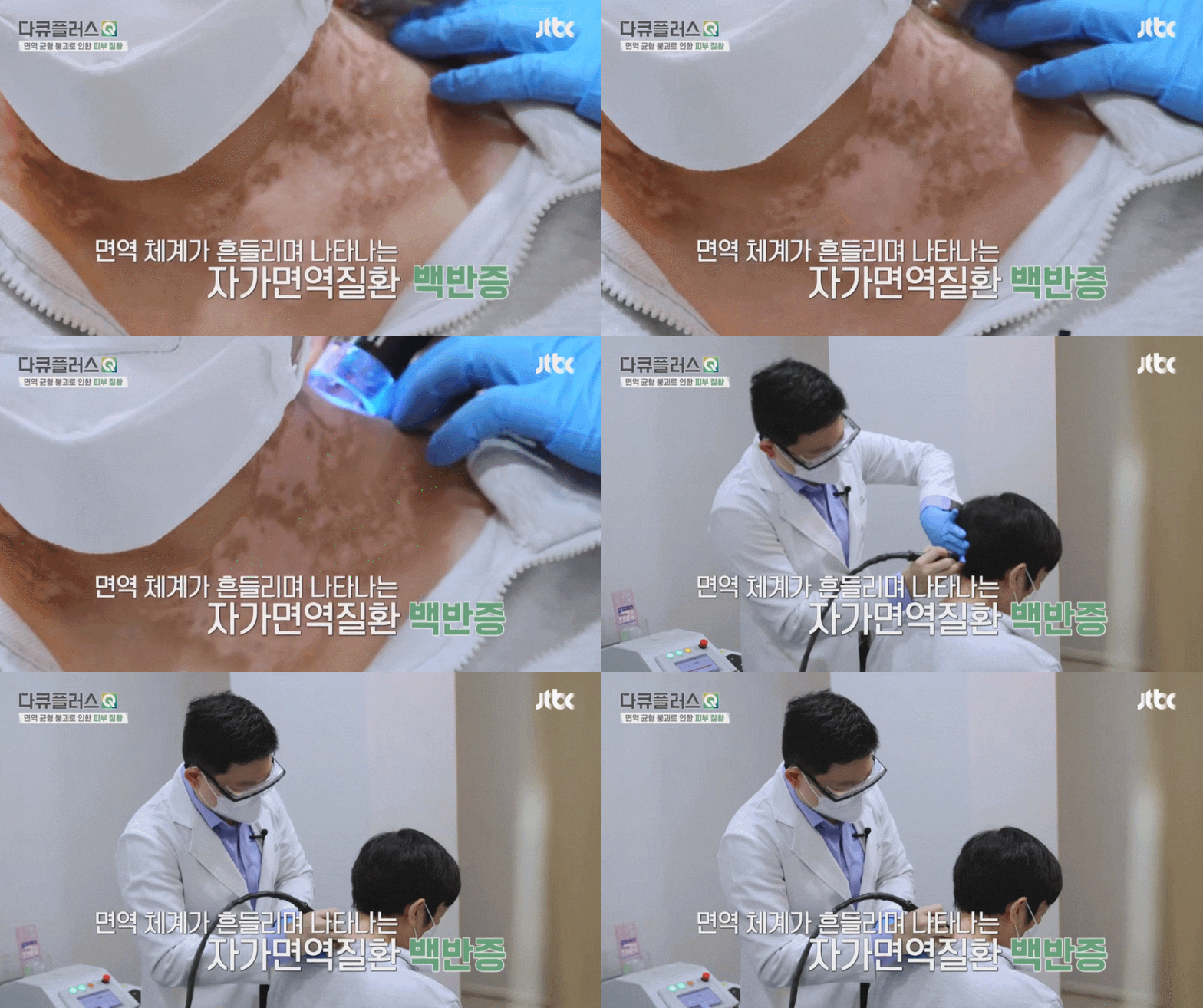
The Importance of Management Considering Recurrence and Spread
Vitiligo is a condition that must be managed with post-treatment care in mind as well.
Even if the color has recovered to some extent, if the skin condition is not sufficiently stable, changes in pigment loss may appear again.
In particular, exposure to ultraviolet light, ongoing skin irritation, and changes in immune status may be related to recurrence or spread of vitiligo.
Therefore, even after treatment, it is important to minimize skin irritation and consistently maintain sun protection.
If needed, it may be helpful to continue observing the skin condition for a certain period while combining supportive treatment.
Only when this kind of management is carried out together can a more stable condition be expected.

Vitiligo may seem like simply a problem of skin color change, but behind it, changes in the skin condition are also at work.
So rather than focusing only on matching the color, it is important to carefully check the current skin condition and set a treatment direction accordingly.
If the condition is checked early and treatment is started at the right time, more stable improvement can be expected.
If you notice a change in skin color, it may be helpful to check your current condition rather than dismissing it as temporary.
Going forward, Gyepi Dermatology will continue to do its best to provide more accurate and helpful skin information based on real clinical experience.
Thank you.
| This post was written for informational purposes in compliance with Article 56, Paragraphs 1 to 15 of the Medical Service Act. All treatments carry the risk of side effects and complications depending on the individual. Before treatment, please be sure to make a sufficient consultation with experienced medical staff before making a decision. |