"Why does acne keep coming back even after treatment?"
"Why doesn’t simple care alone solve the problem?"
Many people worry about acne that keeps recurring and find it hard to understand the cause.
At first, it may start with just one or two spots on the skin, but as time passes, the number gradually increases, and if it keeps calming down and then flaring up again, it can start to feel like more than just a simple skin problem.
Especially when acne appears right before an important schedule, it can create stress, sometimes without you even realizing it.
In this way, acne is one of the skin conditions that requires not only care for what is visible on the surface, but also management aimed at reducing recurrence.
So today, I will explain why acne keeps recurring and what treatment direction can help reduce recurrence.
-Yeouido-dong Dermatology column outline-
-
Why acne recurs
-
Why acne treatment needs to be different
-
How to manage acne to reduce recurrence
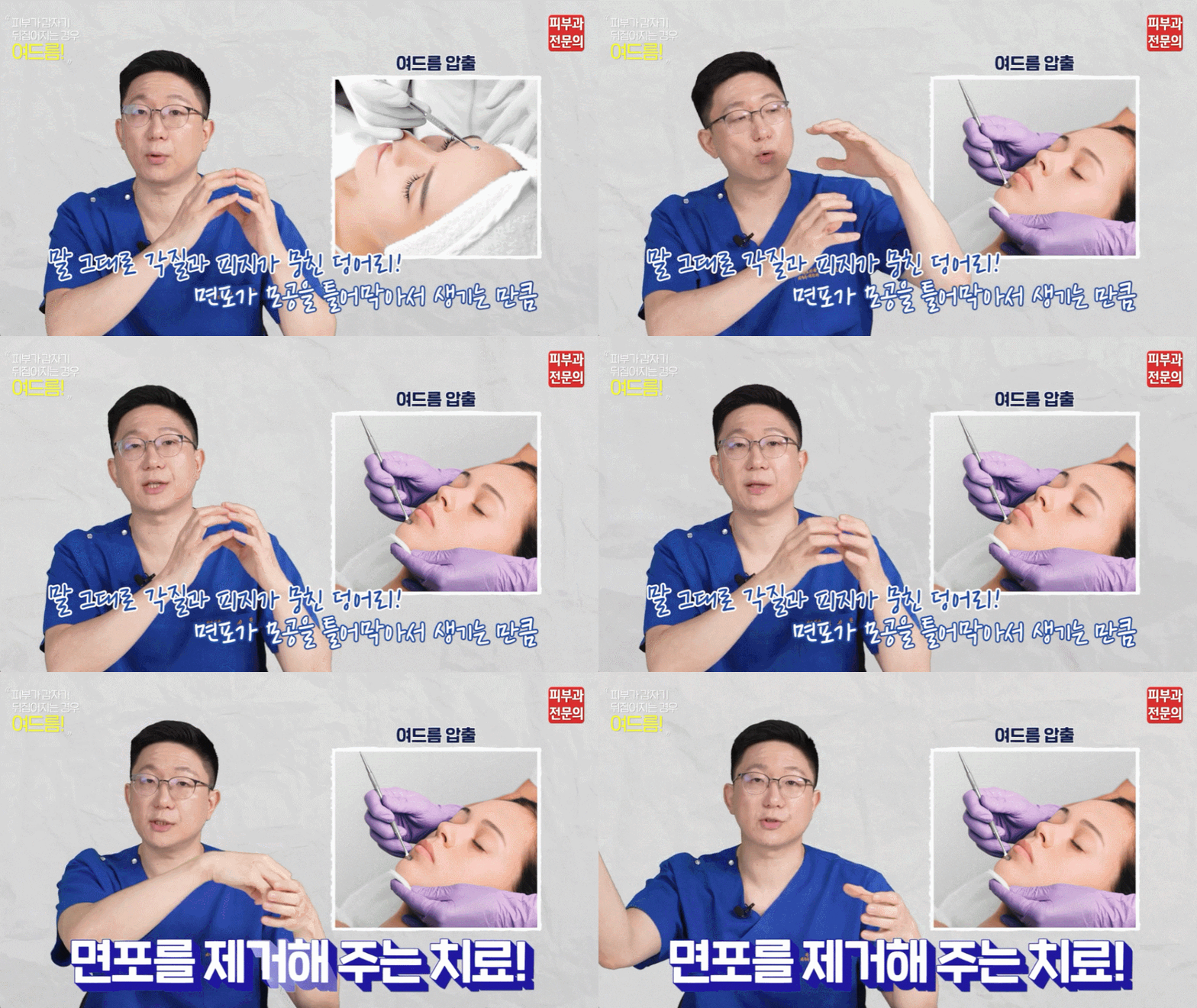
Why acne recurs
Acne is a skin condition that occurs when increased sebum production, clogged pores, and inflammatory responses act together.
In particular, symptoms can appear more easily during periods when hormone secretion or sebum production is active.
In addition, skin irritation and lifestyle habits can affect the skin, causing acne to repeatedly occur in the same area.
Also, if the skin is not properly cared for once inflammation has already developed, scarring or pigmentation changes can occur.
As such, acne tends to persist not because of a single simple cause, but because multiple factors work together.
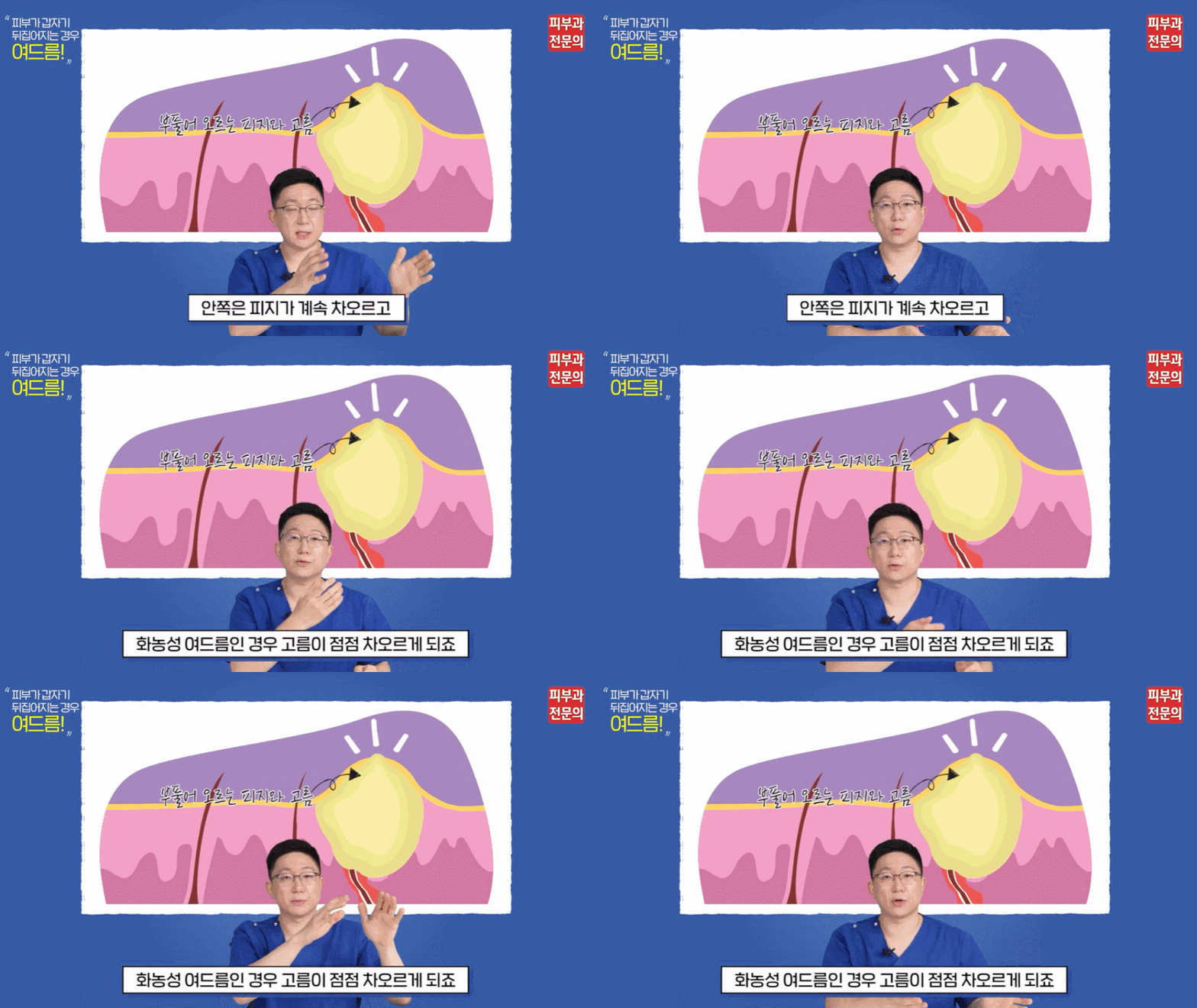
Why acne treatment needs to be different
Even though acne may look similar on the surface, the treatment method can differ depending on the type and stage of progression.
Comedonal acne and inflammatory acne require different approaches, and the management direction may also vary depending on whether the skin produces a lot of sebum or whether the skin barrier has become weakened.
In addition, because the treatment plan may change depending on whether acne is present or whether it recurs, an approach that considers each individual’s condition is necessary.
Also, temporary care alone often makes it difficult to improve symptoms, so a systematic treatment plan is important.
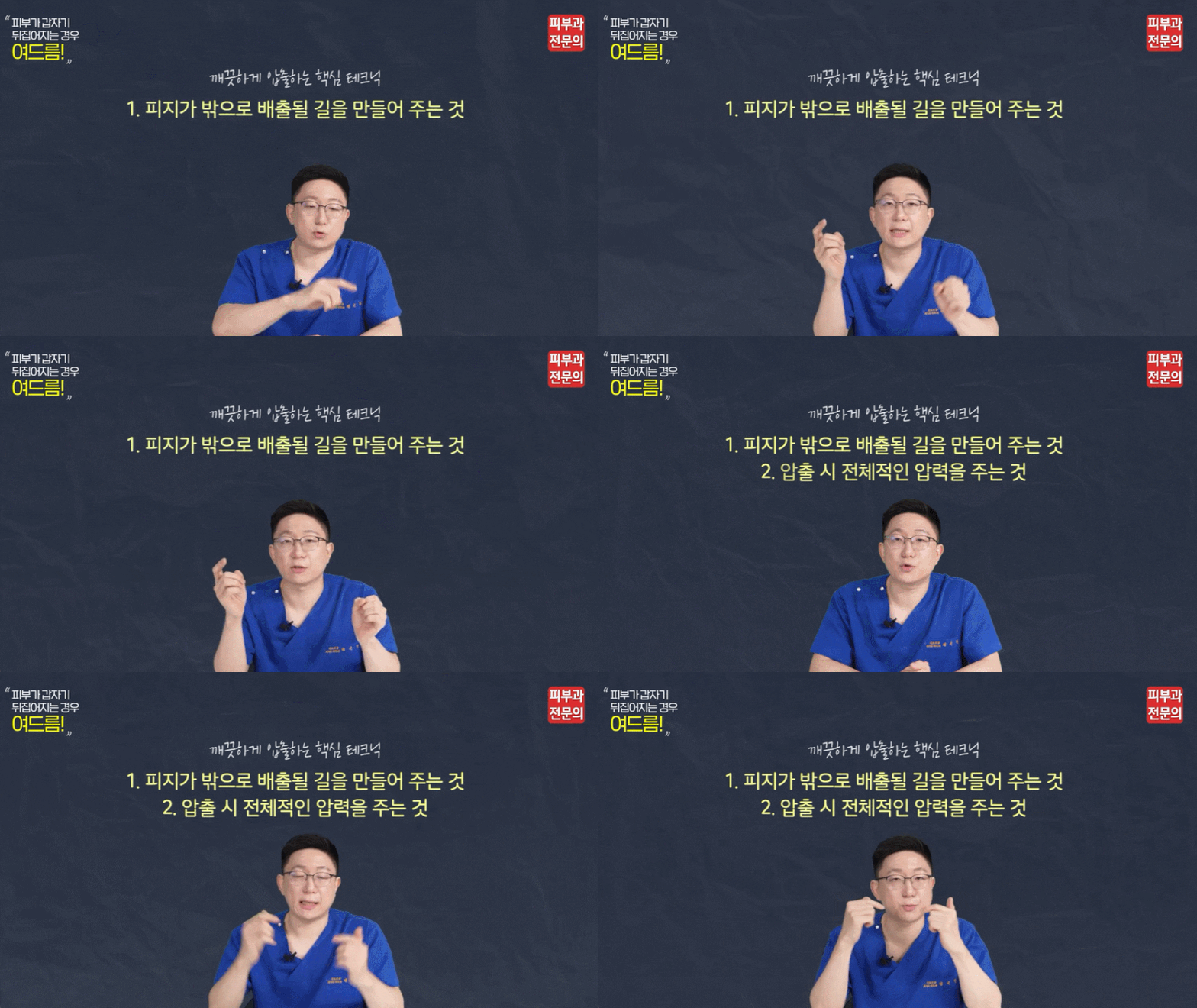
How to manage acne to reduce recurrence
For acne to remain in a more stable condition, daily care should be carried out alongside treatment.
When washing your face, it is best to avoid habits that irritate the skin, and it is important to manage sebum and impurities appropriately.
It is also necessary to maintain moisturizing suited to the skin condition so that the skin barrier does not break down.
Because lifestyle habits can also have an effect, considering the overall daily rhythm, such as sleep, diet, and stress management, can be helpful.
Above all, what matters most is continuing care rather than stopping management just because symptoms have improved.

Acne may seem like a simple skin issue, but if it keeps recurring, it is worth reviewing the direction of care again.
That is why treatment and management aimed at reducing recurrence should be carried out together, rather than only reducing visible symptoms.
In particular, because treatment methods and care can differ depending on the skin condition, it is important to find the approach that suits each person.
And most importantly, rather than judging these symptoms on your own, it is better to visit a clinic, have the symptoms examined, and then establish the direction for treatment and management.
If you are concerned about acne, we recommend visiting our Yeouido-dong dermatology clinic to set up an appropriate diagnosis and treatment plan together.
We hope the information shared today about acne management and treatment methods to reduce recurrence will be helpful to you.
Thank you.
| This post was written for informational purposes in compliance with Article 56, Paragraphs 1 to 15 of the Medical Service Act. All treatments carry the risk of side effects and complications depending on the individual. Before treatment, please be sure to have a thorough consultation with experienced medical staff before making a decision. |