There are moments when you feel like your skin is not the same as before.
This is when skin irritation that used to calm down quickly lasts longer, small breakouts leave red marks easily, or the skin overall feels thinner.
Especially when your skin becomes more sensitive easily and dryness or itching starts to repeat, you may think it is just a matter of skin condition. However, changes in the skin are often connected not only to visible issues on the surface, but also to changes in the environment inside the skin.
One of those factors is “collagen.”
It is easy to think of skin collagen as something that only determines skin elasticity, but in reality, it plays an important role in maintaining skin structure and protecting the skin from external irritation.
Today, through JTBC Docu Plus Q, I will explain the relationship between collagen and skin disease, as well as what criteria should be used for skin care in order to maintain healthy skin.

What role does collagen play in the skin?
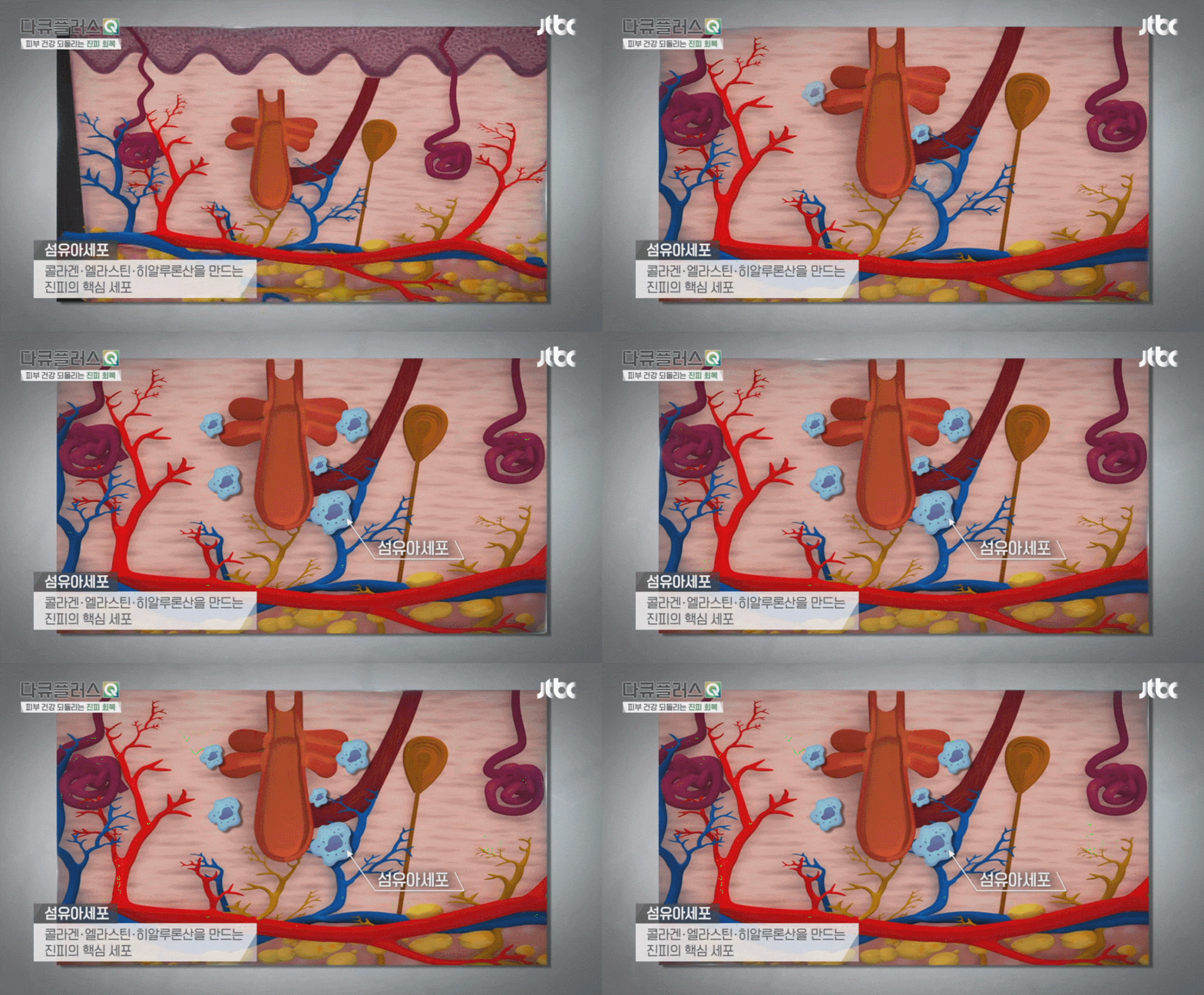
Collagen is one of the important components that makes up the dermis layer of the skin.
It supports the structure inside the skin and is also involved in maintaining skin elasticity.
However, collagen’s role is not limited simply to skin elasticity.
This is because it also affects the maintenance of skin structure so that the skin can protect itself from external irritation.
The problem is that as we age, collagen production can gradually decrease.
In addition, factors such as ultraviolet rays, stress, and lack of sleep can also contribute to a reduction in collagen.
When the environment inside the skin changes like this, the skin barrier can also weaken, leading to a state where the skin reacts more easily to external irritation.

The relationship between skin disease and the skin barrier
The skin barrier plays a role in protecting the skin from external irritation.
However, when the skin barrier is weakened, the skin becomes easily sensitive even to small irritations.
In particular, conditions related to the skin barrier, such as atopic dermatitis and seborrheic dermatitis, may show repeating symptoms of itching and redness.
Also, as the skin becomes dry, flaking and irritation responses can appear more easily, and the skin’s recovery speed also slows down.
And acne is also often repeated in connection with changes in the skin environment.
This is because if skin irritation continues or an imbalance in the skin persists, inflammatory reactions can also keep recurring.
That is why, with skin diseases, it is important not only to manage the visible symptoms on the surface, but also to look at the skin environment itself.
Criteria for healthy skin care
To maintain healthy skin, it is important to keep the skin environment stable.
First, excessive cleansing or using products with strong irritation can weaken the skin barrier, so it is better to avoid them.
Also, ultraviolet rays are one of the factors that can affect collagen reduction, so daily UV protection is important as well.
Along with this, if lack of sleep or stress repeats, skin condition can also easily become unstable.
So skin care is not just about managing the outer surface of the skin; it is also necessary to address lifestyle habits.
In particular, if skin disease keeps recurring, rather than trying to manage it alone, it can be helpful to first accurately check the current condition of the skin and then set an appropriate direction for care.

The skin is not simply what you see on the outside; it is also affected by changes in the environment inside the skin.
In particular, collagen and the skin barrier can play an important role in maintaining healthy skin.
If skin disease keeps recurring or your skin is becoming easily sensitive, rather than seeing it as just a simple skin issue, it is necessary to accurately check the current condition of the skin.
Also, skin care is not something that ends in a short period of time; it is important to continue it consistently along with your lifestyle habits.
I hope today’s content was helpful for healthy skin care.
Thank you.
| This post was written for informational purposes in compliance with Article 56, Paragraph 1 through Paragraph 15 of the Medical Service Act. All treatments carry the risk of side effects and complications depending on the individual. Before treatment, please be sure to have 충분한 상담 with experienced medical professionals and make your decision afterward. |