Acne is often something that is hard to feel has truly ended just because it has improved once.
Even when your skin seems temporarily clear, if breakouts start appearing again at some point, it can lead to the question, “Why does it keep repeating?”
In particular, after extraction or scaling, the skin may feel cleaned up, but as time passes, similar breakouts can recur in the same areas.
Because of this, acne is not something where you should only reduce the visible symptoms; it is also important to check the causes of recurrence.
Today, I will explain what should be checked to help reduce recurrence after acne treatment.
- Omokgyo Station Dermatology Column Order -
-
Why acne keeps recurring
-
How acne treatment is carried out
-
What to check to reduce recurrence
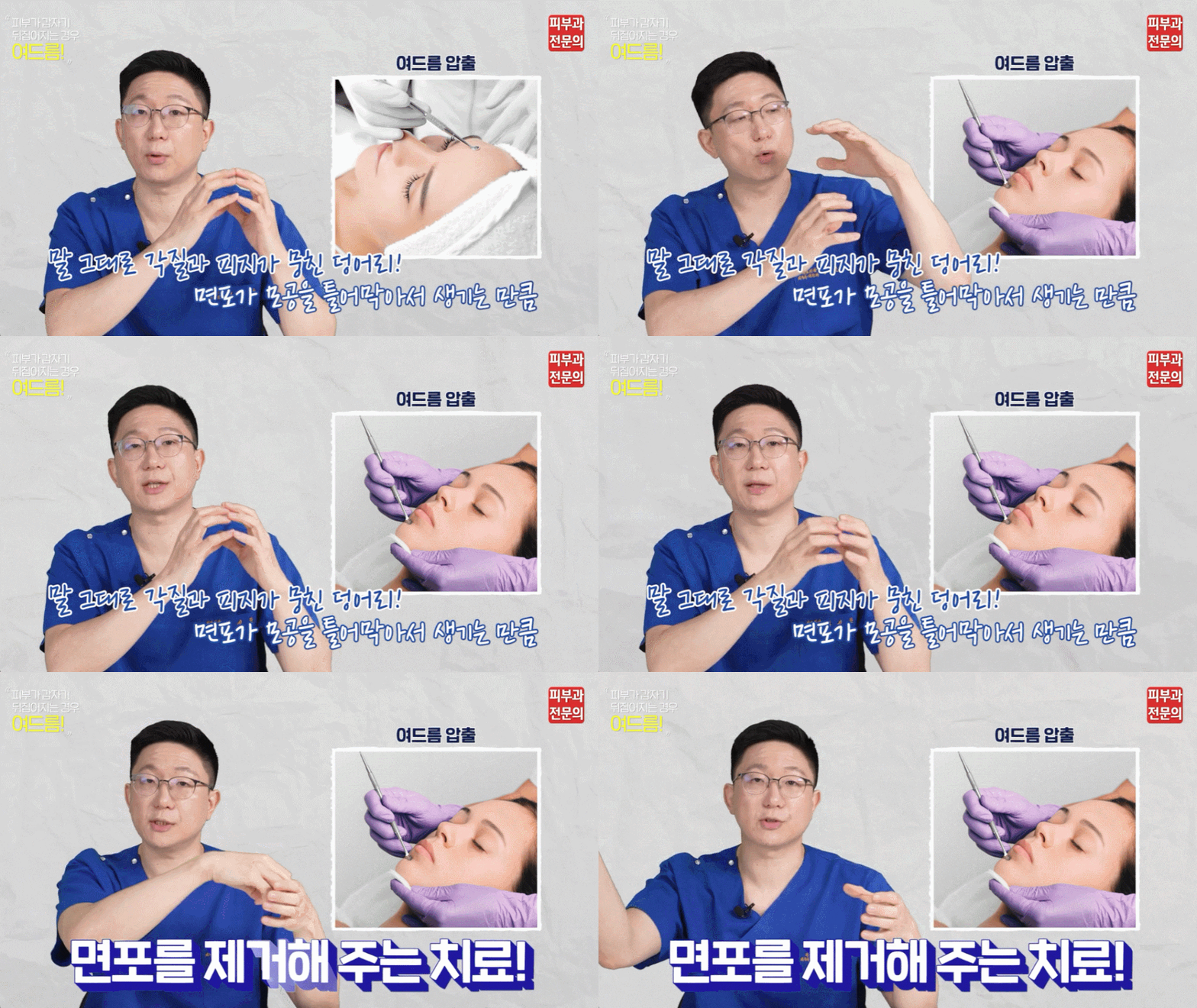
Why acne keeps recurring
Acne refers to a skin condition that appears when factors such as sebum secretion, clogged pores, and inflammatory reactions act together.
In particular, when sebum secretion is active, sebum and dead skin cells can easily build up inside pores, and inflammation may repeat during this process.
In addition, lifestyle factors such as stress, lack of sleep, and eating habits can also affect the skin environment.
So even if it improves temporarily, if the skin environment itself remains the same, it can continue in a pattern of recurrence.
Habits such as frequently touching the skin with your hands or forcing extractions can also worsen inflammation.
In this way, acne is often influenced not only by the skin’s surface issues but also by the skin environment and lifestyle factors.
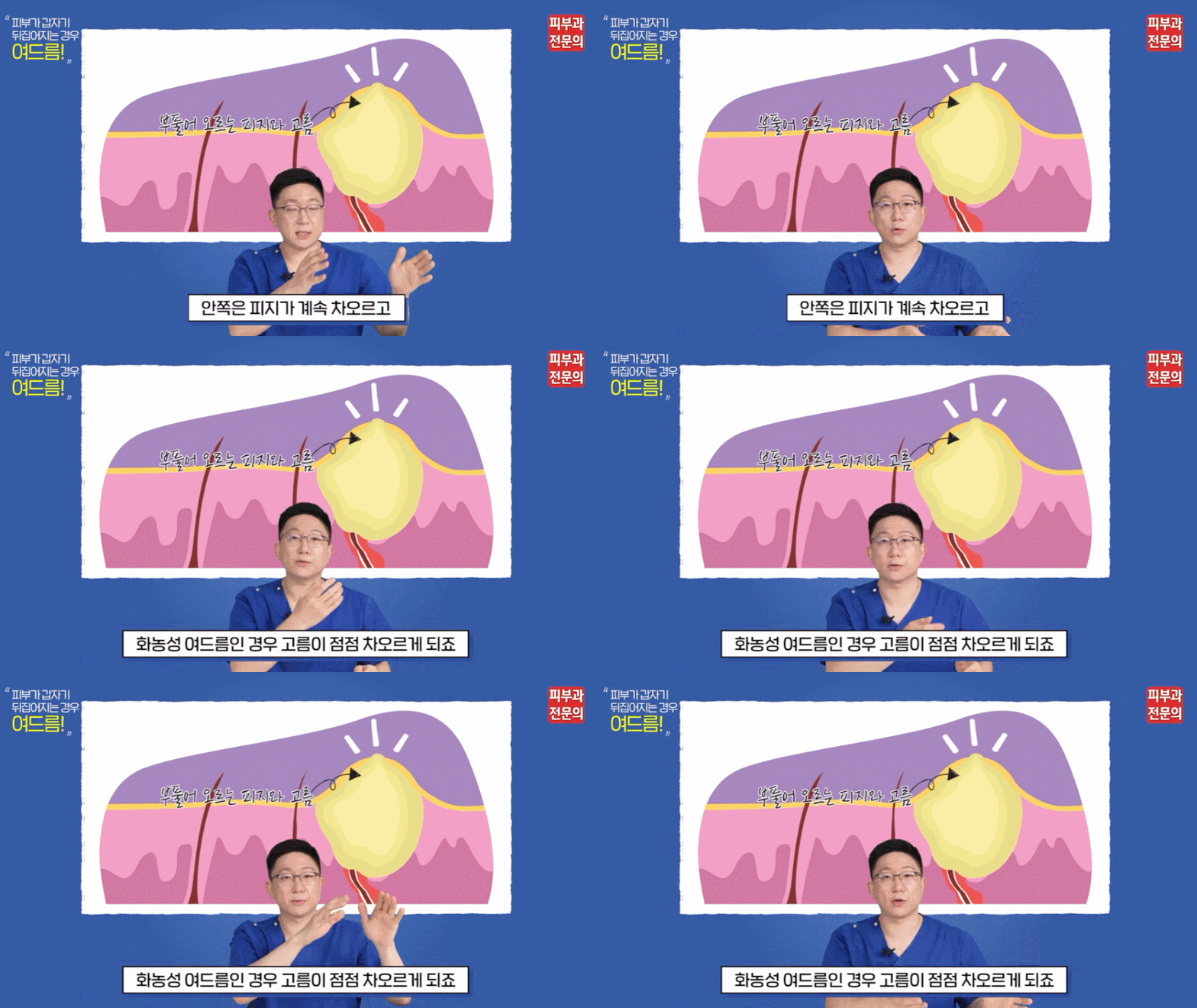
How acne treatment is carried out
Acne treatment may vary depending on the current condition of the skin.
When inflammatory acne keeps recurring, treatment to reduce inflammation within the skin may be considered first, and medication treatment may also be carried out if needed.
In addition, when sebum and dead skin cells repeatedly build up, care such as extraction or scaling may be combined.
What matters in this process is not repeatedly applying strong treatment unconditionally, but approaching it according to the current skin condition.
This is because, especially when the skin has become sensitive, excessive stimulation can instead lead to red marks or damage to the skin barrier.
Even for the same acne, the treatment direction may differ depending on skin type and the degree of inflammation.
That is why it is important to check the overall current condition of the skin rather than looking only at the number of breakouts.
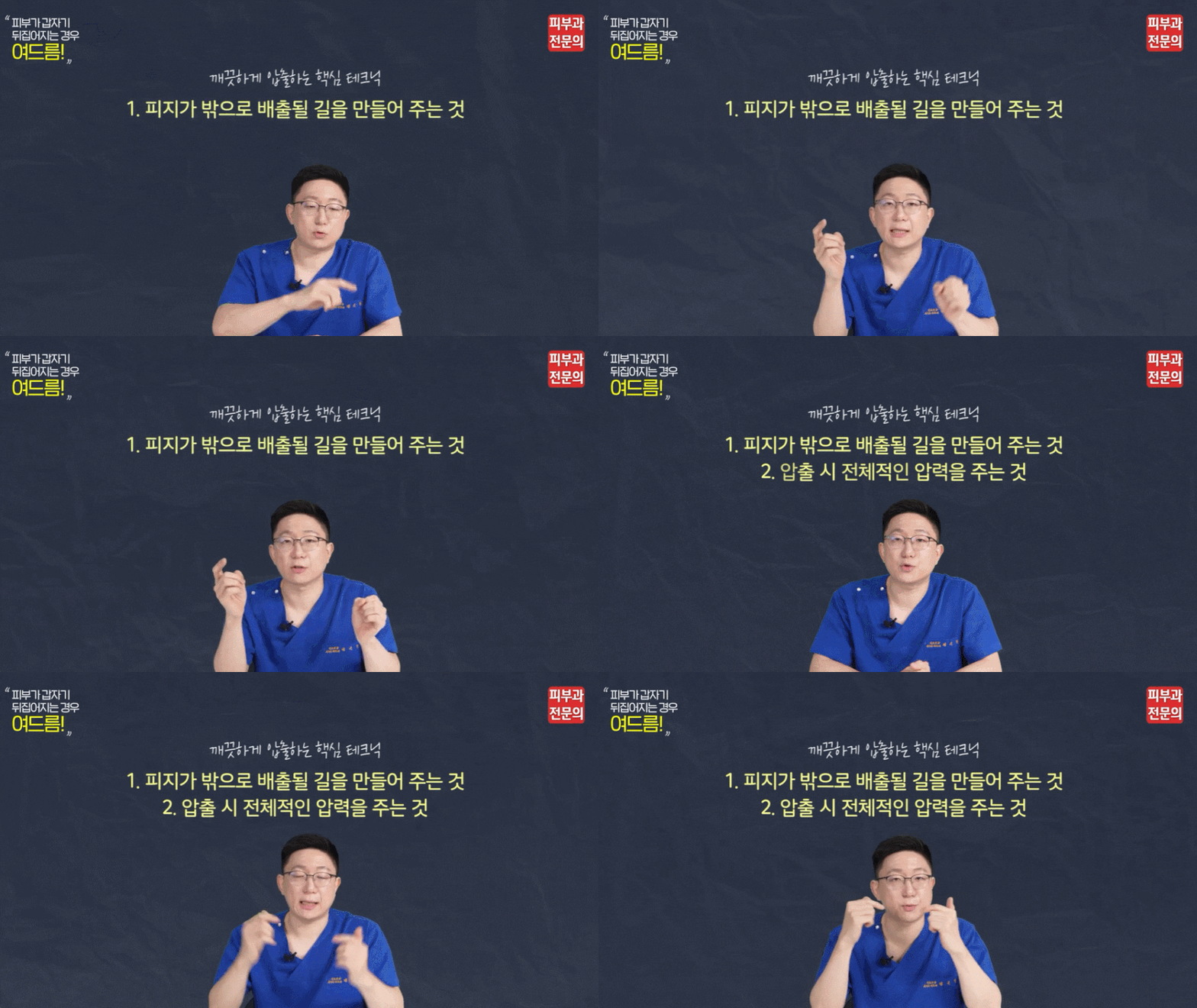
What to check to reduce recurrence
After treatment, management is also important for acne.
This is because if lifestyle patterns remain the same even after the skin improves, sebum secretion and inflammation can recur.
In particular, lack of sleep and stress can easily destabilize skin condition, and oily foods or irritating eating habits can also have an effect.
Also, if you wash your face too often because your skin feels oily, the skin barrier may instead become weaker.
So for acne-prone skin, maintaining balance in the skin is more important than simply removing sebum.
Above all, the most important thing is not to dismiss recurring acne as just a simple skin issue.
Checking the skin condition early and setting a treatment and care plan that matches the current state can help reduce recurrence.

Acne is not just a temporary skin problem that appears from time to time; it is a condition that often shows a recurring pattern.
In particular, because the skin environment and lifestyle habits can both have an effect, it is important not only to manage the visible symptoms but also to check the causes of recurrence.
In addition, when treatment and care suited to the current skin condition are carried out together, they can help maintain a more stable skin condition.
If you are worried because acne keeps recurring, rather than managing it alone, I hope you will first check your current skin condition and then establish an appropriate treatment direction.
I hope the information shared today was helpful to you.
Thank you.
| This post was written for informational purposes in compliance with Article 56, Paragraphs 1–15 of the Medical Service Act. All treatments carry a risk of side effects and complications depending on the individual. Before treatment, be sure to consult sufficiently with experienced medical staff before making a decision. |