There are times when, while looking in the mirror, you notice an area of skin that looks different in color from before.
At first, many people dismiss it as a simple skin change, but if the skin color does not return over time or similar spots begin to appear one by one, concern can grow.
In particular, after treating vitiligo, if it seems to have improved for a while but white patches start to become noticeable again, it can lead to the question, “Why are the symptoms coming back?”
In this way, rather than thinking of vitiligo as only a change in skin color, it is important to look at the current skin condition and symptoms together.
Today, I will explain vitiligo based on the content that Director Kim Shinhan of Gye Dermatology explained on JTBC Documentary Plus Q.
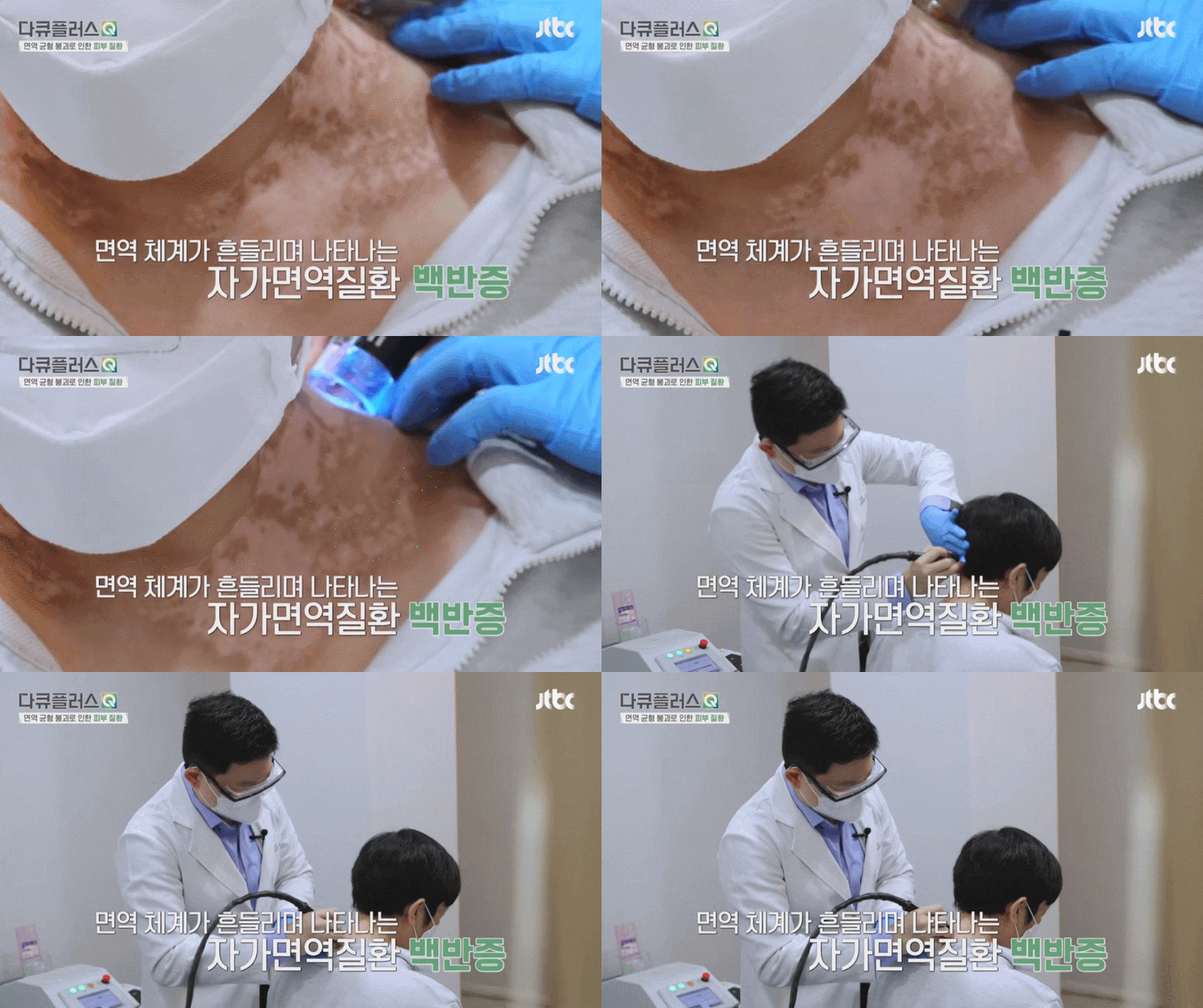
Why Does Vitiligo Repeat?
Vitiligo is a condition that occurs when melanocytes, the cells that produce skin color, do not function properly.
It can appear as white patches on the skin, and the extent may change over time.
In particular, vitiligo often involves periods when symptoms progress and periods when the condition is relatively stable.
So even if it seems unchanged for a while, symptoms may become noticeable again after stress, accumulated fatigue, or changes in daily routines.
Repeated skin irritation or situations that disrupt immune balance can also affect changes in symptoms.
Because vitiligo is often not just a problem on the surface of the skin but something that appears together with changes in the skin’s internal environment, it is important to accurately check the current condition.

How Is Vitiligo Treatment Performed?
Vitiligo treatment can vary depending on the current skin condition and the degree to which symptoms are progressing.
If the symptoms are progressing, the approach should focus on reducing the spread of the condition, and ointment treatment may be used depending on the skin condition.
Also, if the symptoms remain unchanged for a certain period, treatment to help restore pigmentation may be considered.
A representative example is excimer laser treatment, which uses light of a specific wavelength to selectively target the affected area.
This treatment is carried out in a way that stimulates melanocytes and encourages pigment recovery, and it is sometimes applied to vitiligo that appears on certain areas of the skin.
However, what is important here is that vitiligo treatment is not a method that ends in a short time; rather, it is a process of adjusting while observing the skin’s response.
Even for the same vitiligo, the treatment approach can differ depending on the location and extent of the lesions and the stage of progression.
Therefore, before starting treatment, it is necessary to carefully check the current skin condition in detail.

What Needs to Be Managed After Treatment
Post-treatment management is also important for vitiligo.
Because repeated irritation can affect symptoms, care is needed to avoid actions that excessively irritate the skin.
In addition, stress, lack of sleep, and accumulated fatigue can also affect immune balance, so maintaining a stable daily rhythm is important.
In particular, even if symptoms improve, it may be necessary to adjust the management approach while checking the current skin condition instead of stopping treatment on your own.
Above all, the important thing is not to overlook the pattern of improvement followed by recurrence.
Carefully checking the skin condition early and approaching it in a way that matches the current state can help in establishing a treatment plan.

Vitiligo may look like a simple change in skin color, but it is a condition influenced by both melanocytes inside the skin and immune changes.
In particular, if the symptoms improve and then repeat again, it is necessary to closely check the current skin condition.
Also, vitiligo treatment is not something that ends in a short period of time; it is important to observe the skin condition together and adjust the approach.
If you are worried about vitiligo symptoms, rather than judging on your own, we hope you will check your current skin condition and establish an appropriate treatment plan.
We hope the information shared today about vitiligo treatment was helpful for those preparing for treatment.
Thank you.
| This post was written for informational purposes in compliance with Article 56, Paragraphs 1 to 15 of the Medical Service Act. All treatments carry the risk of side effects and complications depending on the individual. Before treatment, please be sure to have a thorough consultation with experienced medical staff before making a decision. |