When itching starts, many people initially just think it’s because the skin is dry and let it pass.
However, if redness and itching keep recurring over time and the more you scratch, the more sensitive your skin becomes, it is worth considering atopic dermatitis.
In particular, there are not a few cases where the itching gets worse at night or people unconsciously scratch their skin while sleeping, causing discomfort in daily life.
Atopic dermatitis is not simply a problem of dry skin; it is a condition in which the skin barrier and inflammatory reactions both have an effect.
So when symptoms keep recurring, it is important to check the current condition of your skin and establish the right treatment direction for you.
Today, I will explain atopic dermatitis symptoms and the 기준 for proceeding with ointment treatment.
-Column order for Seagull Station Dermatology-
- Why do atopic dermatitis symptoms recur?
- How is ointment treatment for atopic dermatitis carried out?
- What should be checked together when using ointment?
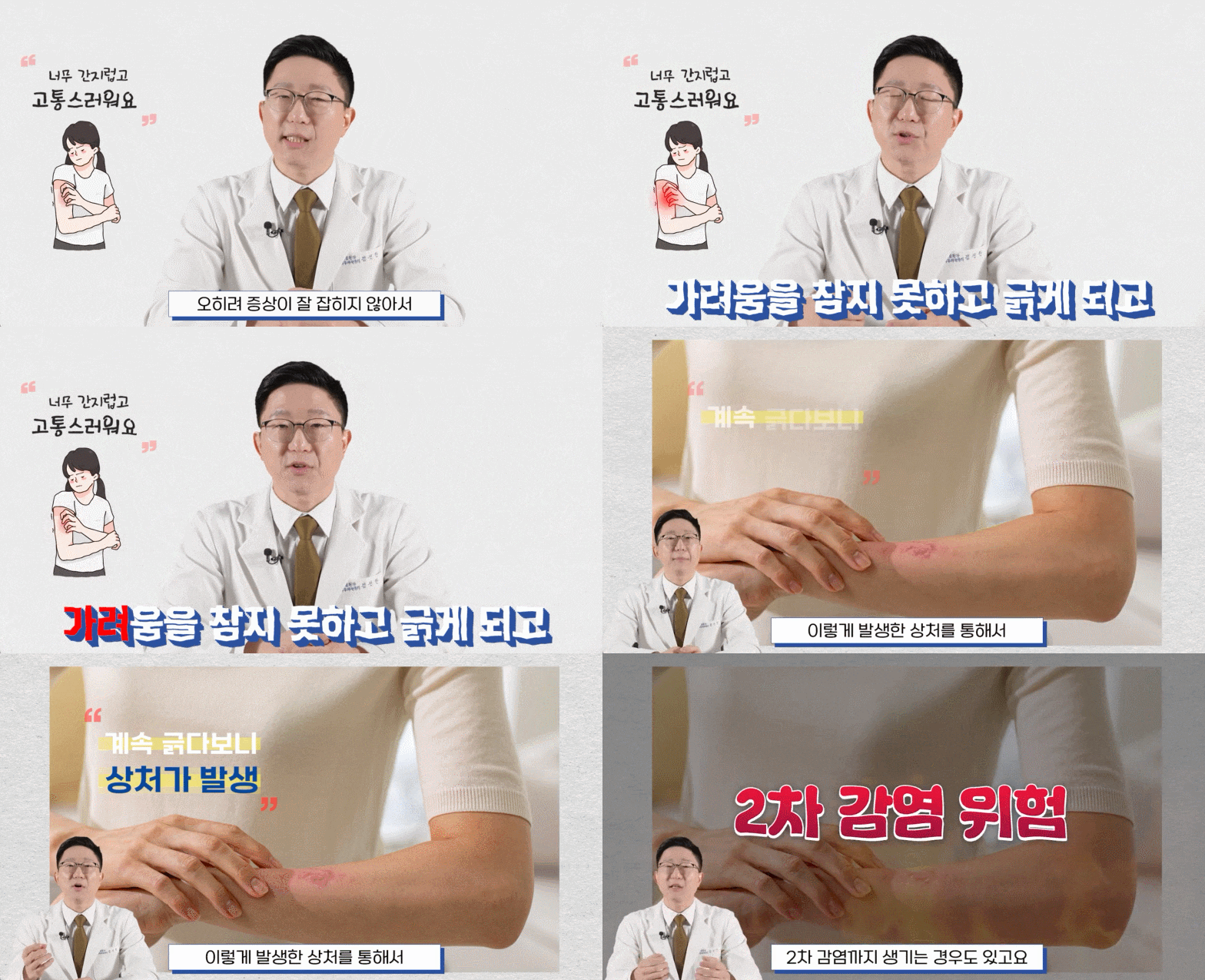
Why do atopic dermatitis symptoms recur?
Atopic dermatitis is a condition that appears when the skin barrier is weakened and the skin reacts sensitively to external刺激.
Normal skin helps maintain moisture and protect the skin from external irritants, but in atopic skin, this function is often weakened.
As a result, the skin can become dry easily, and itching and redness may recur.
In particular, if you cannot tolerate the itching and keep scratching, repeated skin irritation can make inflammation worse.
In addition, factors such as stress, lack of sleep, and seasonal changes can also act as causes that disturb the skin condition.
That is why, rather than looking only at the visible skin symptoms of atopic dermatitis, it is important to check the current skin condition together with the living environment.

How is ointment treatment for atopic dermatitis carried out?
In atopic dermatitis treatment, ointment therapy is often carried out together depending on the current skin condition.
Representatively, steroid ointment can help reduce inflammatory reactions in the skin and may be used in a way that relieves redness and itching.
However, the important point is not to use steroid ointment for a long time without restriction, but to use it while adjusting it to the current condition of your skin.
In particular, the 기준 for ointment use may differ between areas where symptoms are severe and areas that are relatively stable.
Also, if you suddenly stop using it on your own after the skin condition improves, the symptoms may worsen again.
Therefore, in ointment treatment, it is important to adjust the strength and frequency of use while looking at both the severity of symptoms and the skin’s response.
Even for the same atopic dermatitis, the treatment direction can differ depending on age and skin condition.

What should be checked together when using ointment?
For atopic dermatitis, lifestyle management is also important along with ointment treatment.
If the skin remains dry for a prolonged period, itching and irritation may become worse, so consistently maintaining moisturizing care can be helpful.
Also, taking long showers with hot water or repeatedly using products that strongly irritate the skin can further weaken the skin barrier.
Along with this, stress and lack of sleep can also be factors that disturb the skin condition, so maintaining a regular daily rhythm is important.
Most importantly, if symptoms recur, do not use or stop ointment arbitrarily.
After carefully checking the current skin condition, it may be important to proceed with treatment and care in a direction suited to it.
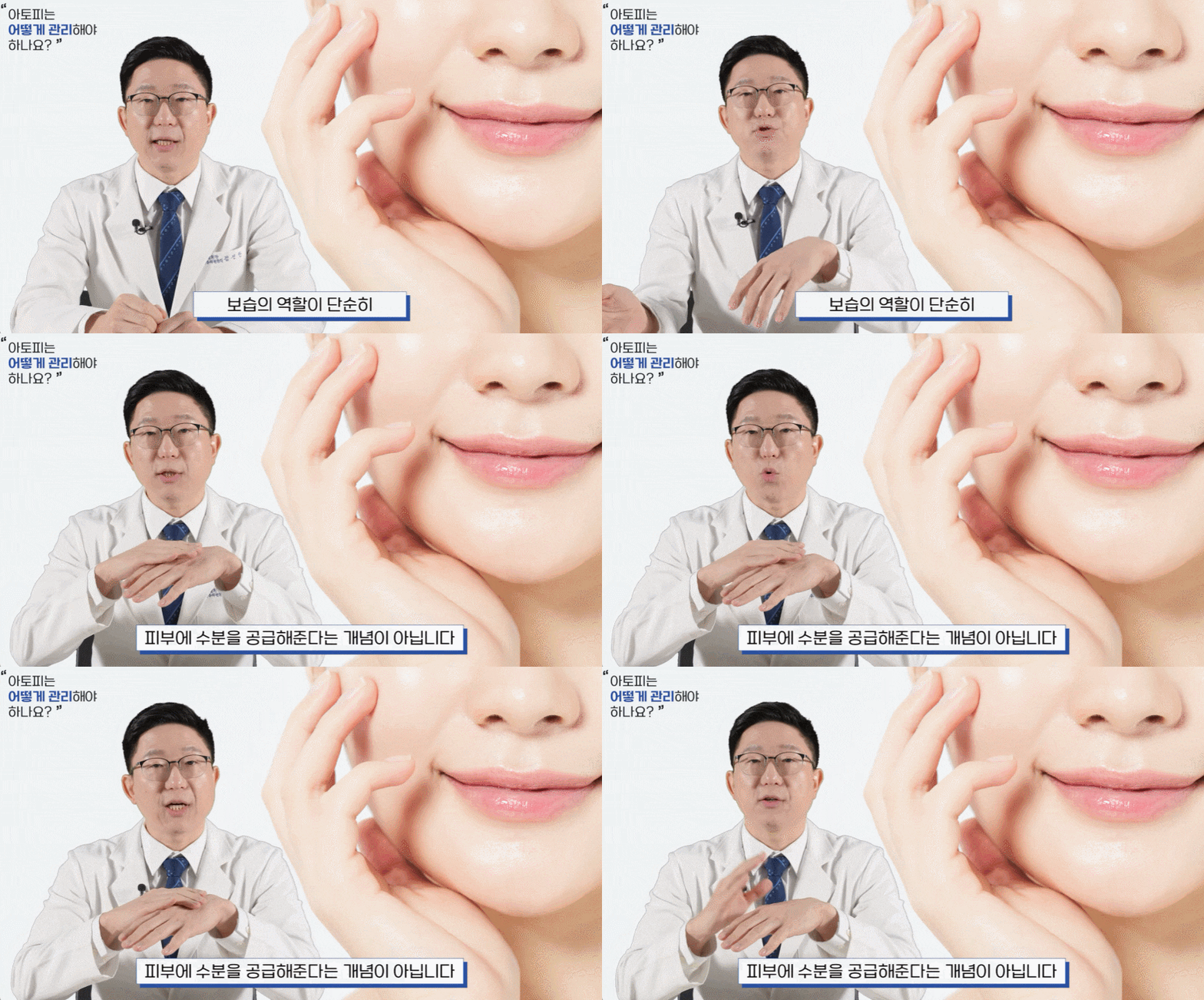
Atopic dermatitis may seem like a simple dry skin problem, but it is a condition in which the skin barrier and inflammatory reactions both have an effect.
In particular, if itching and redness recur, it may be necessary to accurately check the current skin condition.
Ointment treatment is also important to approach in an appropriate direction, taking the current skin condition and the severity of symptoms into consideration.
In addition, when lifestyle management is carried out alongside treatment, it can help maintain a more stable skin condition.
If you are continuing to feel discomfort due to atopic dermatitis symptoms, rather than judging it on your own, we recommend checking the current skin condition accurately and then setting up an appropriate treatment plan.
We hope the atopic dermatitis symptoms and treatment methods shared today were helpful to you.
Thank you.
| This post was written for informational purposes in compliance with Article 56, Paragraphs 1 to 15 of the Medical Service Act. All treatments carry a risk of side effects and complications depending on the individual. Before treatment, please be sure to have a thorough consultation with medical staff with extensive experience before making a decision. |