There are people who feel fine during the day but experience more severe itching as soon as nighttime comes.
Especially when the itching becomes worse before falling asleep, or when they unconsciously scratch their skin while sleeping, it is not uncommon for the skin to appear redder the next day.
At first, people may think it is simply due to dry skin. However, when sleep is disrupted by itching that occurs every night, daily fatigue can also increase.
Atopic dermatitis is not simply a problem of dry skin. It is one of the chronic skin diseases affected by both the skin barrier and inflammatory responses.
Therefore, it is important to carefully examine the current condition of the skin and provide treatment and care suited to that condition.
Today, I will explain why people with atopic dermatitis feel more severe itching every night and what should be considered alongside treatment.
-Column outline from Boramae Station Dermatology-
-
Why the itching gets worse every night
-
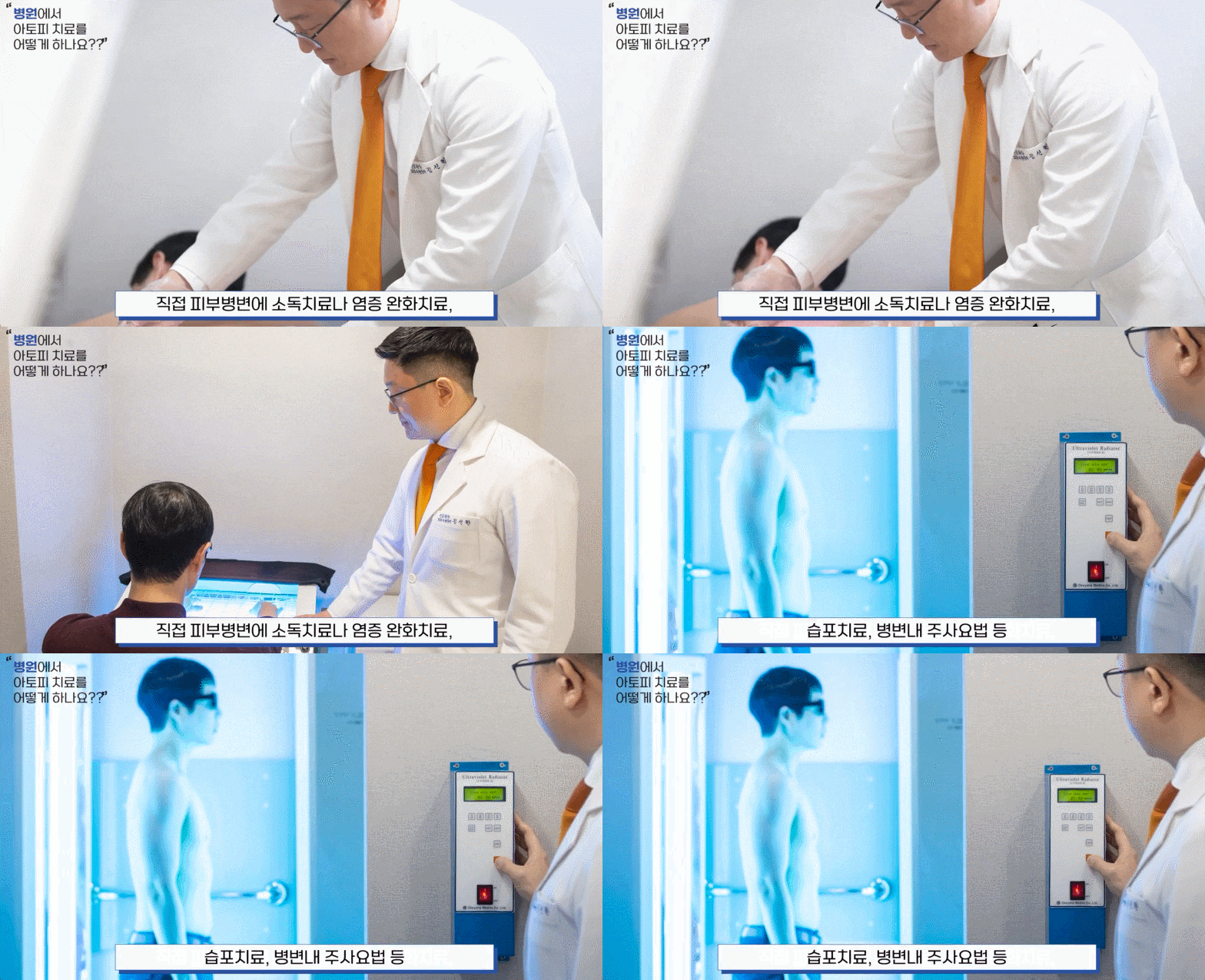
How is atopic dermatitis treated?
-
Areas that also require attention in daily life

Why the itching gets worse every night
Atopic dermatitis is a skin condition in which the skin becomes sensitive to external stimuli as the skin barrier weakens.
Healthy skin maintains moisture within the skin and protects it from external stimuli, but this function is often weakened in skin affected by atopic dermatitis.
As a result, the skin can become dry easily, and even minor stimuli may cause severe itching.
In particular, the itching may feel worse at night as body temperature rises or moisture escapes from the skin more easily.
Stimuli that felt less noticeable while active during the day may also feel more irritating in a quiet environment.
The problem is that continuously scratching because of the itching can further weaken the skin barrier and worsen inflammation.
For this reason, it is important to examine the factors contributing to recurring itching in atopic dermatitis.

How is atopic dermatitis treated?
Treatment for atopic dermatitis may vary depending on the current condition of the skin.
When redness and itching are severe, ointment treatment may also be necessary.
In particular, steroid ointments may help reduce inflammation in the skin and may be used to relieve itching.
However, the important point is not to use an unnecessarily strong ointment for a long period, but to adjust its use according to the current condition of the skin.
Moisturizing care is also important when the skin is very dry.
Even with the same diagnosis of atopic dermatitis, the necessary treatment may differ depending on age, skin condition, and severity of symptoms. Before beginning treatment, it is necessary to carefully examine the current condition of the skin.
Areas that also require attention in daily life
Lifestyle management is also important alongside treatment for atopic dermatitis.
First, consistently using a moisturizer to prevent the skin from becoming dry may be helpful.
In addition, taking long showers with excessively hot water or repeatedly using products that strongly irritate the skin may make the skin more sensitive.
Itching may also worsen when sweat remains on the skin for a long time or when thick clothing increases the sensation of heat in the skin.
Therefore, it is important to maintain an appropriate indoor temperature and humidity level while also managing daily habits that reduce skin irritation.
Most importantly, recurring itching every night should not simply be dismissed as dry skin.
It may be important to check the current condition of the skin and proceed with appropriate treatment and care together.

Atopic dermatitis is not simply a problem of dry skin; it is a condition affected by both the skin barrier and inflammatory responses.
If the itching becomes severe every night, it is necessary to accurately examine the current condition of the skin.
In addition, when ointment treatment, moisturizing care, and lifestyle management are carried out together, they may help maintain the skin in a more stable condition.
If itching is making daily life uncomfortable, rather than managing it alone, we recommend having your current skin condition carefully examined and developing an appropriate treatment plan.
I hope the information provided today was helpful to those looking for ways to treat atopic dermatitis.
Thank you.
| This post was written for informational purposes in compliance with Article 56, Paragraphs 1–15 of the Medical Service Act. All treatments carry risks of side effects and complications that may vary from person to person. Before undergoing treatment, please make your decision only after having a sufficient consultation with a medical professional with extensive experience. |