When white spots that have appeared on the skin become unnoticeable at some point and you feel relieved, it can be disconcerting if similar spots reappear in the same area several months later or are found in a new area.
In fact, quite a few people with vitiligo ask questions such as, “I thought it had gotten better, but it came back,” or “I received treatment, so why has it appeared again?”
Rather than viewing vitiligo simply as a change in skin color, it is important to examine the current condition of the skin along with the symptoms.
In particular, vitiligo is one of the conditions that requires ongoing monitoring because periods when the symptoms are not noticeable and periods when changes reappear may repeat.
Today, based on the content of JTBC Documentary Plus Q, I will explain why vitiligo symptoms may recur and what should be checked during treatment.

Why can vitiligo appear to recur?
Vitiligo is one of the chronic skin conditions in which parts of the skin turn white as changes occur in the function of melanocytes, the cells that produce skin color.
However, not all cases of vitiligo appear in the same form.
In some cases, it begins as small spots and remains that way for a long time, while in others, the affected area may expand over a certain period.
In addition, even if some pigmentation returns after treatment, the skin may not return completely to its original condition.
For this reason, patients may feel as though their condition improved and then returned.
In particular, when new changes appear around an early lesion or the color difference at an existing site once again becomes noticeable, many people think that the symptoms are recurring.
Therefore, rather than checking only the color changes currently visible, it is important to also consider when the symptoms first appeared and how they have changed over time.

How is vitiligo treated?
Treatment for vitiligo may vary depending on the current condition of the skin.
The first step is to determine whether new lesions have appeared recently or whether the condition has remained largely unchanged for a certain period.
Depending on the skin condition, treatment with ointments may be provided, and phototherapy may also be considered to help restore pigmentation.
Excimer laser treatment, for example, uses light of a specific wavelength to selectively irradiate areas affected by vitiligo.
It is often used to treat vitiligo that appears in localized areas.
However, even with the same treatment, the response may differ depending on the location of the lesions, such as the face, torso, hands, or feet.
The treatment plan may also vary depending on how long the symptoms have been present.
Therefore, rather than applying another person’s case directly, it is important to develop a treatment plan based on the current condition of the skin.

Even after the symptoms have stabilized,
why is ongoing care necessary?
After treatment, there may be periods when the symptoms of vitiligo are not noticeable.
Even during this time, it is important to continue checking the condition of the skin.
In particular, environments involving repeated skin irritation, ongoing stress, and lack of sleep may affect skin health.
Therefore, even when the symptoms remain stable, it may be necessary to monitor the current condition of the skin and continue appropriate care.
Most importantly, vitiligo should not be thought of simply as discolored skin.
It is important to accurately assess the current condition and continue appropriate treatment and care.
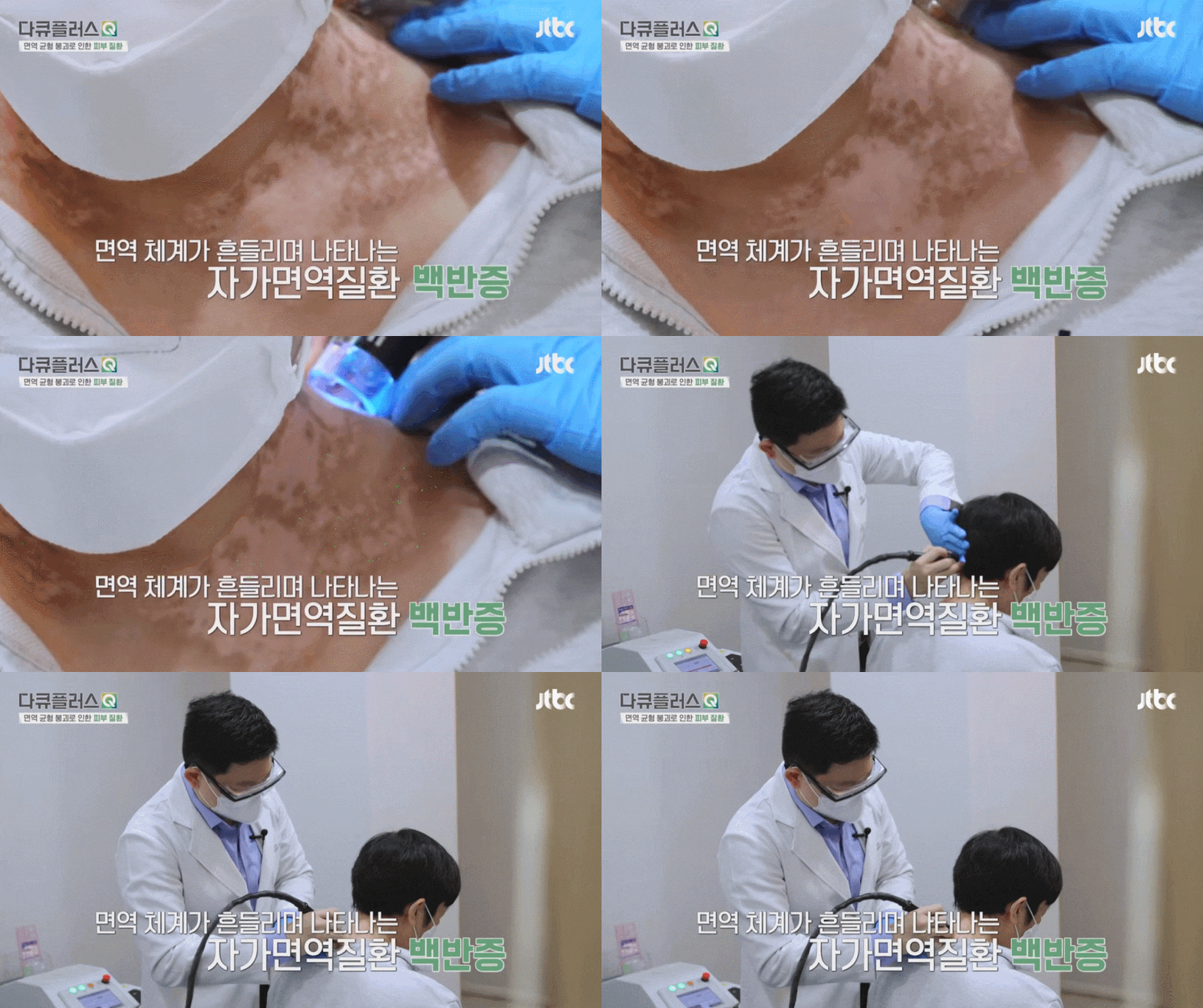
Vitiligo is a skin condition associated with changes in melanocytes, and its symptoms may appear differently from person to person.
In particular, if it feels as though the condition improves and then recurs, it is necessary to take a detailed look at the current condition of the skin.
In addition, for vitiligo treatment, it is important to create an individualized plan that takes into account the extent of the symptoms, the location of the lesions, and the degree of change.
It may also be helpful to continue monitoring the condition of the skin and providing necessary care after treatment.
If you are concerned about recurring changes in skin color, rather than making your own judgment, please have the current condition of your skin evaluated.
I hope today’s information has been helpful to those looking into vitiligo symptoms.
| This post was written for informational purposes in compliance with Article 56, Paragraphs 1–15 of the Medical Service Act. All treatments carry the risk of side effects and complications, which may vary from person to person. Before receiving treatment, please have a thorough consultation with a medical professional with extensive experience and make your decision afterward. |