Among those who visit a dermatology clinic because of acne, some are curious about acne scaling.
Acne scaling is indeed one of the representative methods used for acne management, but the same results do not appear for everyone.
This is because the management method may vary depending on the current skin condition, type of acne, and level of sebum production.
In particular, the treatment plan may differ depending on whether the condition mainly involves closed comedones or recurring inflammatory acne.
Today, we will explain the effects of acne scaling, along with the aspects that may vary depending on the condition of the skin.
-Boramae Station Dermatology Column Outline-
-
What Is Acne Scaling?
-
Why the Effects May Vary Depending on Skin Condition
-
How to Care for Your Skin After Acne Scaling
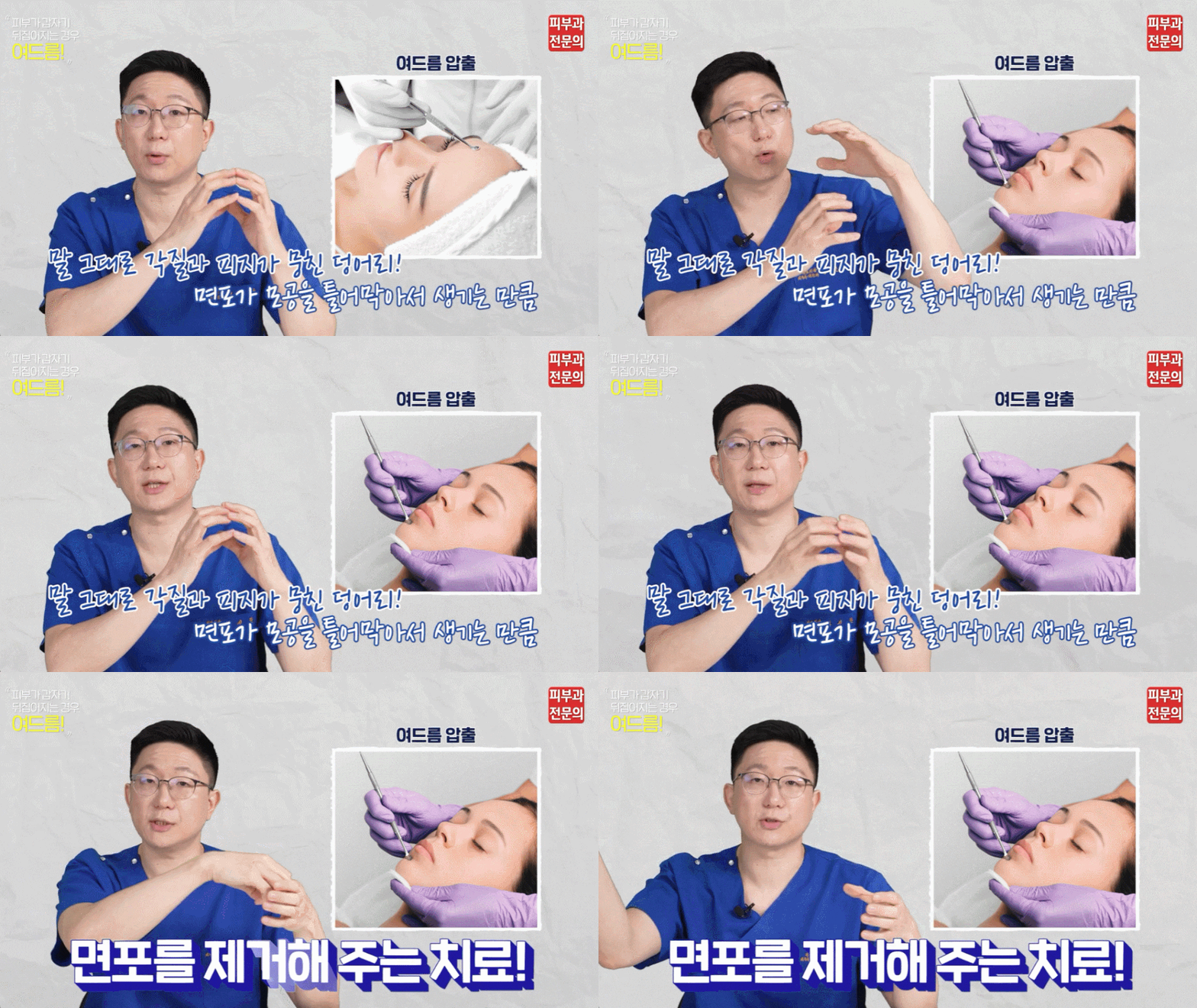
What Is Acne Scaling?
Acne scaling is a management method that helps improve the pore environment by managing dead skin cells and impurities accumulated on the skin's surface.
In particular, excessively accumulated dead skin cells can clog the pores and interfere with sebum discharge.
When this condition repeatedly occurs, the likelihood of developing closed comedones or comedonal acne may increase.
Depending on the condition of the skin, acne scaling can help remove dead skin cells and improve the skin environment.
It may also be performed together with extraction treatment, or combined with other forms of care depending on the skin condition.
However, acne scaling is not simply a treatment for making the skin clean; it is important to perform it while taking the current skin condition into account.
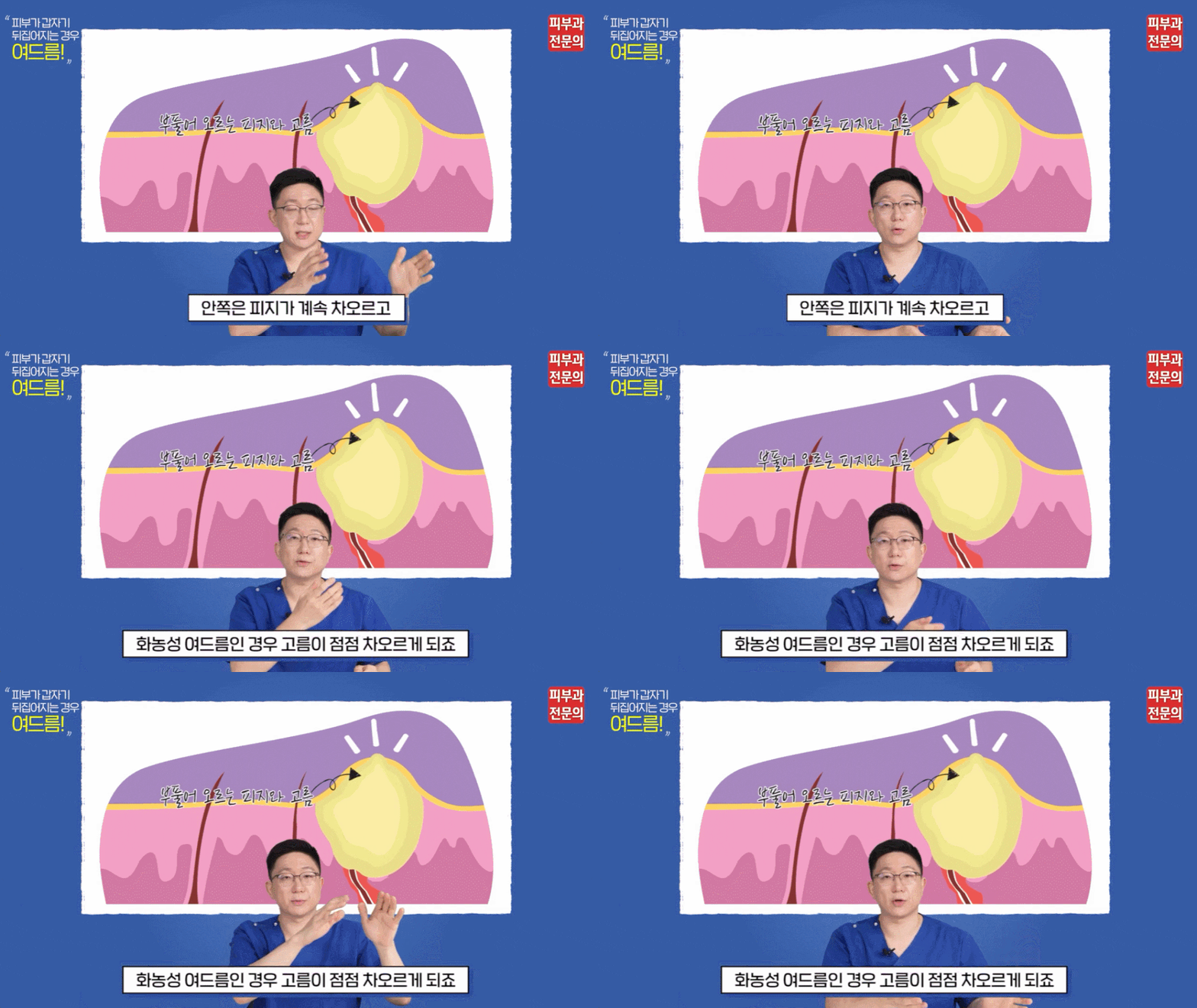
Why the Effects May Vary Depending on Skin Condition
Even when receiving the same acne scaling treatment, the changes perceived may vary depending on the skin condition.
For example, when there are many closed comedones and excessive sebum production, it may help improve skin texture and manage sebum.
On the other hand, when there are many red and severely inflamed acne lesions, it may be difficult to manage the condition with scaling alone.
In addition, when the skin is sensitive or its barrier has become weakened, it may be necessary to adjust the intensity of the treatment.
The duration and extent of the acne may also affect the process of establishing a management plan.
Therefore, what is important is to assess your current skin condition rather than relying on someone else's experience.
This is because, even when conditions are all referred to by the same name—acne—the actual skin condition may differ from person to person.

How to Care for Your Skin After Acne Scaling
After acne scaling, it is important to care for the skin in a way that reduces irritation.
Because the skin may become temporarily sensitive immediately after treatment, it is advisable to avoid harsh scrubs and exfoliation.
Appropriate moisturizing care may also be needed to prevent the skin from becoming dry.
Because ultraviolet rays can also irritate the skin, sun protection when going outside is important as well.
Most importantly, you should not assume that all acne will be resolved through acne scaling alone.
Depending on the current skin condition, extraction treatment, medication, laser treatment, or other options may also be considered.
Therefore, for acne treatment, it is important to establish a management plan suited to the skin condition rather than relying on just one method.
Acne scaling is one of the treatment methods that may help manage the pores and the skin environment.
However, even when receiving the same treatment, the expected effects may vary depending on the skin condition and type of acne.
In particular, because the management methods for closed comedones and inflammatory acne may differ, it is important to carefully assess the current skin condition.
In addition, after acne scaling, care aimed at reducing skin irritation—such as moisturizing and sun protection—should also be provided.
If you are concerned about recurring acne, rather than managing it on your own, we recommend first assessing your current skin condition and then establishing an appropriate treatment plan.
We hope the information about acne scaling provided today was helpful.
Thank you.
| This post was written for informational purposes in compliance with Article 56, Paragraphs 1–15 of the Medical Service Act. All treatments carry the risk of side effects and complications, which may vary from person to person. Before receiving treatment, be sure to have a thorough consultation with a medical professional with extensive experience and make your decision afterward. |