When the skin becomes dry, some people think the problem can be solved simply by applying moisturizer frequently.
However, if itching continues to recur despite consistent moisturizing, and the skin becomes easily red or rough, it is also necessary to examine the function of the skin barrier.
Atopic dermatitis is one of the representative chronic conditions in which symptoms recur because the skin barrier is unable to perform its normal role.
This is because when the barrier becomes weakened, external irritants can easily penetrate the skin, while moisture rapidly escapes, creating a vicious cycle of recurring dryness and inflammation.
Atopic dermatitis is not simply a state of sensitive skin; it is a chronic inflammatory skin condition in which abnormalities of the skin barrier and immune responses work together.
Therefore, whenever symptoms appear, it is important to examine why the skin barrier has weakened rather than merely reducing the itching temporarily.
Today, for those concerned about atopic dermatitis at a Singil Station dermatology clinic, we will look at the role of the skin barrier, the changes that occur when it becomes weakened, and the important aspects of treatment.
-Order of the Singil Station Dermatology Clinic Column-
-
What role does the skin barrier play?
-
Symptoms of atopic dermatitis that appear when the skin barrier becomes weakened
-
Why skin barrier care is important in atopic dermatitis treatment
Singil Station Dermatology Clinic: Atopic Dermatitis—What Symptoms Appear When the Skin Barrier Becomes Weakened?
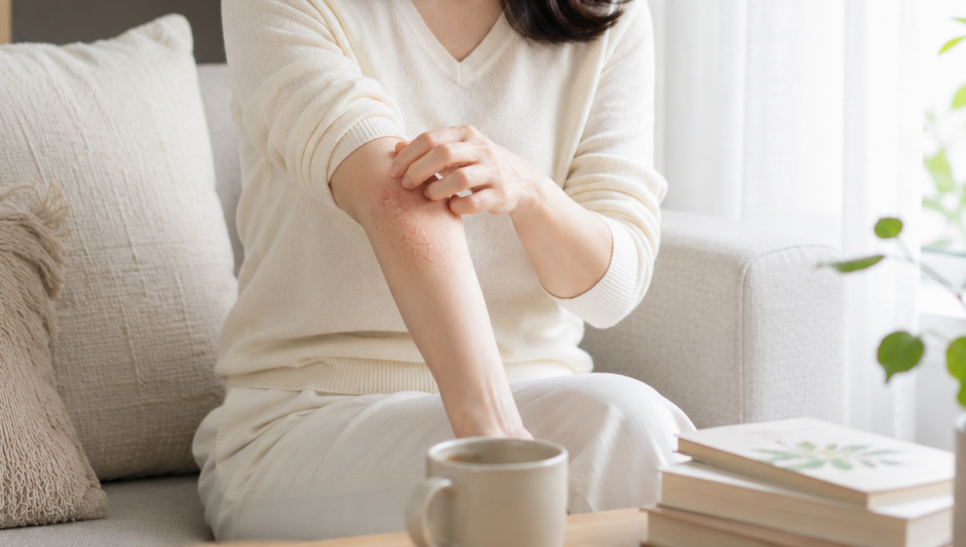
What role does the skin barrier play?
Singil Station Dermatology Clinic
The skin barrier is the outermost layer of the skin and protects our body from external irritants.
Simply put, it can be thought of as a protective shield that prevents moisture inside the skin from escaping and keeps external irritants such as bacteria, allergenic substances, and fine dust from entering the skin.
However, in cases of atopic dermatitis, the skin barrier function is often weaker than normal.
When the skin barrier is damaged, moisture inside the skin evaporates easily, worsening dryness and causing the skin to react sensitively even to minor irritation.
When this process is repeated, itching and inflammation may continue.
In particular, scratching the skin can further damage the barrier and intensify inflammation, creating a repeating vicious cycle. Therefore, it is important to manage the skin appropriately from the early stages.
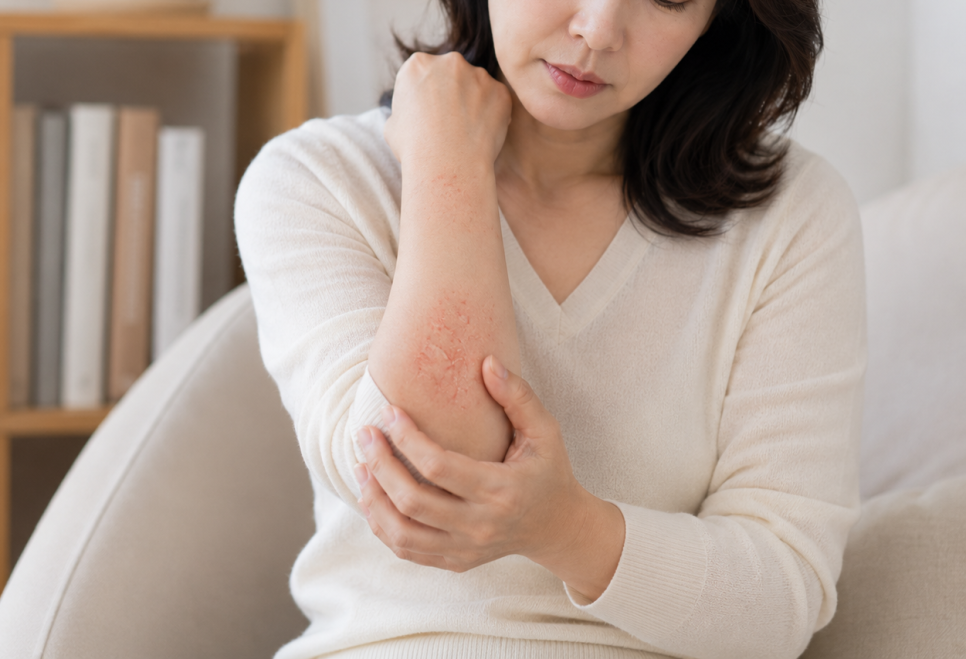
When the skin barrier becomes weakened
Symptoms of atopic dermatitis that appear
Singil Station Dermatology Clinic
Not everyone experiences the same symptoms when the skin barrier becomes weakened.
The most common symptom is dry skin. The skin may continue to flake white or feel tight, and in many cases it quickly becomes dry again even after applying moisturizer.
Severe itching may also occur. In particular, itching may worsen at night, and quite a few people scratch their skin unknowingly while sleeping.
The skin may become red, or small rashes may repeatedly appear. If symptoms persist for a long time, the skin may become thicker and darker, resulting in lichenification.
The skin can also be easily affected by changes in the external environment. Symptoms may worsen when the seasons change, after heavy sweating, in a dry indoor environment, or when wearing clothing made from certain types of fabric.
As such, when the skin barrier becomes weakened, recurring inflammation and itching go beyond simple dryness and can cause discomfort in daily life.
Why skin barrier care is important
in atopic dermatitis treatment
Singil Station Dermatology Clinic
The goal of atopic dermatitis treatment is not simply to reduce visible symptoms.
Along with controlling the inflammation currently present, it is important to manage the skin so that the damaged skin barrier can recover.
This is because when the skin barrier has not recovered, itching and inflammation may recur in the same areas even after symptoms temporarily improve.
In addition, the areas where symptoms appear and their causes vary from person to person. Some people may have severe symptoms on their hands or in the folds of their arms, while others may experience recurring symptoms on the face, neck, or around the eyes.
Symptoms may also vary depending on age. Even with the same atopic dermatitis, it is important to establish a treatment plan after comprehensively examining the skin condition and severity of symptoms rather than applying a uniform approach.
Daily lifestyle habits also affect the maintenance of the skin barrier. Showering with excessively hot water or rubbing the skin vigorously can further weaken the barrier, so it is also important to consistently pay attention to indoor humidity and adequate moisturizing.

If you are concerned about atopic dermatitis at a Singil Station dermatology clinic, it is important to examine whether the skin barrier is being maintained normally rather than thinking of it simply as a problem caused by dry skin.
When the skin barrier becomes weakened, dryness, itching, and inflammation are likely to recur, and the skin may become increasingly sensitive the longer this condition persists.
Therefore, with atopic dermatitis, it is important to consider not only temporary symptom relief but also protecting and restoring the skin barrier.
Accurately identifying the condition of the skin and the causes of the symptoms, then establishing an individualized treatment and care plan, may help maintain long-term skin health.
Singil Station Dermatology Clinic: Atopic Dermatitis—What Symptoms Appear When the Skin Barrier Becomes Weakened?
| This post was written for informational purposes in compliance with Articles 56(1)–(15) of the Medical Service Act. All treatments carry the risk of side effects and complications, which may vary from person to person. Before treatment, please make your decision only after having a thorough consultation with a medical professional with extensive experience. |