Not every white spot that appears on the skin is caused by the same condition.
It may be a temporary skin change, or the skin color may have become lighter after inflammation subsided.
However, if the color does not return over time or the affected area gradually expands, it is important to identify the cause rather than dismissing it as a simple pigment change.
As JTBC Documentary Plus Q introduced the treatment process for a patient with vitiligo and content about changes in skin color, interest in vitiligo has been increasing.
Vitiligo is not a life-threatening condition, but it is a chronic skin disorder that occurs when the pigment-producing cells that determine skin color decrease or disappear. It is one of the conditions for which early diagnosis and determining an appropriate treatment approach are important.
Today, focusing on vitiligo at an Omokgyo Station dermatology clinic, we will look at when you should seek medical care if changes in skin color persist, what symptoms vitiligo can begin with, and what to check to avoid missing the appropriate time for treatment.
Omokgyo Station Dermatology Clinic: Vitiligo—When Should You Seek Medical Care If Skin Color Changes Persist? (JTBC Documentary Plus Q)
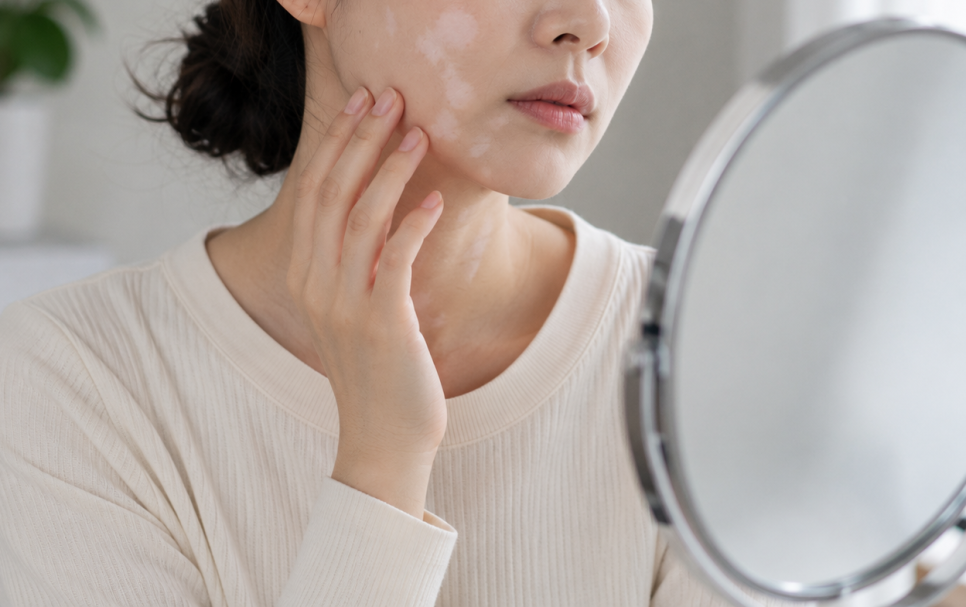
Skin color changes that persist
Why should they be checked?
Omokgyo Station Dermatology Clinic: Vitiligo
If a change in skin color lasts for several weeks or the affected area gradually expands, it is advisable to receive a detailed diagnosis.
There is more than one reason why the skin may turn white.
This is because various causes are possible, including post-inflammatory hypopigmentation and congenital pigment disorders, in addition to vitiligo.
Vitiligo is particularly characterized by relatively well-defined white spots that appear as the skin's melanocytes decrease or disappear.
In some cases, it begins as a single small spot, but over time it may spread to the surrounding area or appear on new areas of the body.
Conversely, temporary pigment changes may naturally recover over time, so it can be difficult to determine whether a person has vitiligo based only on the visible color of the skin.
Therefore, if a change in skin color persists or the affected area has become larger than before, identifying the exact cause should be the priority.

What symptoms can vitiligo begin with?
Omokgyo Station Dermatology Clinic: Vitiligo
Vitiligo often first appears as a change in skin color rather than pain or itching.
Because there may be no noticeable symptoms in the early stages, many people think it is simply a change in their skin tone.
However, over time, the white spots may become more distinct or increase in number.
Common characteristics may include the following.
| Characteristics of vitiligo |
|---|
| Skin color changes | White spots appear |
| Borders | Often relatively well-defined |
| Symptoms | Pain or itching may be absent |
| Progression | The affected area may expand over time |
| Areas affected | Various areas, including the face, hands, feet, elbows, knees, and around the mouth |
However, not every patient experiences the condition in the same way.
In some people, there is little change for several months, while in others, the affected area may expand relatively quickly.
Because the pattern of progression varies from person to person, it is important to assess whether the condition is currently active rather than judging its course based solely on the size of the spots.

When should you visit a hospital?
Omokgyo Station Dermatology Clinic: Vitiligo
If changes in skin color recur or gradually spread, it is advisable not to delay medical care.
The earlier vitiligo is diagnosed, the more helpful it can be in accurately assessing the current condition and establishing a treatment plan.
More careful evaluation may be needed if the white spots gradually enlarge, continue to appear on new areas, there is a family history, or the person has an existing autoimmune disease.
In addition, when lesions occur on areas that are readily visible, such as the face or hands, they can cause a greater psychological burden. Therefore, it is important to accurately check the condition of the skin rather than viewing it solely as a cosmetic concern.
During an examination, the location and extent of the lesions and the rate of progression are assessed. If necessary, diagnostic tests such as a Wood's lamp examination may be used to distinguish vitiligo from other pigment disorders.
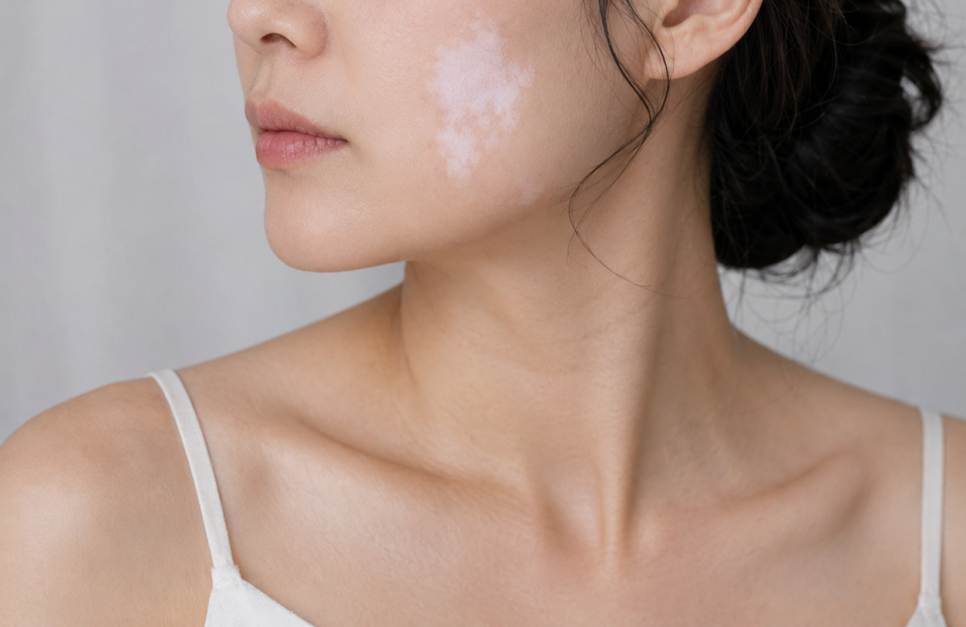
Not every case of skin turning white is vitiligo.
However, if the change in skin color persists for several weeks, the spots gradually increase in size, or they appear on new areas, it is important to identify the exact cause.
Vitiligo occurs when the melanocytes that produce skin color decrease or disappear, and the treatment plan may vary depending on the extent of progression and the area affected by the lesions.
Therefore, rather than judging only the visible change in color, it is necessary to determine whether the lesions are currently progressing and whether they need to be distinguished from other pigment disorders.
Although persistent changes in skin color do not always indicate vitiligo, the treatment method and course may differ depending on the cause.
Therefore, instead of leaving the symptoms unattended, it is most important to accurately assess the current condition of the skin and receive medical care at an appropriate time in order to establish a treatment plan.
Vitiligo Q&A
Q. Does every white spot indicate vitiligo?
A. No. White spots can appear for various reasons besides vitiligo, including post-inflammatory hypopigmentation, tinea versicolor, and congenital pigment disorders. Therefore, it is important to identify the cause through an accurate medical examination rather than judging based solely on appearance.
Q. Does vitiligo cause itching or pain?
A. In many cases, vitiligo causes only a change in skin color without pain or itching. For this reason, it is not uncommon for people to mistake it for a simple change in skin tone and overlook it in the early stages.
Q. When is it advisable to visit a hospital for vitiligo?
A. If the white spots gradually enlarge, continue to appear on new areas, or the change in skin color persists for several weeks, it is advisable to visit a dermatology clinic to identify the exact cause.
Q. Can it improve naturally without treatment?
A. Some patients may experience partial recovery of pigmentation, but natural recovery does not occur in every patient. In addition, the course may vary depending on the extent of progression and the location of the lesions. Therefore, it is important to accurately assess the current condition before establishing a treatment plan.
Omokgyo Station Dermatology Clinic: Vitiligo—When Should You Seek Medical Care If Skin Color Changes Persist? (JTBC Documentary Plus)
| This post was written for informational purposes in compliance with Articles 56(1)–(15) of the Medical Service Act. All treatments carry a risk of side effects and complications that may vary from person to person. Before undergoing treatment, be sure to have a thorough consultation with a medical professional with extensive experience before making a decision. |