Most people think of skin elasticity first when they hear the word collagen.
That is why you have probably often heard that a decrease in collagen causes wrinkles and sagging skin.
However, the skin does not maintain its health through visible elasticity alone.
This is because the skin is an organ that protects the body from external irritants, retains moisture, and even helps repair damaged tissue.
For these functions to be properly maintained, not only the skin’s surface but also the structures that make up the skin must remain healthy.
Recently, studies examining skin conditions have also looked beyond inflammation alone to consider the skin barrier, the dermal structure, and the role of collagen together.
Today, Nodeul Station Dermatology will explore the relationship between skin conditions and collagen, as well as what should be considered together to maintain healthy skin.


What Is the Connection Between Skin Conditions, Collagen, and Healthy Skin? (JTBC Documentary Plus Q)
What role does collagen play in the skin?
Nodeul Station Dermatology: Skin Conditions and Collagen
Collagen is an important protein that provides firm support for the skin.
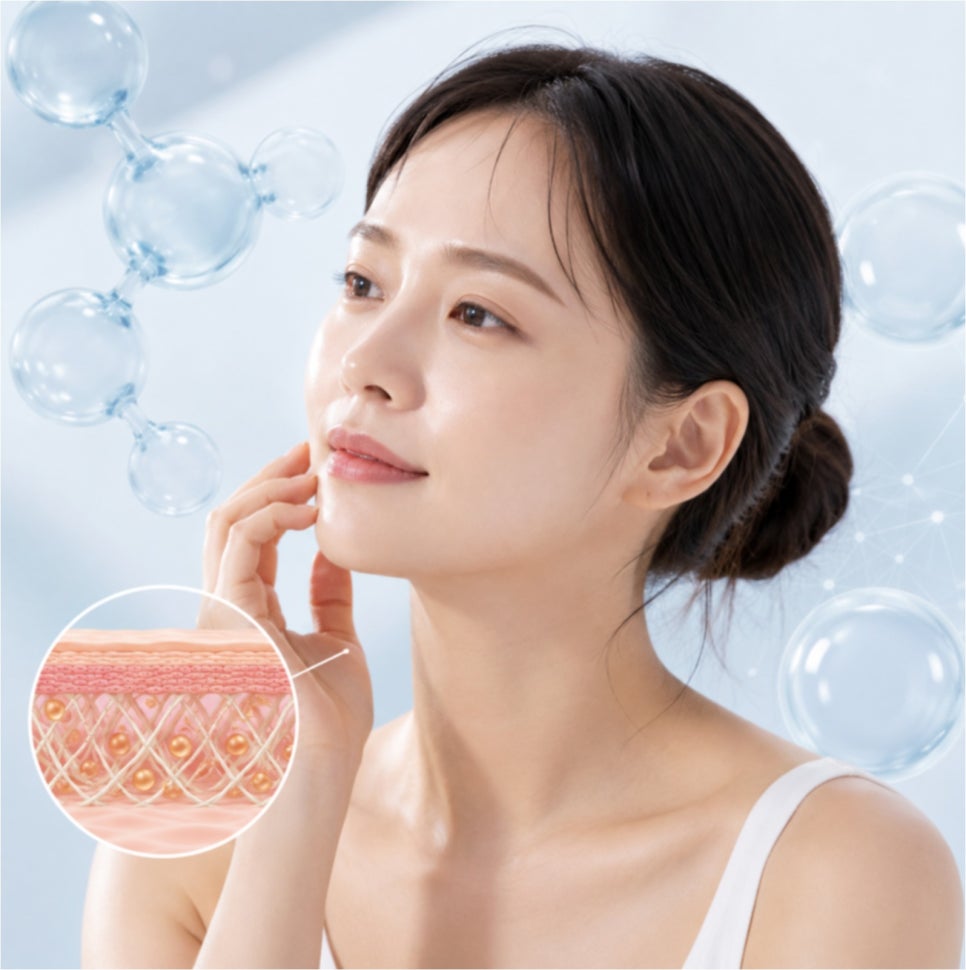
The skin is broadly composed of the epidermis, dermis, and subcutaneous tissue.
The dermis contains collagen, elastin, hyaluronic acid, and other components that help maintain the skin’s shape and support its elasticity.
When sufficient collagen is maintained, the skin can retain a relatively stable structure even when exposed to external irritants. However, as collagen production decreases over time, the skin may gradually become thinner and lose elasticity.
An important point here is that collagen is only one of the components that make up the skin; it does not determine skin health on its own.
A healthy skin environment can be maintained only when various factors—including skin barrier function, moisture retention, and inflammatory responses—remain in balance.
What Is the Relationship Between Skin Conditions and Collagen?
Nodeul Station Dermatology: Skin Conditions and Collagen
Not all skin conditions are caused by a lack of collagen.
Atopic dermatitis is known to be significantly associated with impaired skin barrier function and immune responses, while psoriasis is related to abnormal immune system responses.
Vitiligo is also a condition primarily involving changes in melanocyte function.
In other words, each skin condition has a different cause.
However, repeated inflammation or ongoing damage to the skin can cause changes in its structure, and during the recovery process, various tissues—including the collagen that makes up the dermis—may also be affected.
Conversely, when the skin’s structure has weakened, the skin may react more sensitively to external irritants or take longer to recover.
Therefore, when understanding skin conditions, it is important to consider the skin barrier, inflammation, and skin structure together rather than focusing on a single component.

What Should Be Considered for Healthy Skin?
Nodeul Station Dermatology: Skin Conditions and Collagen
Skin health is not determined by collagen alone, and it is important to maintain an environment in which the skin can recover on its own.
Recently, people often focus on a single component when discussing skin health.
However, the skin is an organ in which multiple tissues and cells work together, so improving just one factor does not restore the function of the entire system.
For example, when the skin barrier is damaged, external irritants can easily penetrate the skin and cause recurring inflammation. If the skin does not retain sufficient moisture, it can also become dry easily.
In addition, lifestyle habits such as repeated exposure to ultraviolet rays, smoking, and insufficient sleep can affect the skin’s recovery process after damage.
Especially when a skin condition is present, it is important not only to manage the symptoms but also to protect the skin barrier, reduce irritation, and create an environment that supports the skin’s recovery.
The following basic practices may help maintain healthy skin.
-
Consistently using sunscreen
-
Moisturizing according to your skin type
-
Avoiding excessive irritation or frequent exfoliation
-
Getting sufficient sleep and maintaining a balanced diet
-
Identifying the cause if skin changes persist
These basic practices may help maintain the skin’s natural functions. When a skin condition is present, it is also important to improve the skin environment together with appropriate treatment.


Collagen is an important protein that makes up the skin, but it is not the only factor that determines healthy skin.
The skin can perform its natural functions when various factors—including skin barrier function, moisture retention, inflammatory responses, and the recovery process—remain in balance.
In addition, because each skin condition has a different cause and course, it cannot be resolved simply by supplementing a particular component.
Understanding what changes are currently occurring in the skin, as well as the condition of the skin barrier and dermal structure, may help maintain healthy skin.
Skin health is not created in a short period. It can be maintained more consistently when daily care and appropriate treatment are carried out together.
Q&A: Skin Conditions and Collagen
Q. Does a lack of collagen cause skin conditions?
A. No. Atopic dermatitis, psoriasis, vitiligo, and other conditions each have different causes. Although it is difficult to regard a lack of collagen as a direct cause, it may affect the skin’s structure and recovery process.
Q. Can consuming collagen improve a skin condition?
A. To date, there is insufficient evidence to conclude that consuming collagen alone can treat or improve a specific skin condition. Skin conditions should first be diagnosed and treated according to their causes.
Q. What is the difference between the skin barrier and collagen?
A. The skin barrier prevents moisture loss from the skin’s surface and protects the skin from external irritants. Collagen, on the other hand, supports the skin and maintains its structure in the dermis beneath the surface. Although they have different roles, both are important for maintaining healthy skin.
Q. What is the first thing I can do for my skin health?
A. It is important to maintain basic lifestyle habits such as moisturizing according to your skin type, using sunscreen, getting sufficient sleep, and following a balanced diet. If skin changes persist for a long time or recur, it may be helpful to identify the cause accurately rather than trying to resolve them through self-care alone.
What Is the Connection Between Skin Conditions, Collagen, and Healthy Skin? (JTBC Documentary Plus Q)
| This post was written for informational purposes in compliance with Article 56, Paragraphs 1–15 of the Medical Service Act. All treatments carry the risk of side effects and complications, which may vary from person to person. Before undergoing treatment, please make a decision only after having a thorough consultation with a medical professional with extensive experience. |