It is easy to think that red spots or scaling on the skin are caused by dry weather or temporary skin irritation.
Especially when itching is not severe, many people apply moisturizer and wait for the condition to improve naturally.
However, if white or silvery-white scales repeatedly build up over red lesions and similar skin changes persist for several weeks or longer, it is necessary to check whether there is another cause beyond simple dry skin.
Psoriasis is not simply a condition in which the scales on the skin’s surface become thickened; it is a chronic inflammatory skin disease associated with immune dysfunction.
Periods of improvement and worsening may repeat, and the extent, location, and severity of symptoms can also vary from person to person.
Therefore, rather than removing only the visible scales, it is important to accurately determine whether the current symptoms are psoriasis and select a treatment method according to the extent and condition of the lesions.
Today, for those looking into psoriasis symptoms in Yeouido-dong, we will review what types of skin changes may occur and how treatment can be approached when symptoms persist for a long time.
-Order of this Yeouido-dong Dermatology Clinic column-
-
What skin changes may appear when psoriasis develops?
-
Why do psoriasis symptoms persist or recur?
-
What treatment should be considered if skin changes persist?
-
Is it enough to examine only the skin when evaluating psoriasis?
When psoriasis develops,
what skin changes may appear?
Yeouido-dong Dermatology Clinic Psoriasis
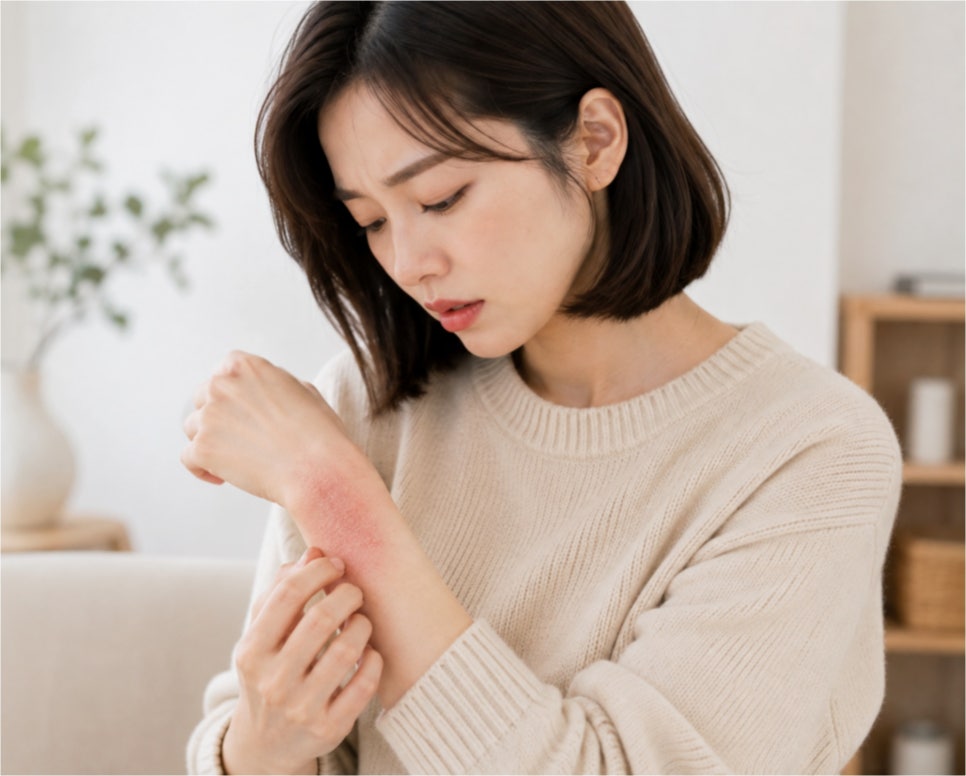
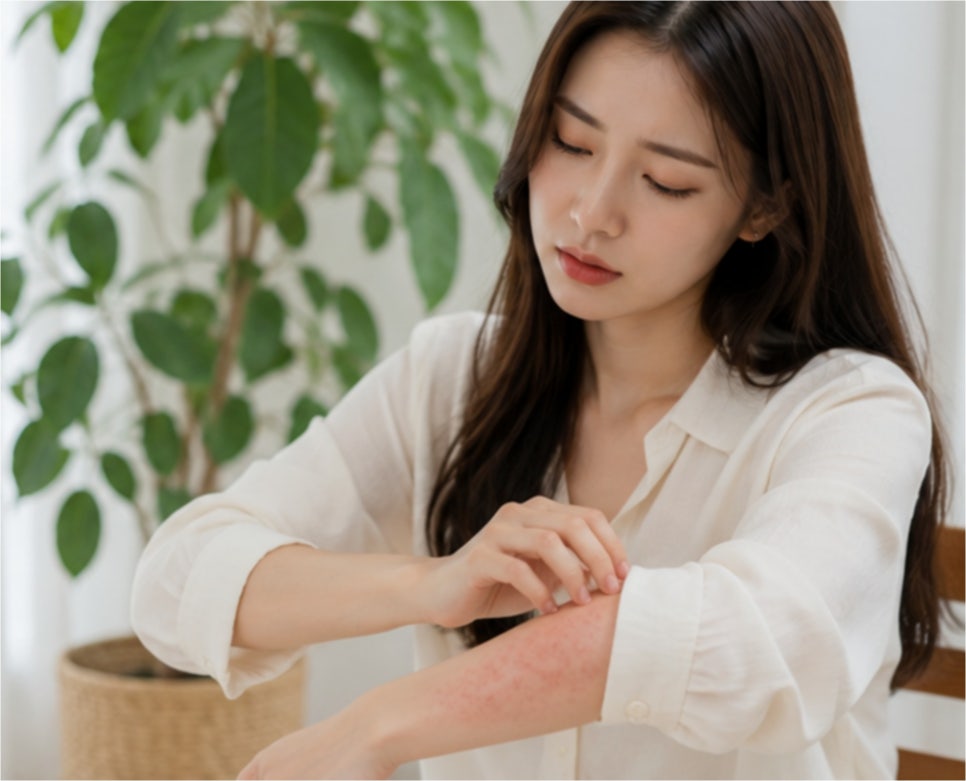
Psoriasis may typically present as relatively well-defined red lesions covered with scales.
Due to an abnormal immune response, the production cycle of skin cells becomes abnormally accelerated in psoriasis. As a result, the scales do not shed sufficiently and build up on the skin’s surface.
Symptoms commonly appear on areas that are easily irritated, such as the elbows, knees, and scalp, but they may also occur on various areas, including the trunk, hands, and feet.
Representative skin changes that may be observed include the following.
| Category | Possible changes |
|---|
| Skin color | Relatively well-defined red lesions |
| Skin surface | White or silvery-white scales |
| Lesion form | Thick, raised plaques |
| Areas of occurrence | Scalp, elbows, knees, trunk, and other areas |
| Associated symptoms | Itching, stinging, skin cracking, and other symptoms may occur |
However, the presence of redness or scaling alone is not enough to diagnose psoriasis.
Similar changes may also occur with seborrheic dermatitis, atopic dermatitis, eczema, and other conditions. Therefore, it is necessary to differentiate them by considering the location and appearance of the lesions, how long they have persisted, and their pattern of recurrence.
Why do psoriasis symptoms
persist or recur?
Yeouido-dong Dermatology Clinic Psoriasis
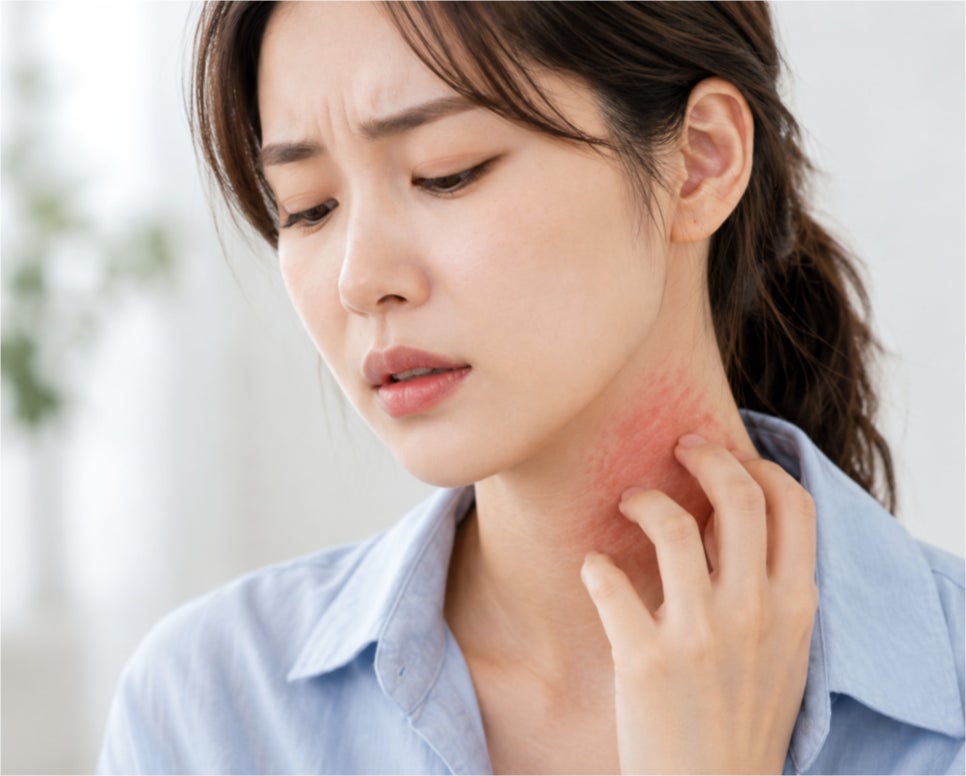
This is because psoriasis is not a temporary skin problem but a condition that may follow a chronic course.
Even after a period in which the skin appears to improve, lesions may reappear, and the timing and severity of worsening symptoms may vary from person to person.
Various factors, including stress, skin injury, infection, certain medications, alcohol consumption, and smoking, may be associated with worsening symptoms. However, eliminating just one specific cause does not make all psoriasis disappear.
Particular care should be taken to avoid scratching the skin or forcibly removing the scales.
This is because new lesions may appear in areas affected by physical irritation or injury in people with psoriasis.
Therefore, rather than repeatedly rubbing or peeling the skin because the scales are bothersome to look at, it is better to manage the condition by appropriately controlling inflammation and minimizing skin damage.

If skin changes
persist, what treatment should be considered?
Yeouido-dong Dermatology Clinic Psoriasis
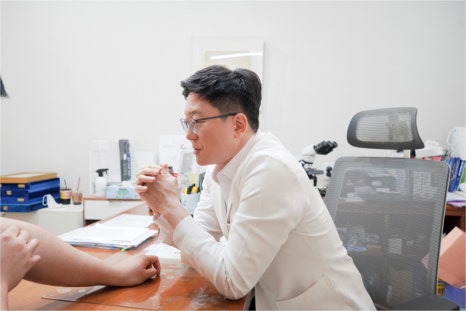
Psoriasis treatment is not determined by a single method. It is selected step by step after considering the extent and location of the lesions, their severity, and other factors.
For relatively limited psoriasis, topical treatment may be considered first. Depending on the condition, topical treatments such as steroids or vitamin D derivatives may be used.
On the other hand, if lesions are widely distributed or are not sufficiently controlled with topical treatment alone, phototherapy may be considered.
Representative treatment methods include the following.
-
Topical treatment: Applying medication to the affected areas
-
Phototherapy: Exposing the lesions to ultraviolet light of a specific wavelength
-
Systemic treatment: Depending on the condition, oral medication or injectable treatment may be considered for moderate to severe psoriasis
The important point is not to decide which treatment is unconditionally better, but to determine the intensity of treatment according to the extent of the psoriasis and how it is affecting daily life.
Is it enough to examine only the skin
when evaluating psoriasis?
Yeouido-dong Dermatology Clinic Psoriasis
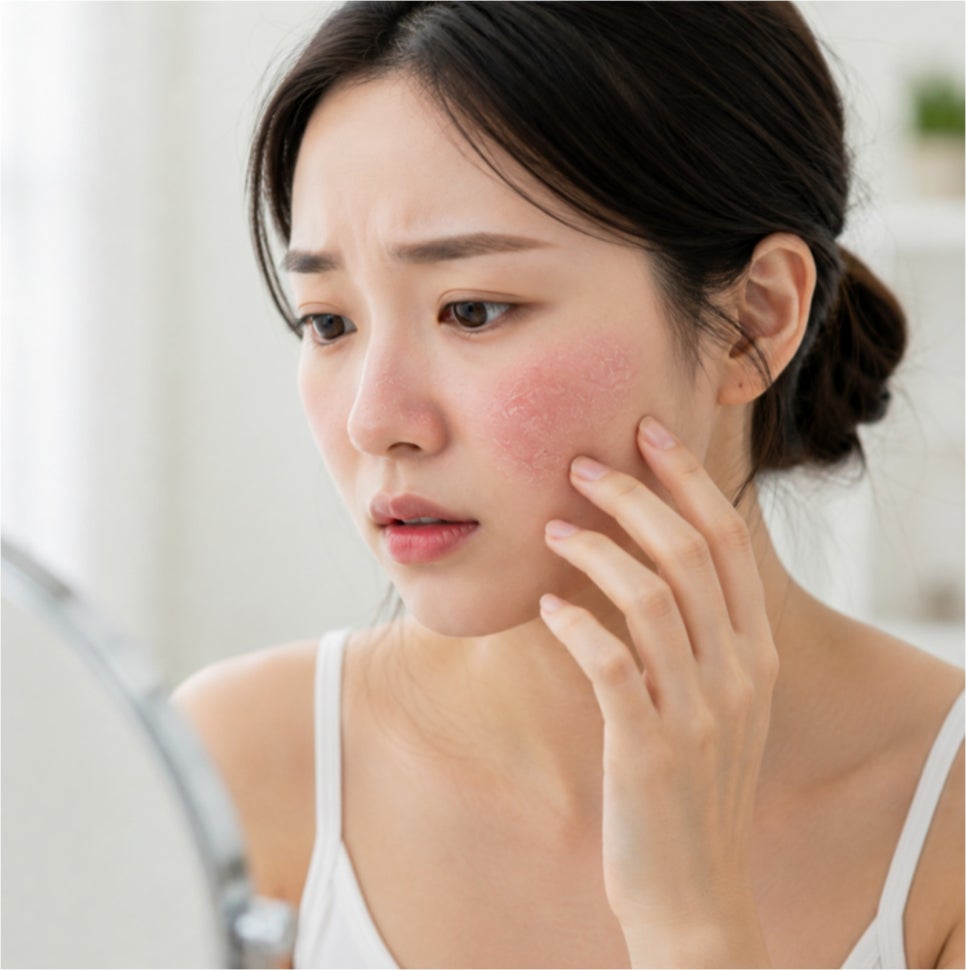
In addition to the skin symptoms, it is necessary to examine other problems that may accompany psoriasis.
In particular, if symptoms such as stiff joints in the morning, swelling of the fingers or toes, or persistent back or joint pain occur, it is important to inform a medical professional rather than assuming that they are unrelated to the skin symptoms.
Therefore, rather than approaching psoriasis simply as a problem involving scales on the skin’s surface, it is necessary to understand its characteristics as a chronic inflammatory disease and take a long-term management approach.
Psoriasis is a condition in which redness and scaling are noticeable, but the goal of treatment cannot be limited to simply eliminating the scales.
Because it is a chronic condition in which skin lesions may improve and then reappear, it is important not only to control the current symptoms but also to reduce recurrence and worsening while maintaining a stable condition.
Therefore, if skin changes have persisted for a long time due to psoriasis symptoms in Yeouido-dong, it is advisable to first receive a detailed diagnosis rather than repeatedly removing the scales yourself or relying only on moisturizing care.
If psoriasis is confirmed, the location and extent of the lesions, severity, response to previous treatment, and associated symptoms can be considered comprehensively to select an appropriate method step by step, ranging from topical treatment to phototherapy and systemic treatment.
Psoriasis Q&A
Q. Can psoriasis improve with proper use of moisturizer alone?
A. Moisturizing can help with dryness and skin barrier care, but it does not treat the inflammation itself. If symptoms persist, it is necessary to determine whether treatment appropriate for the condition is needed.
Q. Is it okay to remove psoriasis scales by hand?
A. It is best to avoid forcibly picking at the scales or rubbing them vigorously. Skin damage may trigger new psoriatic lesions or worsen existing symptoms. It is best to avoid forcibly picking at the scales or rubbing them vigorously. Skin damage may trigger new psoriatic lesions or worsen existing symptoms.
Q. Can psoriasis be treated with phototherapy alone?
A. Not everyone with psoriasis needs phototherapy, and whether phototherapy alone is sufficient also varies from person to person. The treatment plan, including topical or systemic treatment, is determined after considering the extent and severity of the lesions and the response to previous treatment.
Q. Can I stop psoriasis treatment immediately once my skin improves?
A. Because psoriasis is a chronic condition that can recur, management after symptoms improve is also important. Rather than deciding on your own when to use or stop treatment, it is advisable to consult a medical professional after considering your current condition and the possibility of recurrence.
Yeouido-dong Dermatology Clinic Psoriasis Symptoms: If Skin Changes Persist for a Long Time, How Should They Be Treated?
| This post was written for informational purposes in compliance with Articles 56(1) through 56(15) of the Medical Service Act. All treatments carry the risk of side effects and complications, which may vary from person to person. Before treatment, please have a thorough consultation with a medical professional with extensive experience before making a decision. |