Collagen is an ingredient that is always mentioned when discussing skin health.
It is commonly known as an ingredient related to firmness and wrinkles, but it is difficult to view collagen’s role as simply maintaining taut skin.
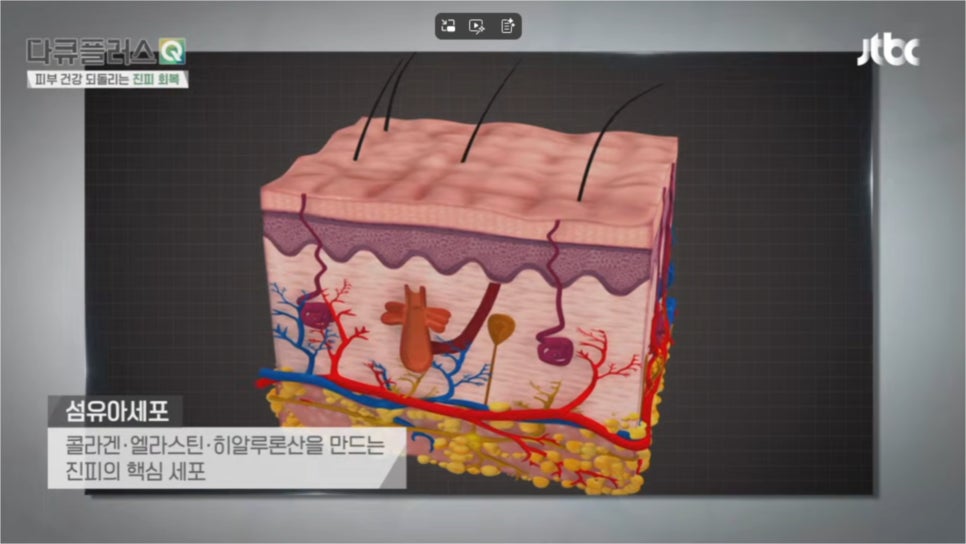
The skin consists of several layers, including the outer epidermis and the dermis beneath it. Collagen mainly supports the structure of the skin in the dermis.
The dermis contains collagen and elastin fibers, which are involved in maintaining the skin’s shape and support.
Then, if you have a skin condition, can your skin become healthy simply by managing collagen sufficiently?
Not necessarily.
Skin health is influenced not only by the structure of the dermis but also by various factors, including the skin barrier that protects against external stimuli from the outermost layer, inflammation, and moisture retention.
Therefore, if you are looking into skin conditions at a Singil Station dermatology clinic, it is important to check what changes are currently appearing in your skin rather than focusing only on one factor, collagen.
Today, we will look at the relationship between the skin and collagen, as well as the aspects that should be examined together when a skin condition is present.

What role does collagen in the skin play?
Singil Station Dermatology Clinic
Collagen makes up the dermis and plays an important role in maintaining the skin’s structure and support.
The skin appears externally to be a single thin membrane, but in reality it consists of several layers.
The outermost epidermis protects the body from external stimuli and harmful substances and prevents excessive moisture loss.
The dermis beneath it contains blood vessels, nerves, and hair follicles, as well as collagen and elastin.
Among these, collagen is a major protein that supports the structure of the dermis.
In simple terms, it can be viewed as one of the structural components that supports the skin so it can maintain a consistent shape and strength.
Elastin is also involved in the skin’s ability to stretch and return to its original state.
Collagen is also involved in the process of tissue recovery after the skin has been damaged.
The recovery process for a wound proceeds through several stages, from the inflammatory response to the formation and remodeling of new tissue, and collagen is an important component of this tissue-recovery process.
In other words, it is best to understand collagen not simply as an ingredient for wrinkles and firmness, but as an element that forms the skin’s structure and is also involved in recovery after damage.


What should be checked before collagen if you have a skin condition?
Singil Station Dermatology Clinic
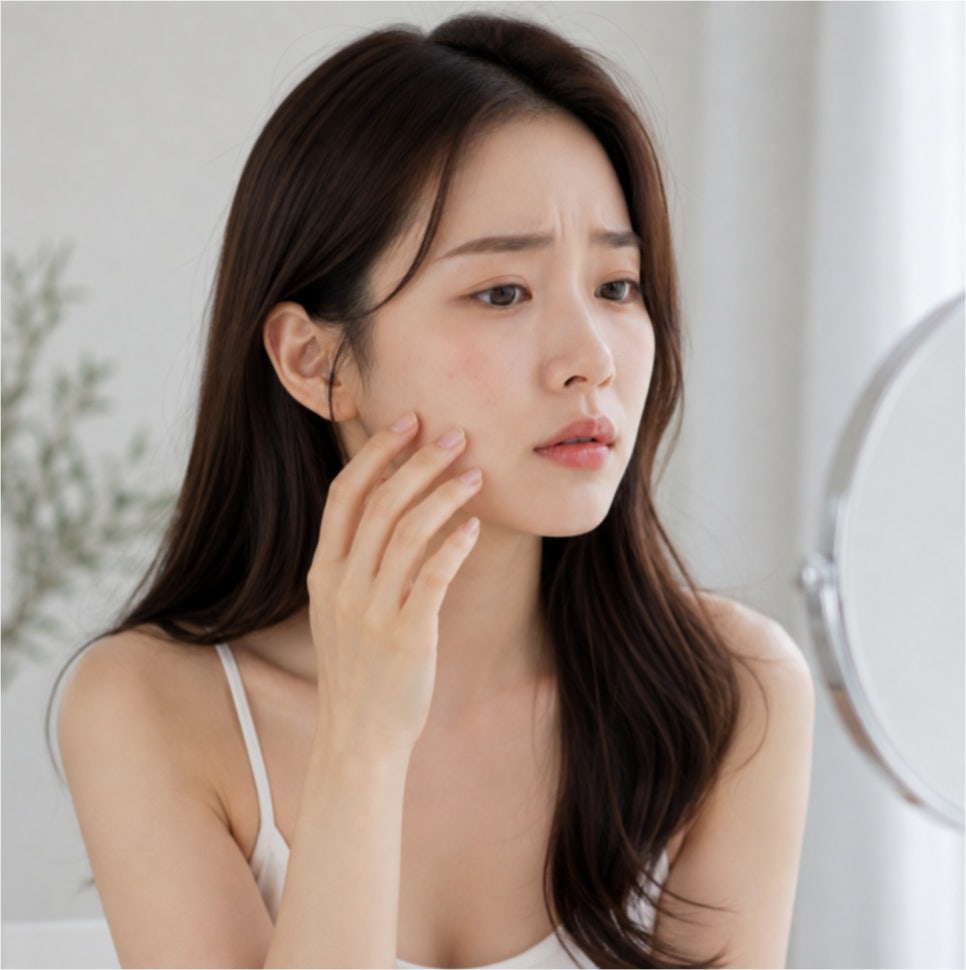
If recurring skin symptoms such as itching, redness, or scaling are present, the priority is to check what problem is currently affecting the skin rather than focusing on collagen itself.
When the skin feels dry and rough or seems to have lost firmness, it is easy to assume that collagen has decreased.
However, if symptoms such as itching, redness, scaling, or oozing recur, it is difficult to explain them simply as a decrease in collagen.
The epidermis, located on the outermost part of the skin, protects the skin from external stimuli and prevents moisture loss.
Therefore, when a skin condition is suspected, it is necessary to examine not only the collagen in the dermis but also the condition of the skin barrier and inflammation.
For example, repeatedly scratching the skin or allowing inflammation to continue for a long time can cause irritation to accumulate in the skin itself.
At this point, rather than focusing simply on firmness care, it is important to identify why the symptoms keep recurring and receive treatment appropriate for the skin condition.
In particular, if changes such as those below recur, it is advisable to have your skin condition checked.
-
Dryness and scaling recur even after moisturizing
-
A specific area remains red persistently
-
You frequently scratch your skin because of itching
-
The skin cracks or oozing occurs
-
Skin changes different from before continue for a long time
For skin health, it is necessary to check not only the visible texture or firmness of the skin but also whether the skin is currently performing its normal protective function.
Can eating or applying collagen help with skin conditions?
Singil Station Dermatology Clinic
Collagen and the treatment of skin conditions need to be considered separately.
Recently, collagen-containing health supplements and cosmetics have become readily available, so some people seek them out first when their skin does not look healthy.
Some studies on oral collagen supplementation have reported positive changes in skin moisture and firmness.
However, results differ among studies, and some have pointed out that there is insufficient evidence to determine treatment effects for skin-barrier conditions such as atopic dermatitis.
Above all, these findings should not be interpreted as equivalent to treatment efficacy for a specific skin condition.
The causes and treatment methods of skin conditions vary depending on the type.
Some conditions require inflammation to be controlled, while others require checking for infection, and for some conditions, care aimed at restoring the skin barrier is important.
Therefore, if you have recurring skin symptoms, the priority is to accurately identify the skin condition and determine what treatment and care your skin currently needs, rather than choosing a collagen product first.
Collagen is an important component of the skin, but skin health is not determined by collagen alone.

Collagen makes up the dermis, helps maintain the skin’s structure and support, and is also involved in the tissue-recovery process.
However, it is not appropriate to think that managing collagen alone is sufficient for healthy skin.
The skin consists of multiple structures, including the epidermis and dermis, which affect one another. The skin barrier that blocks external stimuli, moisture levels, and the presence or absence of inflammation are also important aspects of skin health.
Therefore, if you are looking into skin conditions at a Singil Station dermatology clinic, it is advisable to check not only skin firmness or collagen reduction but also whether symptoms such as itching, redness, or scaling are recurring.
In particular, if skin changes different from before persist for a long time, the cause should be checked first rather than relying only on cosmetics or nutritional ingredients.
Skin health begins with accurately observing the changes your skin is currently signaling, rather than simply replenishing one ingredient.
Q. Can a lack of collagen cause skin conditions?
A. Collagen is an important protein that maintains the structure of the skin, but a decrease in collagen itself cannot be considered the direct cause of every skin condition. Depending on the type of skin condition, various factors may be involved, including the skin barrier, inflammation, immune responses, and infection.
Q. Is dry skin also related to collagen?
A. Various factors affect the skin’s moisture levels. In particular, the barrier on the skin’s surface plays an important role in preventing excessive moisture loss, so if dryness recurs, the condition of the skin barrier should also be examined.
Q. What should be checked first for skin health?
A. It is advisable to first check the symptoms currently appearing. If itching, redness, scaling, or oozing recurs or persists for a long time, it is important to examine the skin’s condition and determine a treatment approach suited to the cause.
| This post was written for informational purposes in compliance with Article 56, Paragraphs 1–15 of the Medical Service Act. All treatments carry risks of side effects and complications that may vary from person to person. Before treatment, please have a sufficient consultation with a medical professional with extensive experience and make your decision afterward. |