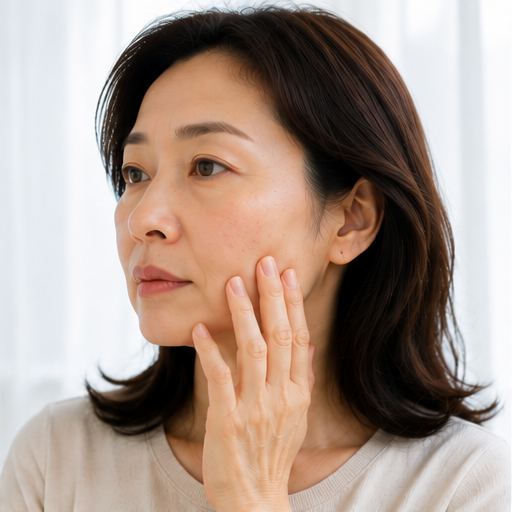
Psoriasis does not always appear over a wide area from the beginning.
Small red spots and scales may develop on specific areas such as the elbows or knees and gradually spread to the surrounding skin. In other cases, symptoms may remain for a long time in limited areas such as the scalp or nails.
For this reason, many people wonder, “Can psoriasis be managed simply by applying ointment consistently?” or “At what point should I receive another type of treatment?”
Psoriasis treatment is not determined simply by how much or how little scaling is present.
The treatment approach is decided by considering the extent of the lesions, the areas affected, the degree of redness and thickness, symptoms such as itching, and the impact on daily life.
Therefore, if you are looking into psoriasis treatment at an Omokgyo Station dermatology clinic, it is important to first determine how extensively the psoriasis is currently affecting you rather than choosing a specific treatment from the outset.
Today, we will explain in three parts how treatment may vary depending on the extent of psoriasis.
-Order of Topics in the Omokgyo Station Dermatology Clinic Column-
-
Why check the affected skin area first?
-
Should treatment for psoriasis covering a limited area begin with ointments?
-
Is another treatment necessary when psoriasis covers a wide area?
Why check the affected skin area first?
Omokgyo Station Dermatology Clinic
Psoriasis is a chronic inflammatory skin condition in which relatively well-defined red lesions appear on the skin and become covered with layers of scales.
However, even with the same condition, psoriasis may be limited to one or two areas, while in other cases it may appear extensively across multiple areas, from the arms and legs to the trunk.
These differences are an important basis for establishing a treatment plan.
When assessing the extent of psoriasis, it is necessary to examine how much of the total skin area is affected by psoriatic lesions.
At the same time, the degree of redness and thickness of the lesions, the condition of the scales, and the discomfort experienced by the patient are also assessed.
However, psoriasis affecting a limited area cannot automatically be considered mild.
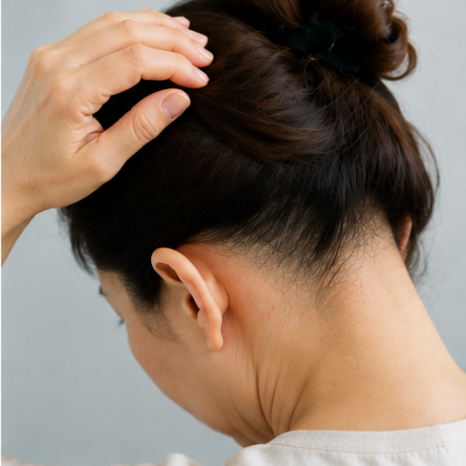
If psoriasis appears on areas that have a significant impact on daily life, such as the face, palms, or soles, even a small lesion can cause considerable discomfort.
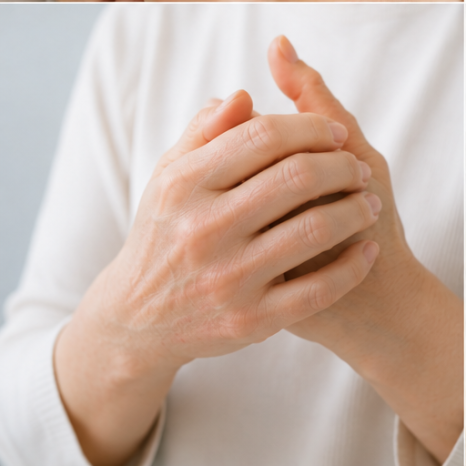
Nail psoriasis is another case in which it can be difficult to assess severity based on the extent alone.

Should treatment for psoriasis covering a limited area begin with ointments?
Omokgyo Station Dermatology Clinic
For relatively localized and mild psoriasis, treatment often begins with topical medications.
Topical medications used for psoriasis include corticosteroids and vitamin D analogues. The appropriate type and method of use are determined according to the location and condition of the lesions.
However, it is important to understand that a limited lesion does not necessarily mean that ointment alone will always be used.
| Checkpoints for Psoriasis Treatment |
|---|
| Extent of the lesions | How extensively psoriasis has appeared on the skin |
| Location | Whether it is an area that is difficult to treat, such as the scalp, face, hands, or feet |
| Condition of the lesions | The degree of redness, scaling, and thickness |
| Treatment response | Whether the lesions persist despite previous treatment |
For example, even if the lesions themselves are not extensive, other treatment methods may be considered if they do not respond sufficiently to topical treatment or repeatedly worsen.
In addition, rather than changing medication use arbitrarily when symptoms improve, it is important to adjust the amount used or the treatment method while checking the condition of the skin.
Is another treatment necessary when psoriasis covers a wide area?
Omokgyo Station Dermatology Clinic
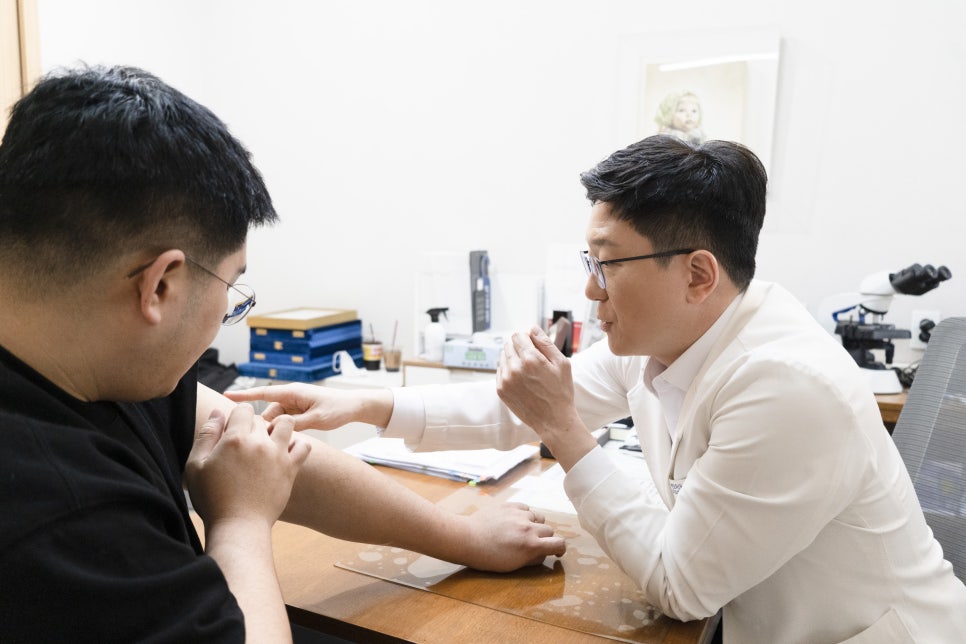
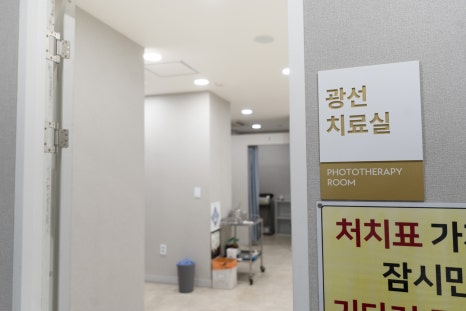
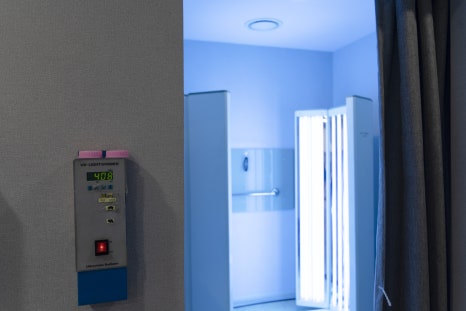
If the lesions cover a wide area or cannot be adequately controlled with topical treatment alone, phototherapy and other options may be considered in stages.
Phototherapy uses ultraviolet light of a specific wavelength to regulate the inflammatory response and rapid proliferation of skin cells associated with psoriasis.
Phototherapy may be considered when the condition is difficult to control with topical medication alone or when the lesions are so extensive that applying medication to each area is difficult.
Rather than thinking of psoriasis treatment as a fixed sequence that applies equally to every patient, it is better to understand that the necessary treatment stages are selected by considering the current extent and location of the lesions, the response to previous treatment, and the impact on daily life.

Even when psoriasis appears similar, with red spots and scales, the same treatment is not applied to every patient.
If psoriasis is limited to certain areas, treatment may focus on topical medication.
However, if the lesions spread or do not respond sufficiently to existing treatment, other options such as phototherapy or systemic treatment may be considered.
In addition, a small lesion area does not necessarily mean that the symptoms are mild.
If the lesions appear on areas that significantly affect daily life, such as the face, hands, feet, or scalp, or if itching and discomfort are substantial,
it may be necessary to adjust the treatment plan regardless of the actual area of skin affected.
Therefore, if you are looking into psoriasis treatment, it is important to first check where and over how wide an area the psoriasis has appeared,
how it has responded to previous treatment, and how much it is affecting daily life, rather than choosing a specific treatment method first.
Because psoriasis may improve and then recur, it is important not only to reduce current symptoms but also to monitor the condition of the skin consistently
and adjust the necessary treatment stages as needed.
Psoriasis Q&A
Q. If there are only a few psoriatic lesions, is ointment treatment alone sufficient?
A. For relatively mild psoriasis, treatment often focuses on topical medication. However, other treatments may be necessary depending on the location of the lesions and the response to previous treatment, so the decision is not based on the affected area alone.
Q. If the lesions spread, is phototherapy necessary?
A. Phototherapy may be considered when the lesions cover a wide area or cannot be adequately controlled with topical medication alone. However, it is not necessary for every patient; the decision is made after assessing the condition of the skin and the treatment response.
Q. Is the appropriate level of psoriasis treatment determined solely by the extent of the lesions?
A. No. In addition to the extent of the lesions, their location, symptoms, treatment response, and impact on daily life should all be considered. In particular, areas that greatly affect daily life, such as the hands, feet, or face, may require careful assessment even when the lesions are limited.
Omokgyo Station Dermatology Clinic: Why Psoriasis Treatment Stages Vary Depending on the Extent of Symptoms
| This post was written for informational purposes in compliance with Articles 56(1)–(15) of the Medical Service Act. All treatments carry the risk of side effects and complications, which may vary from person to person. Before undergoing treatment, please have a thorough consultation with a medical professional with extensive experience and make your decision afterward. |