In atopic dermatitis, itching does not end as a discomfort that is simply difficult to endure.
Scratching the skin because it itches may feel temporarily relieving, but repeated scratching can also become another source of irritation to the skin.
When the skin is damaged, its barrier function can become weaker, while inflammation and itching may worsen, leading to an “itch-scratch cycle” that causes you to scratch again.
In particular, if you continue scratching the same area for a long time, skin that was initially red and dry may gradually become rougher and thicker, with the skin texture becoming more prominent.
Controlling itching and inflammation through atopic dermatitis treatment is also important for reducing these chronic skin changes.
Therefore, if you are looking into atopic dermatitis treatment at a dermatology clinic near Sindorim Station, it is important to look beyond the itchy area and also check how often you scratch, whether the skin has become thicker than before, and whether wounds keep recurring.
Today, we will look at what changes may occur in atopic skin when the same area is scratched repeatedly and what should be checked during treatment and care.
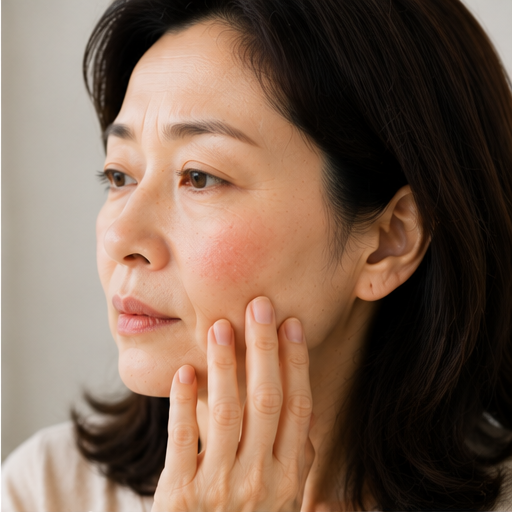
-Order of the Dermatology Clinic near Sindorim Station’s Column-
-
Why does atopic skin become itchier when you keep scratching it?
-
Does the skin become thicker if you scratch the same area?
-
How should atopic dermatitis be treated?
Atopic Dermatitis Treatment at a Dermatology Clinic near Sindorim Station: What Changes Can Occur in the Skin If You Keep Scratching the Same Area?
Why does atopic skin
become itchier when you keep scratching it?
Dermatology Clinic near Sindorim Station
Repeated scratching can damage the skin barrier and worsen inflammation, leading to a cycle in which itching is felt again.
Compared with normal skin, atopic skin has a weaker barrier function, reduced ability to retain moisture, and a tendency to react sensitively to external irritants.
If you repeatedly scratch the skin with your fingernails in this condition, tiny injuries may develop on the skin’s surface.
As a result, the skin can become drier and more sensitive, causing the itching to worsen and the process of scratching again to repeat.
In particular, you may scratch your skin unconsciously while sleeping.
If the itching becomes worse every night and you notice more scratch marks or wounds on your skin when you wake up in the morning, it is necessary to check whether this cycle is continuing.
Repeated scratching that damages the skin can cause cracks or wounds and may also increase the risk of infection.
This is also why reducing dryness and cracking through moisturization is emphasized as a basic part of atopic dermatitis care.
Therefore, rather than simply trying to suppress the urge to scratch whenever you feel itchy, it is important to manage both the inflammation and skin dryness that cause the itching.

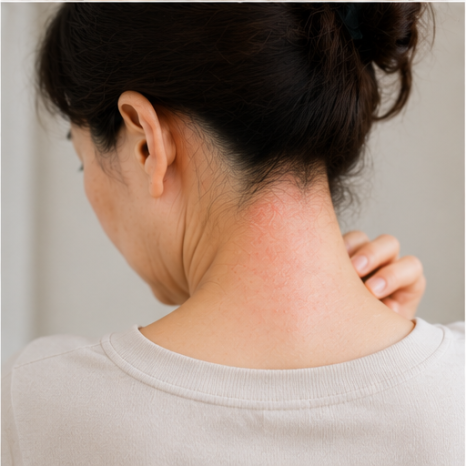
Does the skin become thicker
if you scratch the same area?
Dermatology Clinic near Sindorim Station
Repeated scratching and friction in the same area can cause lichenification, in which the skin becomes thick and rough.
Lichenified skin is somewhat different from simply dry skin.
It refers to a condition in which repeated irritation from scratching or rubbing over a long period causes the skin to thicken, making its texture and wrinkles more prominent than before.
If redness and itching were the main symptoms at first, over time the skin may feel rough and firm or may appear to have changed color.
Appropriate treatment for atopic dermatitis can also help reduce the risk of developing this thickened skin.
| Areas Scratched Frequently | Features That May Appear Due to Repeated Irritation |
|---|
| Around the neck | The skin may become rough, and wrinkles may appear more prominent |
| Inner elbows | The skin may become thicker and rougher |
| Behind the knees | Itching and irritation may recur mainly in the folds |
| Hands and wrists | The skin may crack as dryness worsens |
| Around the face | The skin may become sensitive, and redness may persist |
These changes may be particularly noticeable in areas that are repeatedly scratched, such as the neck, inner elbows, and behind the knees.
If the skin has already become thickened, rather than trying to resolve the issue simply by applying large amounts of moisturizer, it is advisable to check how much inflammation remains and whether there is any skin damage caused by scratching.
How should atopic dermatitis be treated?
Dermatology Clinic near Sindorim Station
To reduce itching, it is important to manage both the skin barrier and inflammation rather than focusing only on avoiding scratching.
Consistent moisturization is part of basic care for atopic dermatitis.
Moisturizers can help manage dry, cracked skin and maintain the skin barrier.
However, if the skin is inflamed, red, and itchy, moisturization alone may not be sufficient.
Depending on the severity of the symptoms, the affected area, and the person’s age, topical treatments such as steroid ointments may be used.
The strength of a steroid ointment may also be selected according to the severity of the symptoms, the treatment area, and the person’s age.
Therefore, rather than using an ointment prescribed for someone else or arbitrarily increasing the amount used whenever itching occurs, it is important to confirm how to use treatment appropriately for your current skin condition.


Atopic dermatitis itself is uncomfortable because of the itching, but it is also important to consider that repeatedly scratching the same area can change the condition of the skin.
In particular, if itching keeps you awake or you continue scratching your skin while asleep, it is advisable to check whether the current atopic dermatitis inflammation is being adequately controlled rather than considering it simply a habit.
Therefore, if you are looking into atopic dermatitis treatment at a dermatology clinic near Sindorim Station, it is important to examine not only visible redness but also how dry the skin is, whether scratch marks keep recurring in the same location, and whether the skin is becoming thicker.
Managing the skin barrier through moisturization and, when necessary, controlling inflammation and itching with treatment suited to the skin’s condition may help reduce repeated skin damage.
Atopic Dermatitis Q&A
Q. Will the skin become thicker if I keep scratching atopic skin?
A. Yes. Repeatedly scratching or rubbing the same area can cause lichenification, in which the skin becomes thicker and its texture more prominent. This change may be seen especially in areas where itching persists chronically.
Q. Is it okay to apply only moisturizer when I feel itchy?
A. Moisturization is a basic part of atopic skin care, but it may not be sufficient on its own when inflammation is severe. Depending on the condition of the skin, appropriate anti-inflammatory treatment may also be necessary.
Q. How can I manage unconsciously scratching at night?
A. First, it is important to appropriately manage the skin dryness and inflammation that cause itching. Keeping your nails short and smooth may also help reduce skin damage when you scratch. If symptoms are severe, the treatment approach may need to be adjusted.
Atopic Dermatitis Treatment at a Dermatology Clinic near Sindorim Station: What Changes Can Occur in the Skin If You Keep Scratching the Same Area?
| This post was written for informational purposes in compliance with Articles 56(1) through 56(15) of the Medical Service Act. All treatments carry the risk of side effects and complications, which may vary from person to person. Before receiving treatment, please have a thorough consultation with a medical professional with extensive experience and make your decision afterward. |