Some people think of acne scaling as a treatment to receive occasionally when acne appears on the skin.
However, acne does not always begin in the same way.
Some people have skin where small, flesh-colored bumps repeatedly appear along with excess sebum, while others develop multiple red and painful inflammatory lesions from the beginning.
Therefore, rather than applying acne scaling in the same way to all acne, it is important to first examine how clogged the pores currently are and what types of acne primarily appear.
Today, for those considering acne scaling, we will explain which skin types may be candidates and what else should be evaluated during treatment.
-Order of the Daerim Station Dermatology Clinic column-
-
Can it help skin with recurring small, flesh-colored bumps?
-
Can red and painful acne also be treated with scaling?
-
Why does acne continue to appear after scaling?
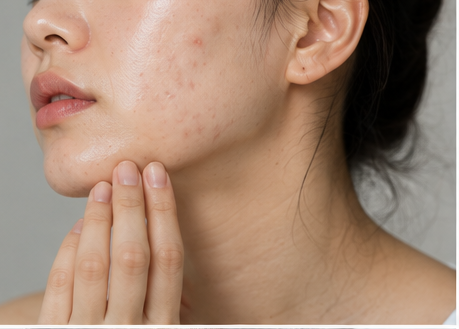
Can it help skin with
recurring small, flesh-colored bumps?
Daerim Station Dermatology Clinic Acne
Acne scaling may be considered for skin where pores clog easily and small, flesh-colored bumps recur.
Sebum is continuously produced in the skin, while old dead skin cells are shed.
However, when sebum and dead skin cells are not removed smoothly, the openings of the pores can become blocked, creating small comedones.
At first, the skin may simply feel bumpy to the touch, but some of these bumps gradually develop into red acne.
In such cases, scaling can be used to help manage clogged pores by clearing away dead skin cells accumulated on the skin’s surface and around the pores.
It may be considered particularly for the following skin types:
-
Small, flesh-colored bumps that frequently appear
-
Many whiteheads and blackheads
-
Excess sebum and pores that clog easily
-
Rough skin texture and dead skin cells that accumulate easily
However, scaling is not necessarily needed simply because the skin looks shiny or oily.
It is advisable to decide whether to undergo treatment after checking the current type of acne and the skin’s sensitivity.
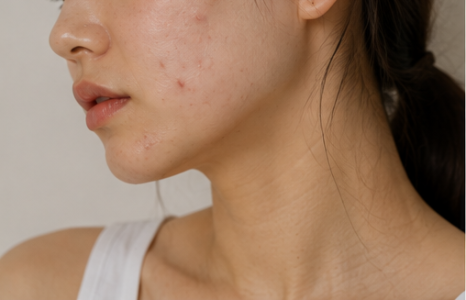
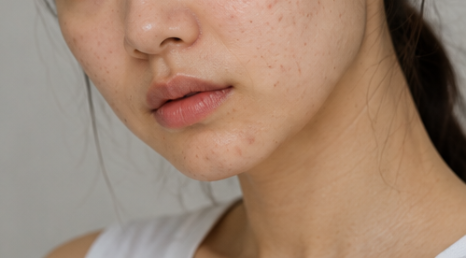
Can red and painful acne also be treated with scaling?
Daerim Station Dermatology Clinic Acne
If there are many inflammatory acne lesions, it is important to assess the severity of the inflammation rather than focusing only on scaling.
Unlike small, flesh-colored bumps, acne that is red and swollen, painful, or filled with pus may already be in an inflammatory stage.
At this point, forcibly removing dead skin cells or extracting lesions may instead add further irritation to the skin.
Therefore, if red acne recurs, it is necessary to first check how extensively the inflammation is appearing, whether there are deep acne lesions, and whether marks or scars are developing.
Depending on the situation, topical or oral medication and extraction may be considered together, and whether to perform scaling is determined according to the condition of the skin.
-
Many small, flesh-colored bumps → Check for clogged pores and the condition of dead skin cells
-
Many red acne lesions → Check the severity and extent of inflammation
-
Recurring deep and painful acne → Check the risk of scarring and the treatments needed
The appropriate approach may differ in this way.
Rather than looking only at whether the number of acne lesions is large or small, it is important to first distinguish which stage of lesions is currently most prevalent.
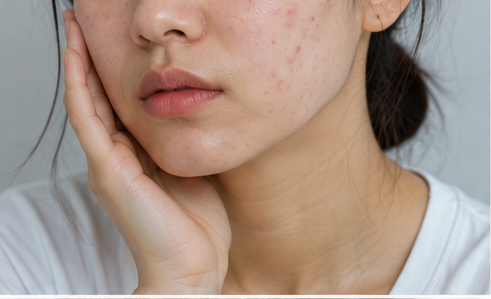
Why does acne continue to appear after scaling?
Daerim Station Dermatology Clinic Acne
Because acne is not caused solely by dead skin cells, new lesions may appear even after scaling.
Even if the skin feels smoother after scaling, small, flesh-colored bumps may reappear over time.
This does not necessarily mean the treatment was performed incorrectly; rather, multiple factors, including sebum production, clogged pores, and inflammation, contribute to acne formation.
Therefore, instead of trying to prevent recurrence simply by repeating scaling frequently, it is necessary to manage the factors causing new acne to continue appearing.
After treatment, it is advisable not to rub the skin vigorously or forcibly remove dead skin cells, and attention should also be paid to moisturizing and sun protection.
Caution is also needed because adding scrubs or peeling products may subject the skin to overlapping irritation.
If acne continues to recur, it is important to reassess the current skin condition and adjust the treatment method rather than simply increasing the number of scaling sessions.
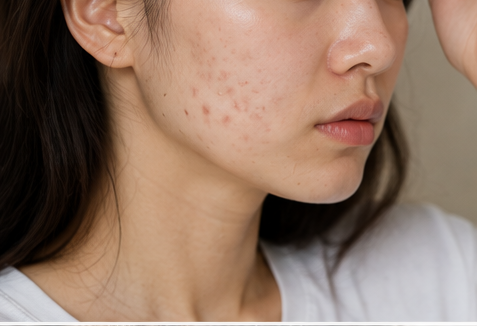
Acne scaling is not a treatment that is equally necessary for every acne-prone skin type.
In particular, scaling may be considered depending on the current condition when pores are frequently clogged by sebum and dead skin cells, causing small, flesh-colored bumps or comedones to recur.
On the other hand, if red and painful inflammatory acne or deep lesions recur, it is necessary to first assess the degree of inflammation and plan any needed treatments together rather than receiving scaling alone.
Therefore, if you are considering acne scaling, instead of deciding on treatment simply because your skin looks oily or you have many acne lesions, it is advisable to first determine whether you have small, flesh-colored bumps, inflammatory acne, or a combination of both.
It is important to appropriately select the treatment your skin currently needs and to manage it consistently so that new acne does not continue to recur.
Acne Q&A
Q. Can scaling help with small, flesh-colored bumps?
A. If there is a large amount of sebum and dead skin cells blocking the pores, scaling may be considered as one treatment option. However, the skin’s sensitivity and the current condition of the acne should be checked first.
Q. Are acne extraction and scaling the same treatment?
A. They are different. Extraction focuses on removing already formed comedones, while scaling clears away dead skin cells from the skin’s surface and around the pores.
Q. Can scaling be performed for pus-filled acne?
A. It may be used depending on the condition of the skin, but if the inflammation is severe or there are many deep acne lesions, it is necessary to check whether another treatment should take priority.
Q. Will acne occur less often if I receive scaling frequently?
A. Increasing the number of treatments does not necessarily reduce acne. Excessive irritation can make the skin sensitive, so it is advisable to determine the treatment interval according to the severity of the acne and the skin’s response.
Daerim Station Dermatology Clinic: Acne Scaling—Which Skin Types Can It Help?
| This post was written for the purpose of providing information in compliance with Articles 56(1) through 56(15) of the Medical Service Act. All treatments carry the risk of side effects and complications, which may vary from person to person. Before treatment, please make your decision only after having a thorough consultation with medical professionals who have extensive experience. |