As dandruff increases on the scalp, it may become itchy and red. Around the same time, flaking and redness may also develop around the eyebrows or nose.
Because the scalp and face are separate areas, it is easy to think that they are different skin problems.
However, seborrheic dermatitis is a chronic inflammatory skin condition that mainly occurs in areas with high sebum production.
Typically, symptoms can appear not only on the scalp but also around the eyebrows, between the eyebrows, around the nose, around the ears, and on the chest.
Therefore, if similar symptoms repeatedly appear on the scalp and face, it is important to consider whether seborrheic dermatitis may be occurring in multiple areas rather than managing each area separately.
Today, focusing on seborrheic dermatitis, we will explain why symptoms can occur simultaneously on the scalp and face, as well as treatment and management methods by area.
-Dangsan Station Dermatology Clinic Column Contents-
-
Why does seborrheic dermatitis appear on both the scalp and face?
-
Can scalp and facial symptoms be treated in the same way?
-
Why do symptoms improve and then reappear?
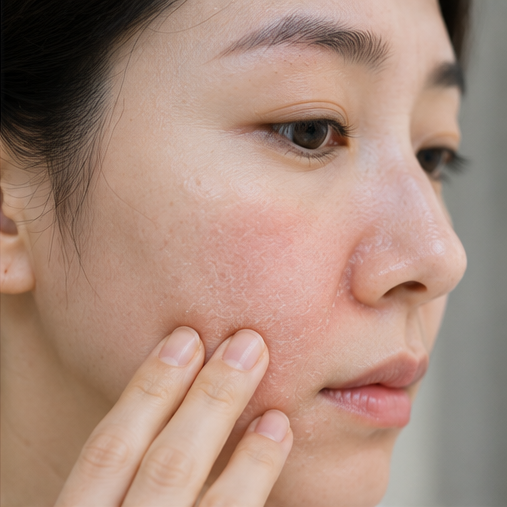
Dangsan Station Dermatology Clinic: Why Do Seborrheic Dermatitis Symptoms Appear on Both the Scalp and Face?
Why does seborrheic dermatitis appear on both the scalp and face?
Dangsan Station Dermatology Clinic Seborrheic Dermatitis
This is because both the scalp and face have a high concentration of sebaceous glands.
Although no single exact cause of seborrheic dermatitis has been identified, it is known to be associated with inflammatory reactions that can occur in the skin.
Symptoms tend to appear particularly in areas where relatively large amounts of sebum are produced.
Rather than understanding dermatitis that begins on the scalp as simply “spreading” to the face, it is better to understand that the scalp and face both provide conditions in which seborrheic dermatitis can easily develop, allowing symptoms to appear simultaneously in multiple areas.
On the face, it does not usually appear just anywhere. The following areas are primarily examined:
-
Around the eyebrows and between the eyebrows
-
Along both sides of the nose and around the nasolabial folds
-
The hairline
-
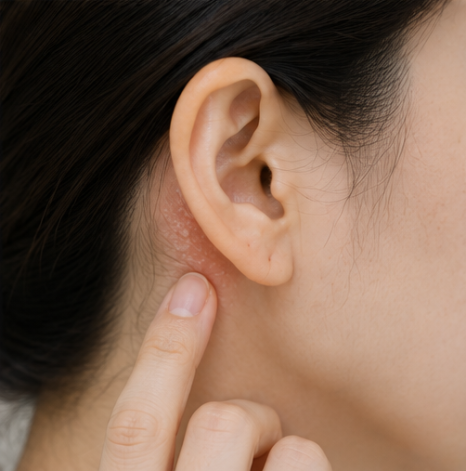
The ears and behind the ears
-
Areas where facial hair grows
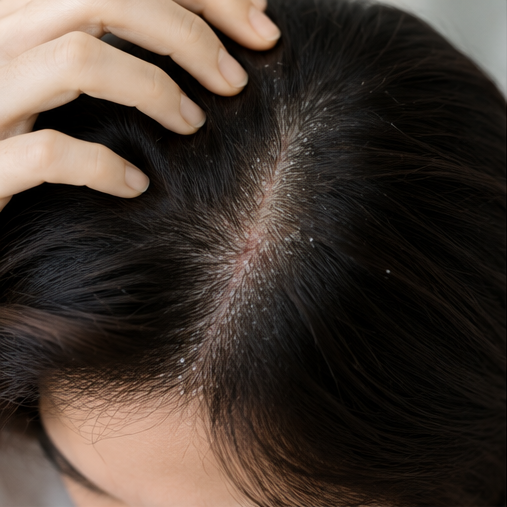
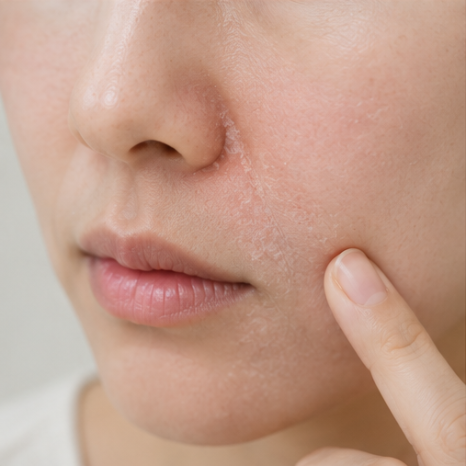
The scalp may develop white or yellow flakes that look like dandruff, along with redness. On the face, thin flakes may repeatedly appear over red patches.
Can scalp and facial symptoms be treated in the same way?
Dangsan Station Dermatology Clinic Seborrheic Dermatitis
Even when the condition is seborrheic dermatitis, the treatment methods and management approaches used may differ depending on the affected area.
The scalp has hair, and flakes or dandruff often appear over a relatively broad area.
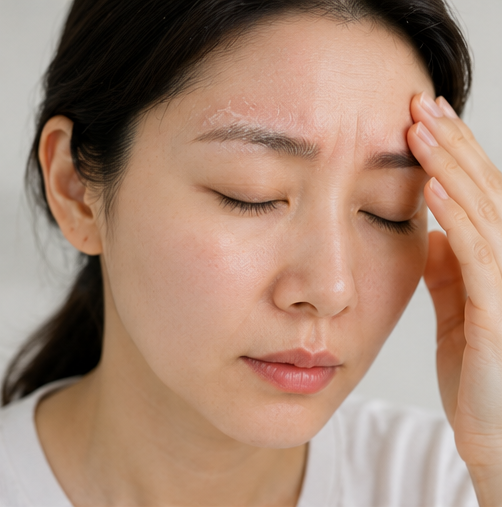
In particular, thin flakes and redness may appear around the eyebrows and between the eyebrows, while redness accompanied by recurring flaking may develop around the nose.
Symptoms may also extend to the area around the ears or the hairline.
For seborrheic dermatitis on the face, topical medication to control inflammation may be used as appropriate after examining its location and the degree of inflammation.
Therefore, when symptoms appear on both the scalp and face, it is important not to manage them all with a single approach. Instead, assess separately the extent of dandruff and inflammation on the scalp and the areas of redness and flaking on the face.
Even with the same seborrheic dermatitis, skin condition and affected areas may differ, so treatment methods and the intensity of management should be adjusted according to the symptoms in each area.
Why do symptoms improve and then reappear?
Dangsan Station Dermatology Clinic Seborrheic Dermatitis
Seborrheic dermatitis is not necessarily a condition that ends completely after a single course of treatment. It may improve and then reappear.
Even if redness and flaking decrease through treatment, symptoms may return over time.
Stress and lack of sleep may also contribute to worsening symptoms, and symptoms may become more severe depending on the season.
Therefore, rather than immediately stopping all management as soon as symptoms improve slightly, it can be helpful to observe the circumstances in which scalp and facial symptoms reappear.
However, not all redness and flaking on the face is caused by seborrheic dermatitis.
Psoriasis, atopic dermatitis, rosacea, and contact dermatitis can also cause similar symptoms. If symptoms continue to worsen despite treatment or appear in a different pattern than usual, it is necessary to distinguish them from other skin conditions.
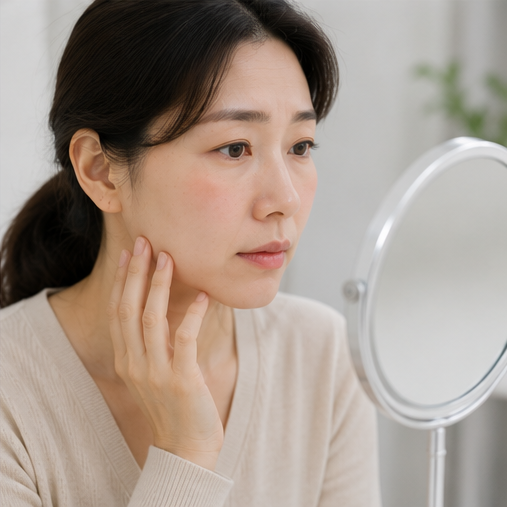
There is no need to conclude that two different skin conditions have developed simultaneously simply because flaking and redness appear together on the scalp and face.
This is because seborrheic dermatitis can occur on both the scalp and face, where sebaceous glands are well developed.
In particular, if redness and flaking repeatedly occur around the eyebrows, between the eyebrows, around the nose, or around the ears, in addition to dandruff and itching on the scalp, it is advisable to assess the overall distribution of symptoms together.
If you are looking into treatment for seborrheic dermatitis, rather than repeatedly using the same method for the scalp and face, it is important to identify which symptoms occur in which areas and proceed with treatment and management according to the characteristics of the skin in each area.
Seborrheic dermatitis can also recur, so even after symptoms improve, it is necessary to reduce irritation and continue observing the pattern of recurrence.
Seborrheic Dermatitis Q&A
Q. If I have seborrheic dermatitis on my scalp, will it spread to my face?
A. It is difficult to view it as simply moving from the scalp to the face. Because both the scalp and face have many sebaceous glands, seborrheic dermatitis can appear in multiple areas at the same time.
Q. If my face becomes flaky, does that mean I have seborrheic dermatitis?
A. Not necessarily. Similar changes can also occur with contact dermatitis, atopic dermatitis, psoriasis, and other conditions. The location of the flaking should be assessed together with symptoms such as redness and itching.
Q. Does having a lot of dandruff always mean that I have seborrheic dermatitis?
A. Dandruff is sometimes described as a form of seborrheic dermatitis in which inflammation is not prominent, but scalp flaking can also have other causes. If redness or itching is severe or keeps recurring, it is advisable to have the condition of the scalp evaluated.
Q. If my symptoms increase, can I stop treatment immediately?
A. Seborrheic dermatitis tends to recur, so maintenance care may be necessary depending on the condition even after symptoms improve. The duration and frequency of using treatment products or medicated shampoo should be adjusted according to the current symptoms.
Dangsan Station Dermatology Clinic: Why Do Seborrheic Dermatitis Symptoms Appear on Both the Scalp and Face?
| This post was written for informational purposes in compliance with Article 56, Paragraphs 1–15 of the Medical Service Act. All treatments carry the risk of side effects and complications, which may vary from person to person. Before treatment, please make a decision only after having a thorough consultation with a medical professional with extensive experience. |