Acne is often treated first with a topical ointment.
For early comedonal acne or cases without much inflammation, treatment can begin with topical medication. However, there are also cases in which red pimples continue to appear or the inflammation spreads even after consistent use.
In such cases, rather than simply applying the ointment more frequently, it is necessary to reassess the type and severity of the acne.
Acne begins when pores become clogged, but as inflammation progresses, it can develop into red papules, pus-filled pustules, or deep and painful nodules.
Therefore, if you are looking into an acne medication prescription, before assuming that ointment treatment is ineffective, it is important to first determine whether your current acne can be managed with topical treatment alone.
-Order of the Hwagok-dong Dermatology Clinic Column-
-
Why does acne keep appearing even after applying ointment?
-
What if ointment treatment is not enough?
-
What treatment is needed along with a medication prescription?
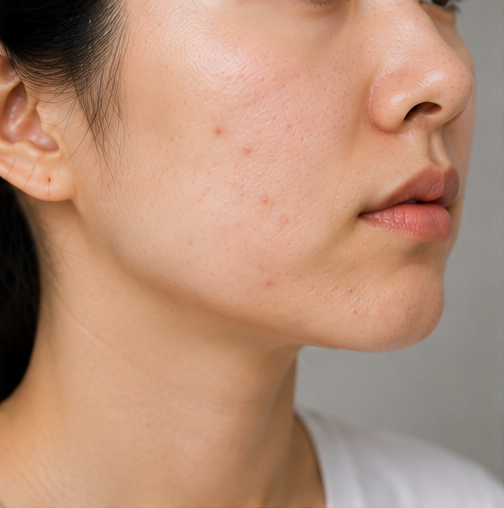
Hwagok-dong Dermatology Clinic: Acne Medication Prescription—What to Do If Ointment Treatment Alone Does Not Improve It
Why does acne keep appearing
even after applying ointment?
Hwagok-dong Dermatology Clinic Acne Care
This is because the necessary treatment differs depending on the type and severity of the acne.
Not all acne ointments serve the same purpose.
Some ointments help reduce clogged pores, while others are used to control inflammation and acne-causing bacteria.
Therefore, if you are managing your skin with a method that does not match its current condition, or if you have not used the medication correctly for a sufficient period, the changes may not be as noticeable as expected.
In addition, if acne that initially consisted mainly of small, grain-like comedones changes over time into red and painful inflammatory acne, the treatment method may need to be reassessed.
It is especially advisable to check whether your current treatment is appropriate if you notice the following changes:
-
New red pimples continue to appear
-
Inflammation spreads to multiple areas of the face
-
There is pus, or the area is painful when touched
-
Deep, hard pimples recur
-
Marks or scars remain where the inflammation has subsided
If the form of your acne is changing in this way, it may be necessary to adjust the treatment according to the current degree of inflammation rather than repeatedly using only the ointment you have been applying.

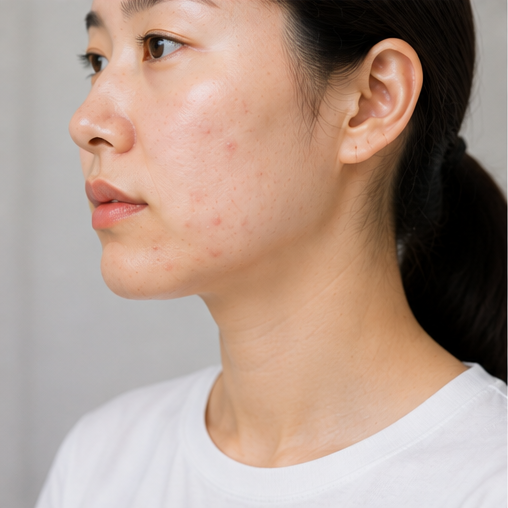
What if ointment treatment is not enough?
Hwagok-dong Dermatology Clinic Acne Care
If inflammatory acne appears over a wide area or cannot be adequately controlled with topical treatment alone, oral medication may be considered.
Common oral medications used for acne include antibiotics and isotretinoin, but they are not prescribed in the same way for every case of acne.
When red inflammatory acne appears in multiple areas, oral antibiotics may be used for a certain period together with topical treatment.
On the other hand, if inflammation is severe, deep acne recurs, or there is not a sufficient response to other treatments, isotretinoin treatment, which reduces sebum production, may also be considered.
The type of medication should be determined after checking whether the acne is primarily comedonal, inflammatory, or in the form of deep nodules, as well as the extent of the affected area.
In particular, the precautions and points that need to be checked while taking oral acne medication differ depending on the type. It is therefore best to avoid taking it on your own or reusing medication prescribed in the past.
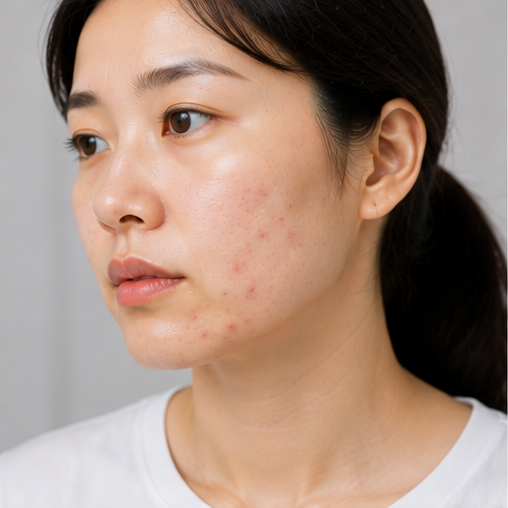
What treatment is needed along with a medication prescription?
Hwagok-dong Dermatology Clinic Acne Care
Acne treatment should address both reducing new inflammation and managing pores that are already clogged.
Taking medication does not immediately eliminate all comedones and sebum remaining in the skin.
If there are many small, grain-like pimples or clogged pores, treatments such as comedone extraction or acne scaling may be considered depending on the condition of the skin.
In contrast, forcibly squeezing red, pus-filled pimples at home may worsen the inflammation or lead to hyperpigmentation and scarring, so caution is needed.
Skin-care practices are also important during acne treatment.
Washing your face excessively or repeatedly scrubbing to remove dead skin cells can irritate the skin.
Rather than trying to remove all oil simply because you have acne, it is better to continue the necessary treatment consistently while minimizing irritation.
In addition, treatment may be adjusted while monitoring whether the number of new pimples is decreasing and whether the severity of the inflammation is improving.
Even if you have used ointment consistently and acne continues to appear, simply increasing the amount of ointment or switching to another product may not be the only solution.
This is because acne that initially consisted mainly of small, grain-like pimples can change over time into red inflammation or pus-filled pimples, and the affected area may also change.
Therefore, if you are looking into an acne medication prescription, it is important to check the type of acne, degree of inflammation, affected area, and risk of scarring along with the ointment you are currently using.
If the condition is difficult to manage with topical treatment alone, oral medication may be considered. When necessary, treatments suited to the condition of the skin, such as extraction or scaling, may also be performed together.
Ultimately, what is important in acne treatment is not repeatedly using one method, but checking what stage the skin is currently in and adjusting the treatment accordingly.
Acne Q&A
Q. If new pimples appear even after applying acne ointment, does that mean it is ineffective?
A. It is difficult to conclude immediately that it is ineffective. Acne treatment requires a certain amount of time, and the type of medication and how it is used also have an effect. However, if the inflammation continues to increase despite sufficient treatment, it is advisable to reassess the current treatment method.
Q. Are oral acne medications prescribed only when the inflammation is severe?
A. It depends on the type and severity of the acne. Oral medication may be considered when inflammatory acne appears over a wide area or is difficult to control with topical treatment alone.
Q. Are oral medication and ointment sometimes used together?
A. Yes. Depending on the condition of the acne, oral medication and topical treatment may be used together. However, the type of medication and duration of use should be determined according to the condition of the skin.
Q. If acne keeps appearing, should I start with extraction?
A. Not all acne should be extracted. While extraction may be helpful for some lesions, such as comedones, forceful extraction may need to be avoided for severely inflamed or deep acne. It is important to first distinguish the current type of acne and then choose the necessary treatment.
Hwagok-dong Dermatology Clinic: Acne Medication Prescription—What to Do If Ointment Treatment Alone Does Not Improve It
| This post was written for informational purposes in compliance with Articles 56(1) through 56(15) of the Medical Service Act. All treatments carry the risk of side effects and complications, which may vary from person to person. Before treatment, please have a thorough consultation with a medical professional with extensive experience and make your decision afterward. |