Thread Lifting? If You Understand It Properly Before Getting It, It Lasts Longer. <Effects, Recommended Candidates, Duration>
Hello,
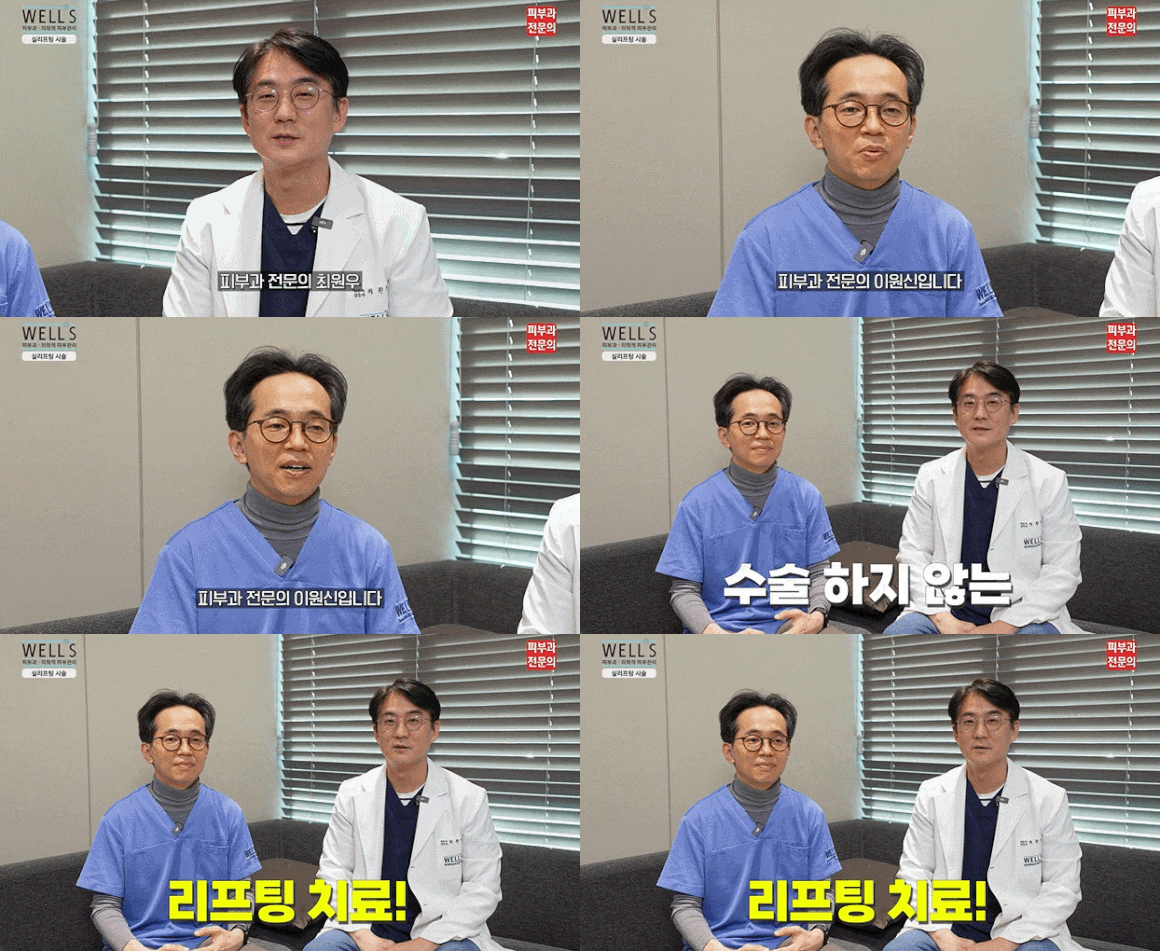
We are dermatology specialists Choi Won-woo and Lee Won-shin with 22 years of experience.
At some point, every time you look in the mirror, you start to notice a face that looks different from before.
The jawline becomes less defined, and you may feel as if the entire face is drooping downward.
These changes are a natural part of the passage of time, but when you actually face them, it is also true that they can weigh on your mind.
That is why many people look for a method that is less burdensome than surgery and can improve things while still allowing daily life to continue.
In that process, many people become interested in non-surgical lifting, especially thread lifting.
So today, I will carefully explain the principles of thread lifting, who it is suitable for, the maintenance process, and recent changes in materials.
Table of Contents
-
What is thread lifting?
-
It is good for these people.
-
The duration depends on skin condition.
-
The material of the thread also matters.
-
What is thread lifting?
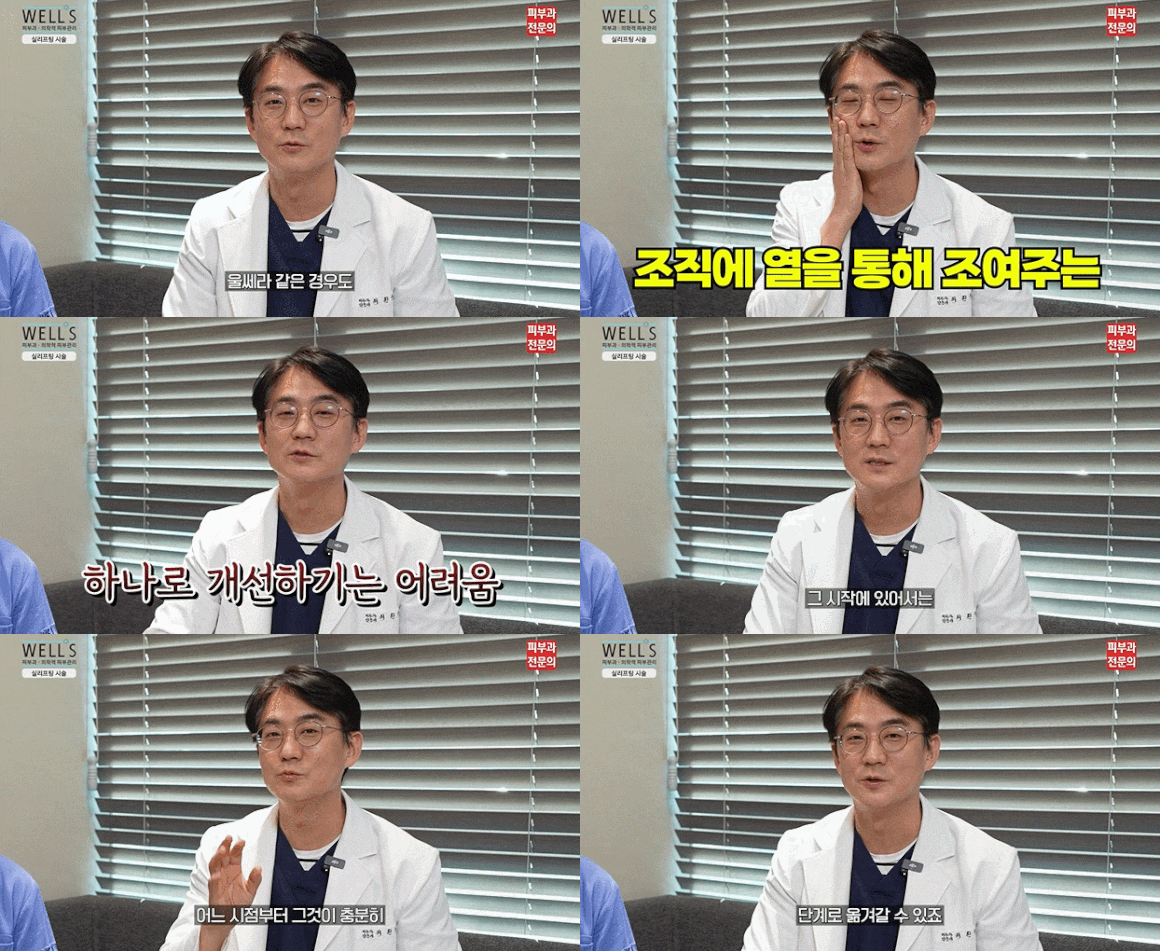
Thread lifting is a method in which dissolvable threads are inserted into the skin to directly support sagging or loosened tissue.
Unlike device-based procedures such as laser or radiofrequency, which improve the skin’s own elasticity, thread lifting works by physically pulling and fixing the tissue with the threads.
So when the skin is in a state where it cannot support itself well, it can provide structural support.
In the past, bidirectionally barbed threads were widely used.
However, these barbed threads had a limitation in that the barbs could easily break over time.
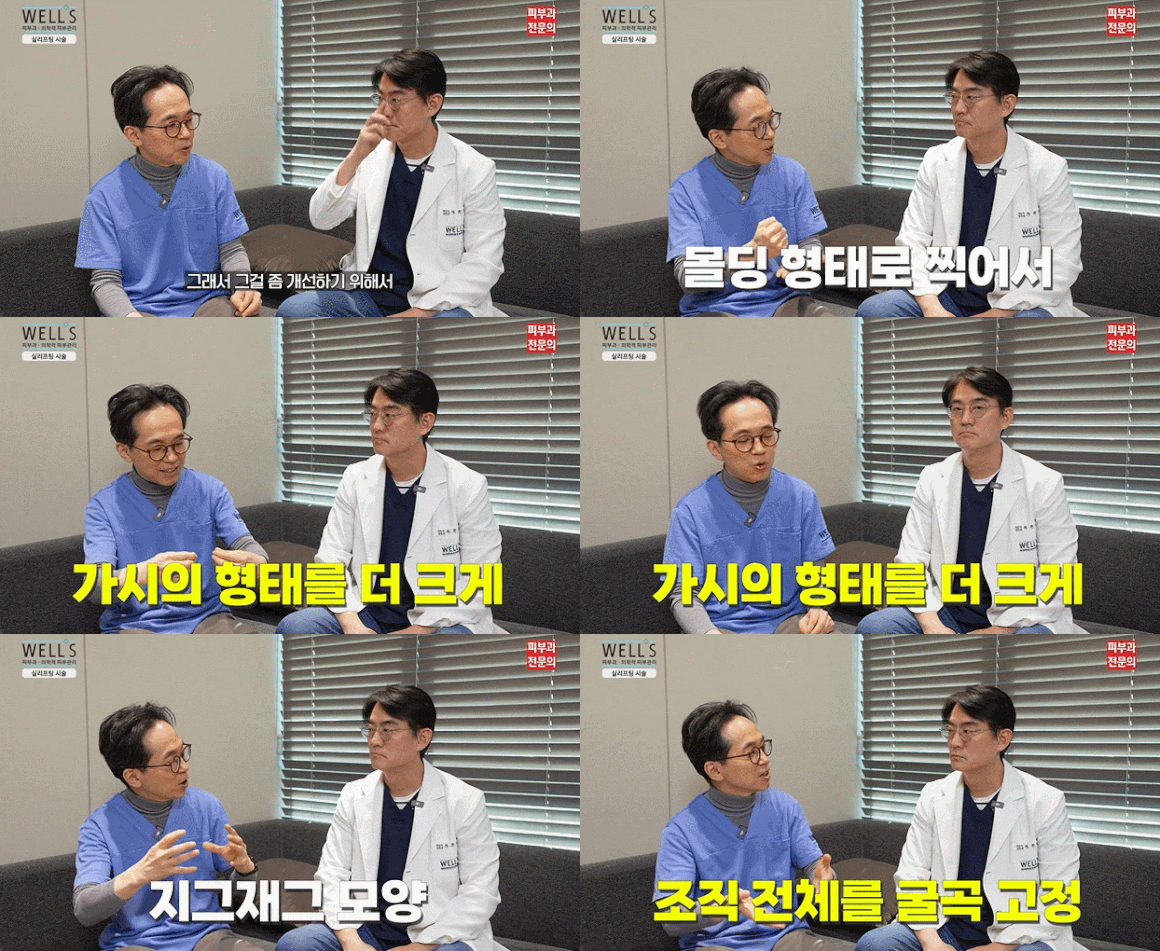
Recently, to address these shortcomings, more durable cog threads made using a molding process have been developed.
In addition, threads designed with a zigzag structure that can hold tissue more broadly are also being used.
As the types of threads have become more diverse, it has become possible to choose the appropriate thread according to each person’s skin condition and degree of sagging.
The important point here is that it is not simply a matter of pulling upward,
but rather the key is to finely match the type of thread and the direction of insertion according to the tissue structure and direction.^^
Even with the same thread, the result can differ depending on where it is inserted and at what angle.
- It is good for these people.
Thread lifting may be helpful when the skin is generally thin and has lost elasticity, making it appear loose.
However, there is one thing to keep in mind here.
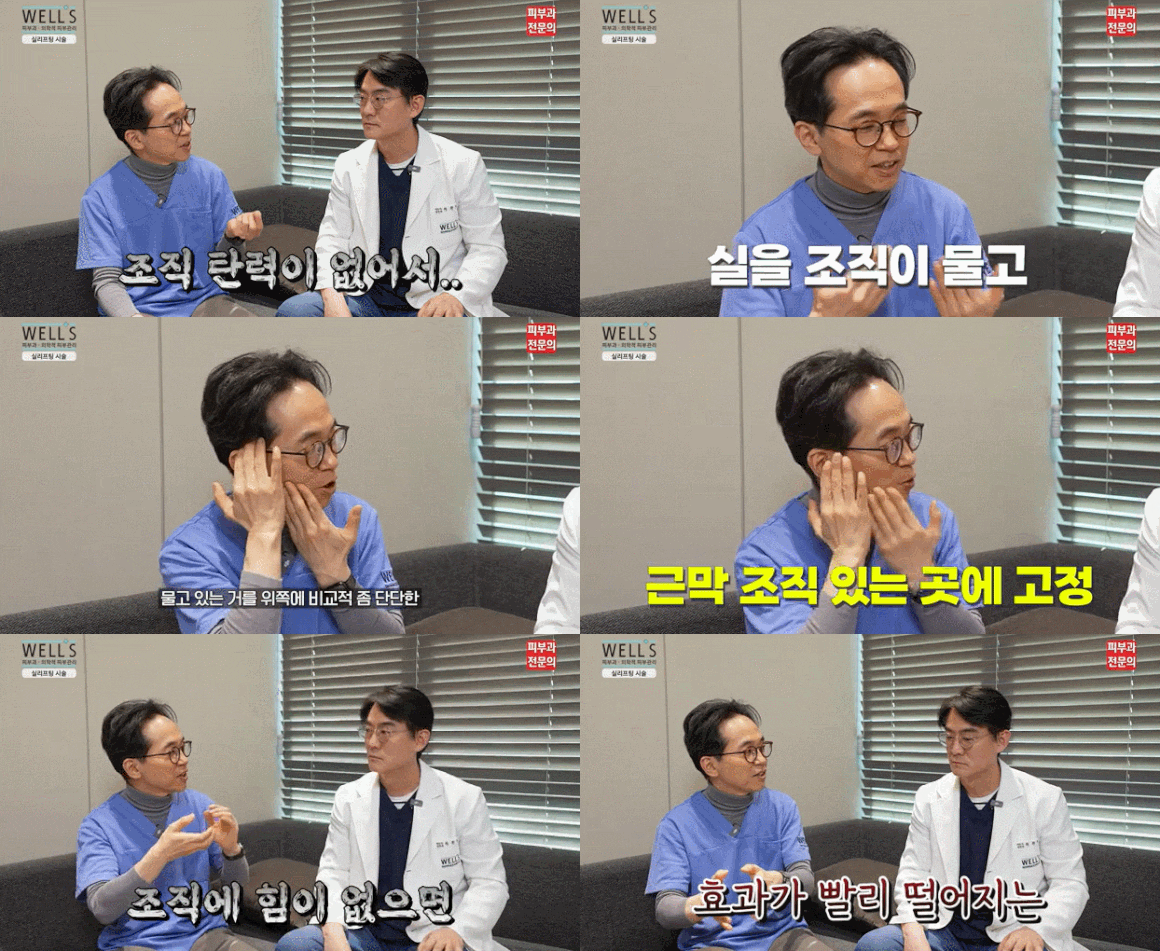
If the tissue’s own strength is too weak, the threads may not hold the tissue for long, and the maintenance period may become shorter.
Just as a nail driven into a crumbling wall will not hold for long, if the skin’s basic elasticity is not in place, the threads will have difficulty doing their job.
That is why, before receiving thread lifting, it is important to first build up the skin’s basic condition, that is, its elasticity.
In general, it is best to strengthen the skin’s elasticity and thickness first using radiofrequency- or ultrasound-based lifting devices, and then proceed with thread lifting.
If you induce collagen production and firm the skin through procedures such as Ulthera or Thermage, then insert the threads on top of that, the threads can hold the tissue more securely.
Depending on the situation, collagen-stimulating procedures such as Sculptra may also be performed together.
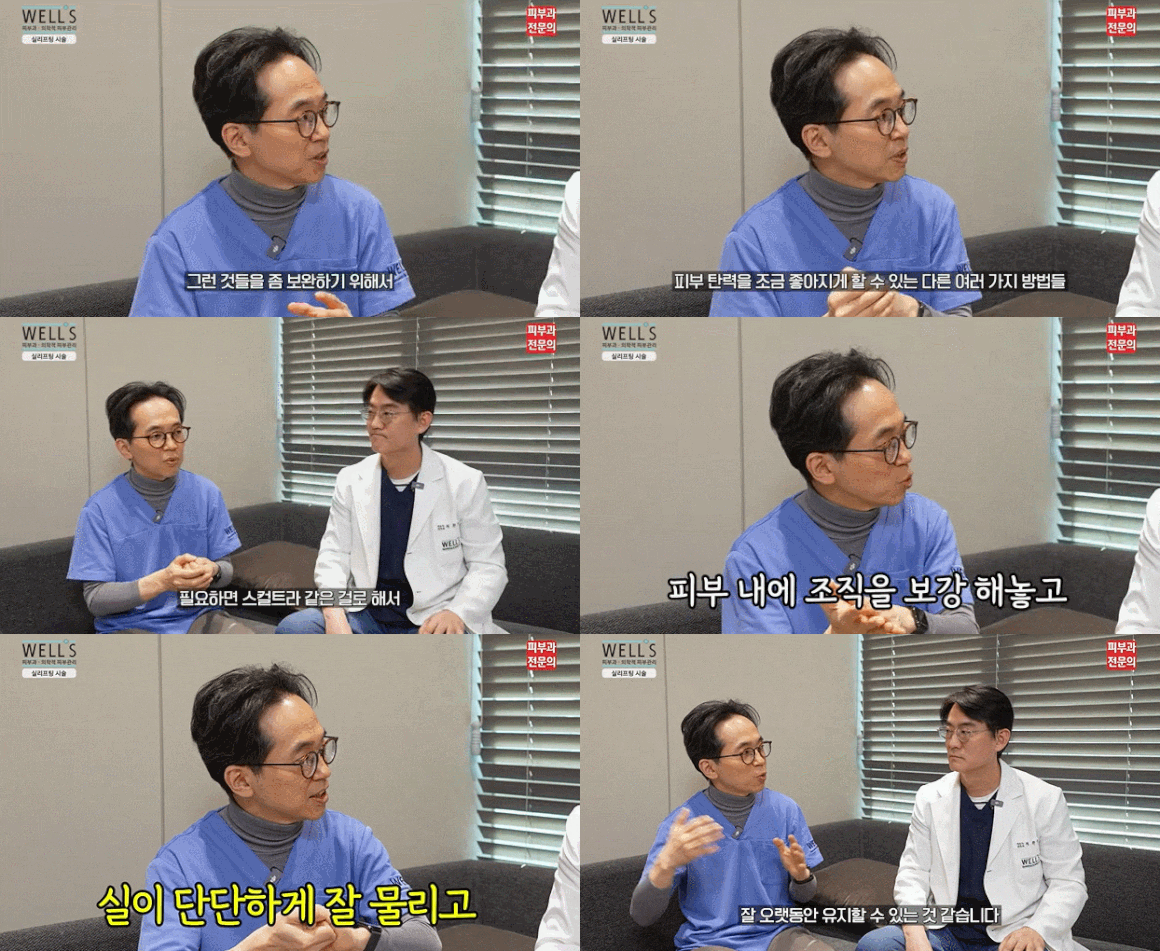
In this way, the threads are firmly fixed within the tissue, and the maintenance period continues more stably.
Also, for people with a lot of volume, it is necessary to first reduce the weight of the fat.
If only threads are inserted while the fat is still pulling downward heavily, the threads may loosen sooner.
So, after first reducing the volume in the necessary areas and reinforcing areas that lack elasticity,
finishing with thread lifting at the end creates the most natural and long-lasting result.
- The duration depends on skin condition.
Thread lifting provides an immediate pulling effect right after the procedure.
Because the threads physically lift the tissue, the change appears right away.

And after about a month, it settles in naturally and harmonizes with facial expressions.
As for the maintenance period, it is generally often maintained for more than six months.
However, this is a result that is possible when the skin is already well prepared enough to hold the threads well.
As mentioned earlier, if skin elasticity is insufficient or the tissue is weak, the maintenance period may become shorter.
- The material of the thread also matters.
The most commonly used thread material at present is PDO.
PDO threads are a safe material that gradually breaks down over time and is absorbed by the body.
In theory, they are known to dissolve slowly over about one year.
However, in actual use, the force by which the thread pulls the tissue, that is, the tension, tends to weaken more quickly than expected.

The reason is that PDO is a material that is vulnerable to moisture.
Since the inside of the skin is a moisture-rich environment, PDO breaks down quickly and the tension decreases.
That is why many people feel that the effect weakens about 2 to 3 months after the procedure.
To address these limitations, research into new materials has recently been underway.

One of them is a biopolymer called P4HB.
Compared with PDO, P4HB is firmer and more durable, so tension can be maintained longer.
It has not yet been introduced as a dissolvable thread, but it is considered possible that materials for thread lifting may emerge in this direction in the future.
In closing,


Thread lifting is not a procedure that simply pulls up the surface.
It is closer to a process that provides structural support so that the skin can regain strength on its own.
That is why, when the basic foundation is sufficiently prepared and the threads settle in, the tissue can become firmer over time and lead to a more natural appearance.
So before the procedure, through sufficient consultation, I recommend finding a place that will help you plan together what your current elasticity is like, what preparation process is needed,
and in what order it would be best to proceed.^^
Thank you for reading this long post.
This has been Choi Won-woo and Lee Won-shin, directors of Wells Dermatology Clinic.
[Further reading]
Best 1. This is what Wells Dermatology Clinic is like.
Best 2. If Ulthera or Thermage were not enough?
| Wells Dermatology Clinic main phone: 02 - 542 - 2372 |
|---|
| Weekdays 10:00 ~ 20:00 |
| Saturday 10:00 ~ 17:00 |
| Lunch break 13:00 ~ 14:00 |
| Closed on Sundays and public holidays |
This post was written directly by Wells Dermatology Clinic and complies with all laws regarding medical advertising, other than Article 56, Paragraph 1 of the Medical Service Act.
Please note that all surgeries and procedures may be accompanied by side effects depending on the individual, so please make a careful decision about whether to undergo the procedure after receiving sufficient guidance from the medical staff.