Hello,
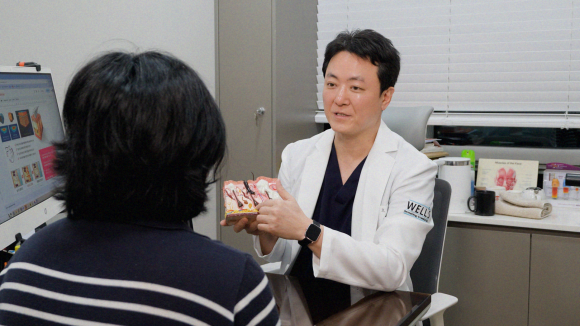
We are dermatologists Choi Won-woo and Yoo Hyo-seop, with 22 years of experience.
As I was writing this, I suddenly remembered the days when Ultherapy was first introduced in Korea.
Back then, it was a treatment that was not easy to decide on because of the high cost,
but as it became known for delivering clear results, it came to be regarded as the standard name for lifting devices.
And now, this device, which has continued to be loved by patients over the years, has recently been improved and released under the name “Ultherapy Prime.”
In consultations in the clinic, many people say they have heard that it is better than the previous device,
but they are curious about what specifically has changed and whether it is worth the increased cost.


I think those of you reading this after searching for our dermatology clinic may also have similar questions.
So today, as a dermatologist with 22 years of experience, I would like to explain what has technically improved in Prime compared to the previous version,
and what differences it can make in the actual treatment results.^^
Table of Contents
-
What is Ultherapy Prime?
-
Two differences from the original Ultherapy
-
Reducing the possibility of side effects through 3D analysis
-
What is Ultherapy Prime?
First, let me explain the principle behind why Ultherapy has been loved for so long.
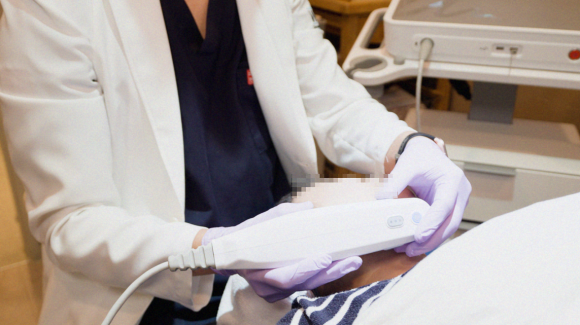
It delivers high-intensity focused ultrasound energy to the deepest fascial layer of the skin (SMAS) without damaging the skin surface.
Like using a magnifying glass to focus sunlight and burn paper, it concentrates ultrasound energy on a single point to create thermal coagulation points.
This thermal energy causes the loosened fascial layer to contract, producing a lifting effect,
and then, during the natural healing process as the wound recovers, collagen regeneration becomes active.
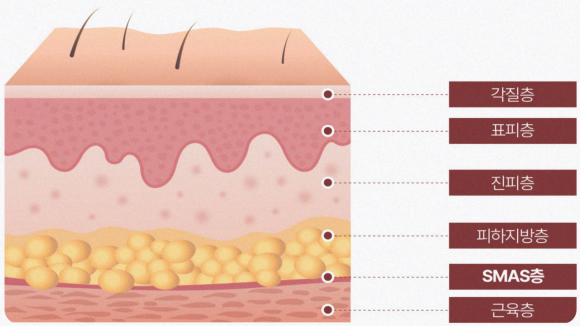
Collagen is like a pillar that supports the elasticity of our skin, so over time you feel it becoming firmer from within.
Ultherapy Prime, newly launched in the first half of this year, keeps this lifting principle intact while
improving the precision and convenience of the procedure.
- Two differences from the original Ultherapy
The biggest change and advantage of the Prime model lies in the treatment screen display.
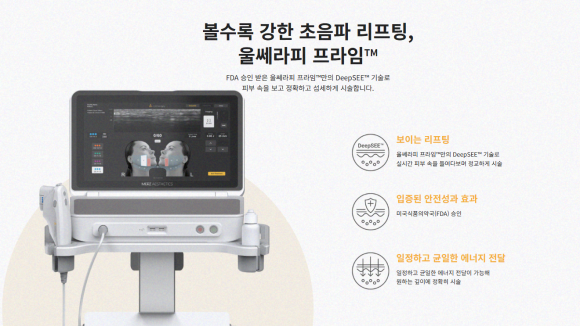
Compared to the previous model, the screen is about 35% larger, and the resolution has also improved.
A key feature of Ultherapy is that the clinician performs the treatment while directly viewing the inside of the skin through the ultrasound screen.
In the past, the position of the fascial layer or blood vessels could sometimes appear somewhat blurry, so there was a large reliance on the clinician’s experience and sense.
But with Prime, the structure of the skin layers is visible more clearly, making it possible to target the area where energy should be delivered with greater precision.
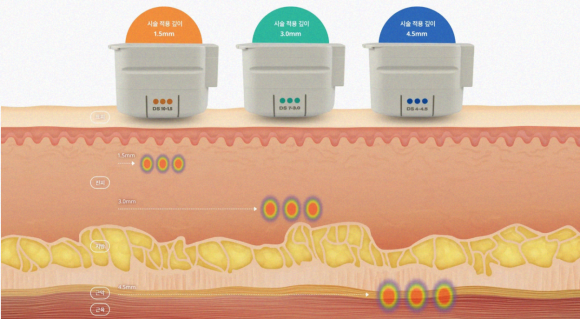
In addition, the depth that can be checked by ultrasound has been expanded to 8 mm, deeper than before.
Each person differs in thickness and fat distribution, and even within the same face, the depth of the layers varies by area.
Because Prime allows a more detailed view down to deeper areas and helps identify anatomical structures,
it has become possible to perform more efficient lifting by delivering energy to the necessary locations without wasted shots.
- Reducing the possibility of side effects through 3D analysis
One of the biggest concerns for those considering lifting procedures is side effects such as “hollowing of the cheeks.”
This is when excessive energy is delivered to an area with little fat, causing the face to appear uneven instead.
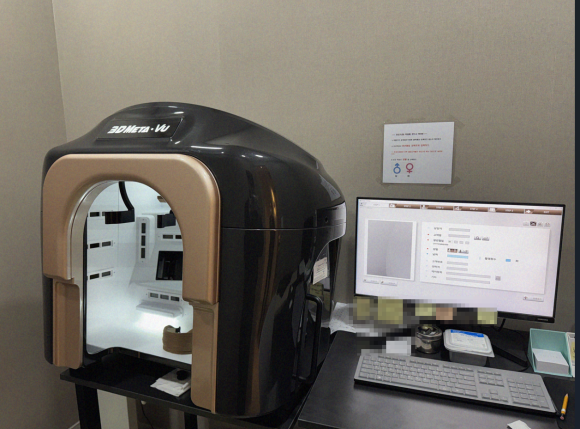
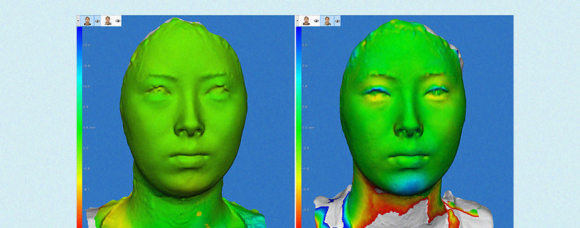
To prevent this, we first carry out a detailed analysis before treatment using a 3D imaging device.
This is because ordinary flat photos or the clinician’s naked eye make it difficult to identify subtle differences in volume or the contours of the face.
Through 3D analysis, it is necessary to understand in three dimensions which parts of the face have more or less fat, and the degree of asymmetry.
Based on the data identified in this way, it becomes possible to design the treatment by avoiding areas with insufficient fat and focusing energy only on areas that need firmness.
In other words, advances in the device and precise diagnosis help lower the risk of side effects while improving the quality of the procedure.
In Closing,

During consultations, many people ask, “How many shots do I need for good results?”
Many people commonly think that more than 600 shots are needed,
but among the patients who receive treatment at our dermatology clinic, the proportion who undergo more than 600 shots is only about 2% of the total.
Most patients are satisfied with around 300 to 400 shots.
The reason effective results can be achieved with fewer shots has to do with the anesthesia system.
With sleep anesthesia, the patient cannot respond, so the clinician performs the treatment at a lower energy level,
and in the end, the number of shots has to be increased to compensate for the weaker intensity.
On the other hand, we perform the procedure without sleep anesthesia while observing the patient’s response and staying within a range they can tolerate in terms of pain.
When strong energy is delivered to the necessary areas, a sufficient effect can be achieved without having to fire many shots.
Although this was a long post, I hope today’s article was of some help to those of you who were considering Ultherapy treatment.
We will always provide honest and proper care so that your skin can maintain healthy elasticity even as time passes.
Thank you for reading this long post.
This has been CEO dermatologists Choi Won-woo and Yoo Hyo-seop.
[Articles that may be worth reading together]
Best 1. If you have concerns about Ultherapy shot counts, be sure to read this.
Best 2. If Ultherapy and Thermage were not enough? Wenergy lifting
Best 3. Introduction to Well Dermatology Clinic
| Well Dermatology Clinic Main Phone: 02 - 542 - 2372 |
|---|
| Weekdays 10:00 ~ 20:00 |
| Saturday 10:00 ~ 17:00 |
| Lunch Break 13:00 ~ 14:00 |
| Closed on Sundays and public holidays |
This post was written directly by Well Dermatology Clinic and complies with all medical advertising regulations, excluding Article 56, Paragraph 1 of the Medical Service Act.
All surgeries and procedures may be accompanied by side effects depending on the individual, so please receive sufficient guidance from medical staff and carefully decide whether to undergo the procedure.