From a Comparison of Genetic Hair Loss vs. Age-Related Hair Loss for People in Their 40s and 50s
To the Latest CeraExosome Hair Loss Treatment Methods
Hello.
I’m Choi Won-woo from Wells Dermatology, where I have focused on skin and hair improvement for 23 years.
When you feel a sense of loss that is hard to put into words—whether it’s seeing a handful of hair fall out every morning while shampooing, or noticing that the crown looks sparse after drying your hair—it’s the feeling that “things are not like they used to be.”
For people in their 40s and 50s, one of the biggest concerns is hair that becomes thinner and loses strength. Many people are even startled, wondering, “There’s no baldness in my family, so why am I experiencing this?”
When people think of hair loss, they usually think of genetic hair loss, but just as skin ages, hair also ages over time. This is called age-related hair loss (Senile Alopecia).
We manage wrinkles with Botox or lifting procedures, but how should hair loss be addressed?
Today, I’ll explain in order the differences between genetic hair loss and age-related hair loss, as well as exosome treatment, which has recently been drawing attention in the dermatology field, off-label prescriptions using Botox, and even the latest biotechnology trends that are being watched by research institutions such as Wells Dermatology and CutisBio.
Table of Contents
-
What is the difference between genetic hair loss and age-related hair loss?
-
Why does my hair become thinner? The secret of stem cells and signal transmission
-
A new alternative, Ceraxosome and advanced bio technology
-
Hair anti-aging strategies for people in their 40s and 50s
-
Hair loss treatment Q&A
-
Closing: The secret to looking young starts with full, healthy hair
-
What is the difference between genetic hair loss and age-related hair loss?
Women in their 40s or men in their 50s may feel upset when their hair becomes thinner or styling no longer works the way they want it to.
At this point, the most important thing is to distinguish whether the hair loss is caused by “genetics” or by “aging.”
Genetic hair loss includes male-pattern hair loss and female-pattern hair loss, and symptoms can begin as early as the 20s, or at the latest in the 30s. The cause is that testosterone, a male hormone, is converted into a substance called “dihydrotestosterone (DHT),” which then attacks the hair follicles.
In this process, it appears in a distinct pattern, such as the hairline receding into an M shape or the part at the crown widening like a tree. If these features continue, it often leads to complete hair loss, commonly called “baldness.”
By contrast, age-related hair loss shows a different pattern from existing genetic hair loss. The age-related hair loss we should focus on today is something you begin to feel gradually in your mid-40s to 50s.
The cause is the aging of the hair follicle stem cells themselves. As we age, our cells age too, their regenerative ability declines, and hair no longer grows properly.
Rather than falling out in a specific pattern, the most noticeable sign is hair thinning, where the overall thickness of the hair becomes finer. Even if the number of hairs stays the same, the hair may look less voluminous or the scalp may appear more visible. That is due to hair thinning. In simple terms, hair density decreases.
- Why does my hair become thinner? The secret of stem cells and signal transmission
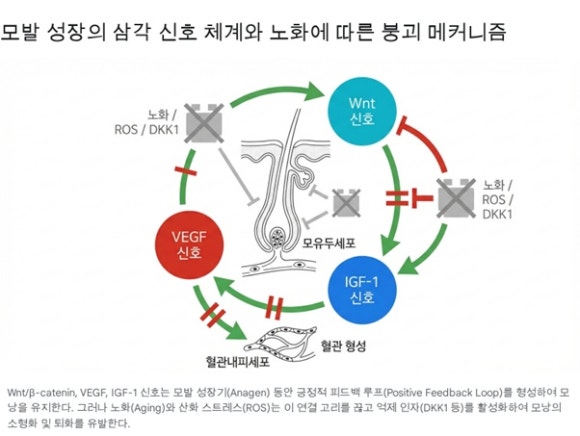
Why does hair become thinner and fall out as we age? It happens as biological aging progresses, and once aging begins, the hair follicles undergo the following characteristic changes.
-
Miniaturization: As the growth phase shortens and the resting phase lengthens, the hair follicle itself shrinks, and thick terminal hair turns into vellus hair.
-
Graying: Hair pigment disappears due to depletion of melanocyte stem cells and abnormalities in differentiation.
-
Depletion and aging of stem cells: Due to accumulated DNA damage and oxidative stress, stem cells lose their regenerative ability or enter a state of cellular senescence, an irreversible cell-cycle arrest.
These phenomena are caused by an imbalance and collapse of Wnt, VEGF, and IGF-1 signaling.
- A new alternative, Ceraxosome and advanced bio technology
Existing hair loss patients often use Propecia or Minoxidil. These are excellent FDA-approved treatments, but they still have limitations when it comes to treating age-related hair loss.
Propecia is a drug that suppresses DHT production. It is effective for genetic hair loss, but its effect is limited for age-related hair loss, where the main cause is cellular aging.
Minoxidil helps provide nutrients by widening blood vessels, but it is not enough to rejuvenate stem cells that have already aged and lost their function.
Because of the limitations of existing treatments, dermatology specialists have continuously conducted research to develop hair loss treatments for people in their 40s and 50s, and at the center of this effort is the non-drug hair loss solution, Exosome.
Ceraxosome, called a game changer in hair loss treatment, is generating strong responses at seminars held by dermatology societies and leading hospitals such as Wells Dermatology.
“The emergence of microbial-derived exosomes and CeraXosome”
-
Microbial-derived exosome: According to research by bio companies such as CutisBio, exosomes derived from certain microorganisms (Ceraxosome) show excellent effects in promoting hair growth.
-
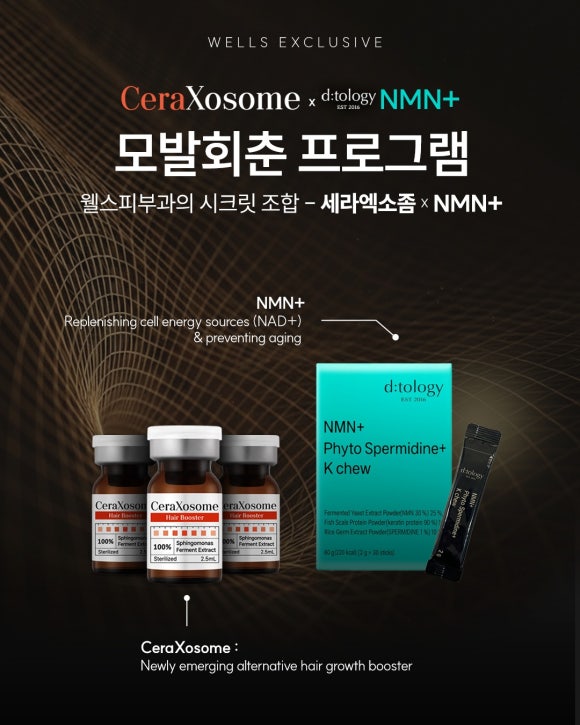
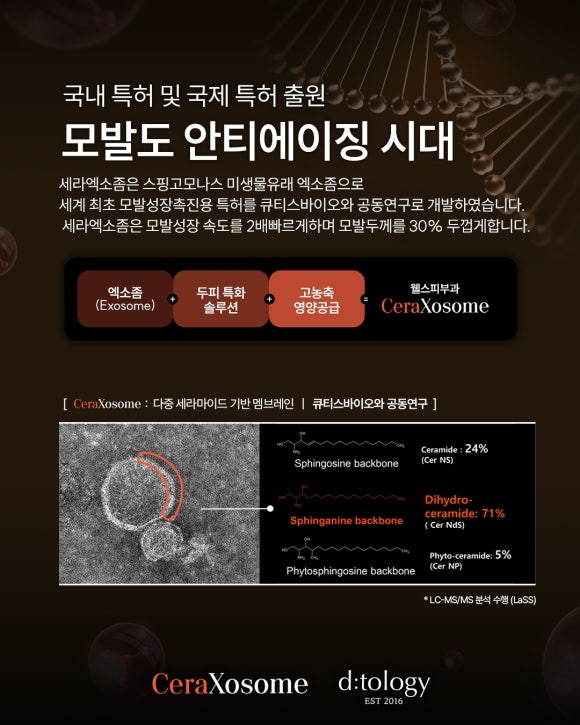
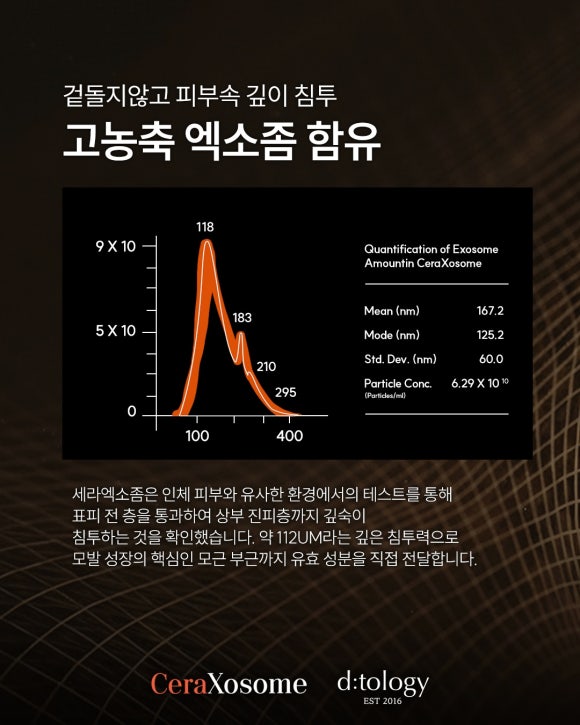
Ceraxosome: A 100-nanometer microbial-derived exosome whose outer membrane is composed of sphinganine, a lipid structure that forms the chemical basic framework of ceramide. It is an exosome with excellent heat stability and skin permeability.
It effectively crosses the scalp barrier and delivers the active ingredient sphinganine deep into the hair follicle, emerging as a key material for hair anti-aging procedures that help promote hair growth and increase hair thickness.
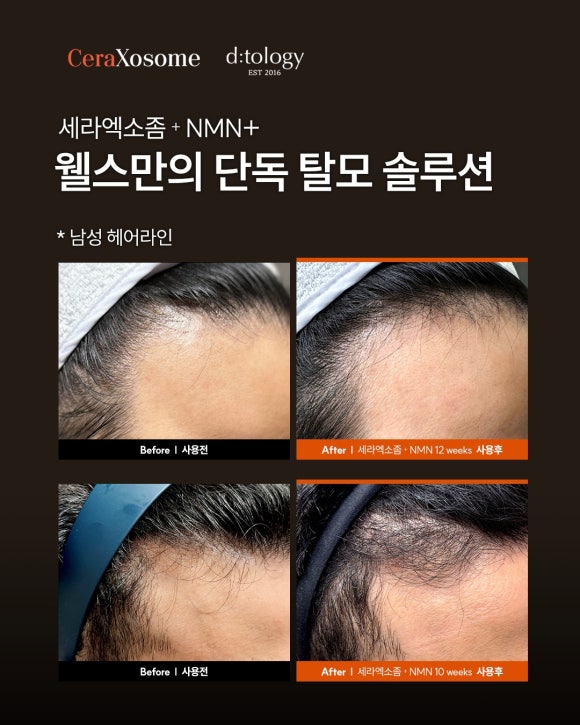
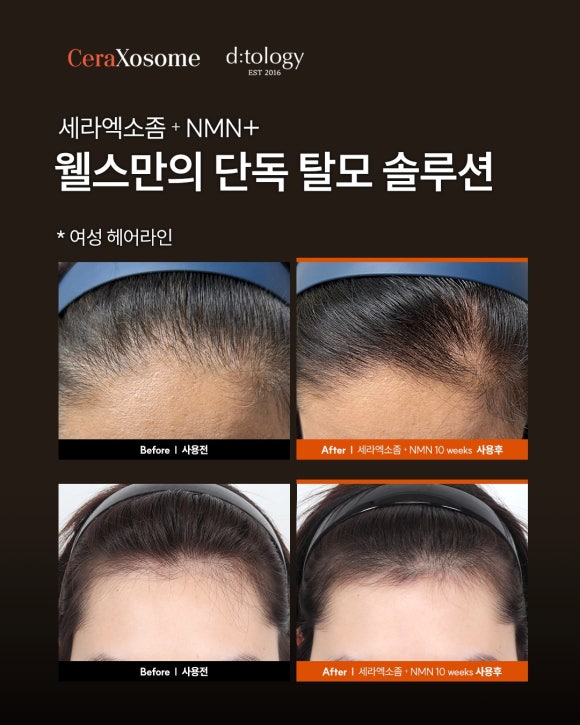
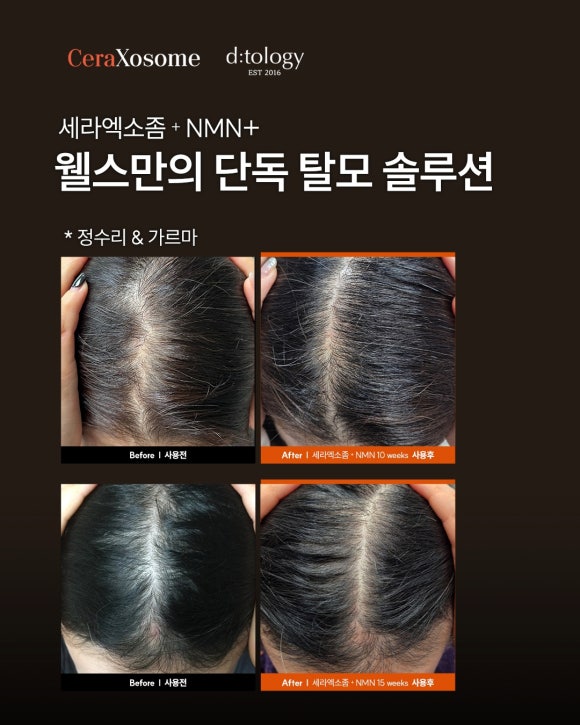
Through clinical research using such Ceraxosome and hair boosters, the medical team at Wells Dermatology is carrying out a program (CeraXosome Hair Program) that rejuvenates aged hair, making it thicker and shinier without drug side effects. This is not merely about suppressing hair loss, but about “rejuvenating” the hair itself.
- Hair anti-aging strategies for people in their 40s and 50s
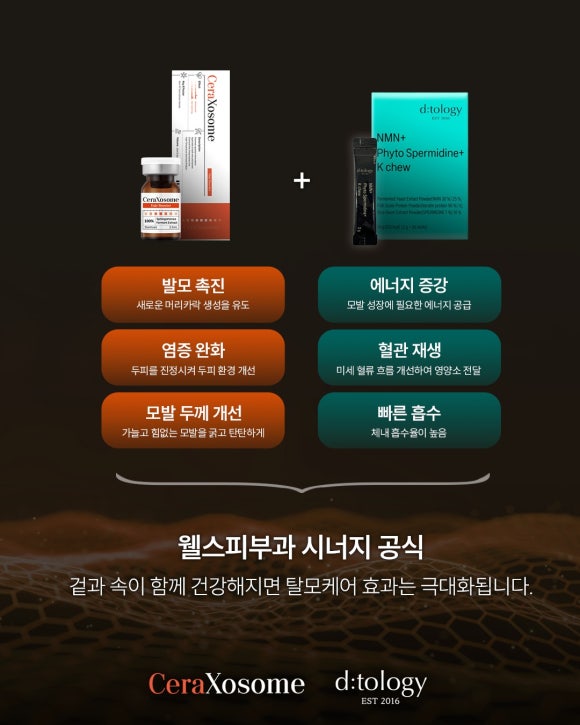
Just as we prevent skin aging, hair now also needs to be managed through anti-aging care. Here are the hair anti-aging strategies that women in their 40s and men in their 50s should practice.
Step 1. Self-Check
-
Women in their 40s: If your hair tie feels loose when you tie your hair up, there is a high chance that age-related hair loss is progressing. It may be different from postpartum hair loss, so pay attention to the gradual thinning of the hair.
-
Men in their 50s: If your hairline remains the same but the crown looks sparse, or if your hair has become as fine as vellus hair, it may be difficult to solve with genetic hair loss medication alone.
Step 2. Lifestyle correction
-
Antioxidant diet: To prevent cellular aging, please consume antioxidant foods such as black beans, berries, and nuts, which help eliminate reactive oxygen species.
-
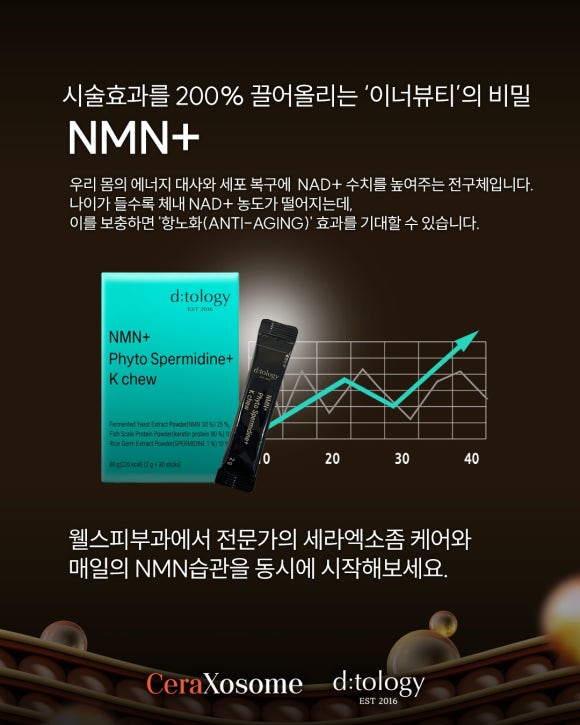
Keratin-spermidine supplementation: It is recommended to take a keratin-spermidine supplement (Diology nmn), which has been proven through the latest clinical research to support hair follicle stem cells and hair growth.
Step 3. Professional medical care
Age-related hair loss is a process of “aging,” not a “disease,” so ongoing care is necessary.
-
Ceraxosome & hair booster treatment: Once or twice a month, the key amino acids of hair protein keratin and hair-growth signals are delivered directly into the scalp. After that, spermidine and keratin protein are supplemented to carry out a hair rejuvenation program. Treatments using Ceraxosome or microbial-derived exosomes have almost no side effects, and you can return to daily life immediately after the procedure, making it a low-burden option.
-
Scalp regeneration injections: Special amino acids such as alanylglutamine are injected to help suppress fibrosis in the scalp and strengthen the support for hair.
- Hair loss treatment Q&A
Q1. Can women take Propecia?
A. In general, it is contraindicated for women of childbearing age because of the risk of fetal malformations. In postmenopausal women, it may be used in limited cases at the discretion of a specialist, but if the condition is age-related hair loss, exosome or stem cell treatment may be a safer and more effective alternative.
Q2. How many Ceraxosome treatments are needed to see results?
A. Although there are individual differences, intensive treatment is usually recommended 5 to 10 times at 2-week intervals. After that, receiving treatment once every 1 to 2 months for maintenance can help keep hair in good condition for a longer time.
Q3. Is age-related hair loss hereditary too?
A. The speed and tendency of aging can be inherited. If your parents developed gray hair early or had less hair volume, it is a good idea for their children to start hair anti-aging care early as well.
- Closing: The secret to looking young starts with full, healthy hair
Even if facial wrinkles are smoothed with skin lasers, people sometimes still look older because their hair is sparse. On the other hand, even with wrinkles on the face, a full head of hair makes a person look much younger and more energetic.
"Hair anti-aging is not an option; it is essential."
Because age-related hair loss is not a state in which the hair follicle has completely died, but rather a state in which it has temporarily stopped functioning, if inhibitory signals such as TGF-beta or DKK-1 are removed and strong regenerative energy such as exosomes is supplied, your hair can regain the vitality of your 20s.
The elegance of your 40s and the dignified presence of your 50s begin with healthy, abundant hair. Beyond simply reducing hair shedding, we are creating an era of “regrowth” through research by specialized institutions such as Wells Dermatology and CutisBio.
Take the first step toward fuller hair at Wells Dermatology.
This has been Choi Won-woo, your friendly dermatologist. Thank you.
[Recommended related reading]
Ceraxosome procedure? A hair loss program that reverses hair aging.
Hair aging during female menopause? Hair anti-aging procedure, “Ceraxosome”
Hair anti-aging, does hair also need aging prevention?
【Hair Anti-aging by Director Choi Won-woo】