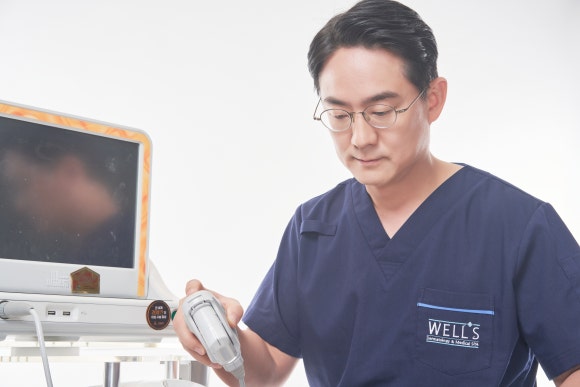
Hello.
I’m Choi Won-woo, a dermatologist with 23 years of experience.
A large number of people who come in for consultations about lifting procedures arrive with this concern.
"I heard that lifting makes your cheeks look sunken. Will that happen to me too?"
Concerns about cheek hollowing are one of the biggest reasons people hesitate to undergo lifting procedures.
In fact, if you hear from people around you that their cheeks became hollow after lifting, it can be difficult to decide easily, even if the results are said to be good.
Today, I’ll explain why cheek hollowing occurs and what approach we take to minimize it while still achieving proper lifting results.
Table of Contents
-
Why does cheek hollowing happen?
-
Why Ulthera Prime helps reduce concerns about cheek hollowing
-
Why we add fitting lifting here
-
Who we recommend Ulthera Prime Fit for
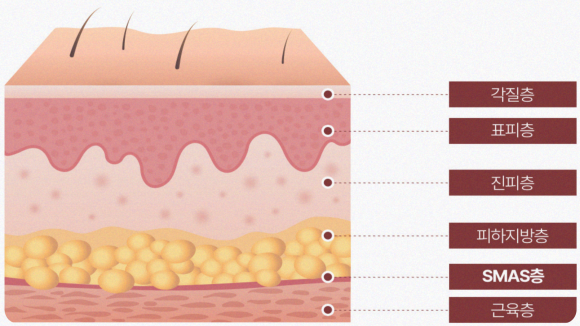
Why does cheek hollowing happen?
Cheek hollowing is not really a problem with the lifting device itself, but rather a problem with the depth at which energy is delivered.
Using Ulthera as an example, the target of this device is the SMAS layer, located deep within the skin.
When ultrasound energy reaches the SMAS layer accurately, the tissue contracts and lifting occurs.
However, if the energy is concentrated in the subcutaneous fat layer above the SMAS rather than in the SMAS itself, the fat cells may shrink, causing the cheeks to look sunken.
The thickness of the skin, the distribution of fat, and the distance to the SMAS layer all differ from person to person, almost like fingerprints.
So even with the same device and the same number of shots, some people may have no issues, while others may develop cheek hollowing.
In the end, the key to preventing cheek hollowing is not the choice of device, but precise design tailored to the structure of your own face.
 Why Ulthera Prime helps reduce concerns about cheek hollowing
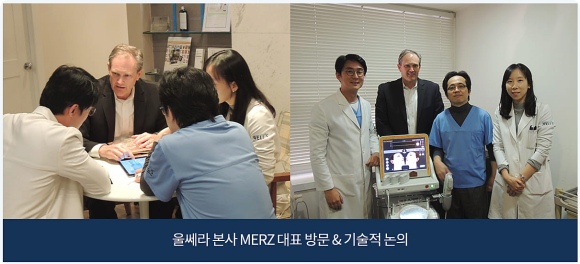
The recently introduced Ulthera Prime is equipped with a wider and clearer real-time ultrasound imaging technology than before.
Thanks to this technology, during the procedure we can check the internal skin structure in real time and deliver energy while accurately identifying the location of the SMAS layer.
In addition, a 3D-based facial analysis function has been applied, making it possible to design a more refined treatment by avoiding sunken areas and precisely targeting only the areas that need lifting.
If the main cause of cheek hollowing is energy being delivered to the wrong depth, Prime can be said to be a device that improves that accuracy to the next level.
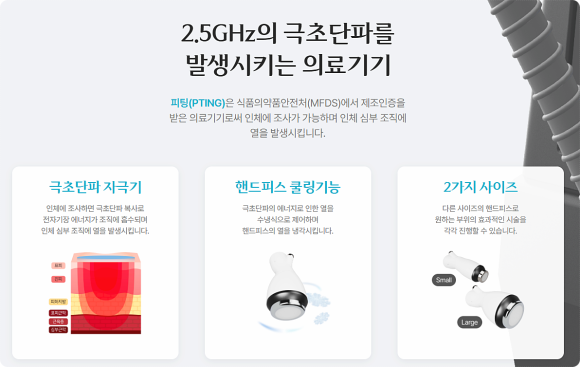 Why we add fitting lifting here
Then is Ulthera Prime alone enough?
If Ulthera plays the role of pulling up the deep SMAS layer to establish the framework of the facial contour, the dermal and fat layers above it may still remain loose.
This refers to cases where the inner structure has been lifted, but the outer skin does not adhere snugly and still feels somewhat loose.
Fitting lifting uses microwave energy to deliver heat broadly and evenly to the dermis and fat layers.
It helps organize unnecessary fat and make the skin adhere more closely to the underlying structure, improving the overall fit.
If Ulthera Prime builds the pillars from deep within, fitting lifting is the process of smoothly laying the skin over them.
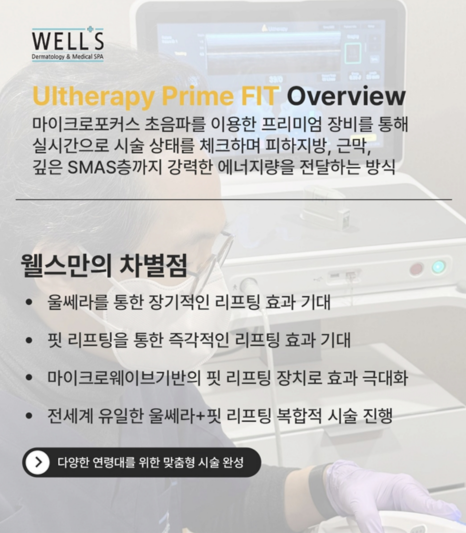
Applying these two together is what we call Ulthera Prime Fit at Wells Dermatology.
As energies that act at different depths come together, you can expect a more three-dimensional lifting result that would be difficult to achieve with a single procedure alone.
 Who we recommend Ulthera Prime Fit for
Those who wanted lifting but hesitated because they were worried about cheek hollowing,
Who we recommend Ulthera Prime Fit for
Those who wanted lifting but hesitated because they were worried about cheek hollowing,
Those who have previously experienced sunken cheeks or a gaunt-looking face after a lifting procedure,
Those who are concerned that the overall impression of their face has changed as the jawline and cheek line have both started to sag,
And those who want lifting results that are natural and not obvious.
Ulthera Prime Fit can be a good choice.
In particular, for people who do not have much facial fat and therefore have a higher risk of cheek hollowing with standard ultrasound lifting,
Ulthera Prime’s real-time imaging technology can precisely target only the SMAS layer while avoiding the fat layer,
and the fitting lifting approach can increase the adherence of the dermis, potentially leading to safer and more satisfying results.
 In closing,
Lifting is not a treatment where the name of the device guarantees the result.
In closing,
Lifting is not a treatment where the name of the device guarantees the result.
Even when using the same device, the results can vary greatly depending on how accurately your facial structure is understood and which layer is approached in what way.
If you have been hesitant to undergo lifting because you are worried about cheek hollowing, before choosing a device, please check whether the clinic can first design a plan that fits your facial structure.
Of course, Ulthera Prime Fit is not the right answer for everyone.
Depending on skin thickness, fat distribution, and the degree of sagging, the intensity and combination of procedures should vary, and this should be determined through a specialist’s diagnosis.
If you are considering lifting, I recommend creating a treatment plan that suits you through thorough consultation.
Thank you for reading this long post.
I’m Choi Won-woo, director of Wells Dermatology.
[Recommended further reading]
Best 1. Introduction
Best 2. Why it is good to receive Ulthera Prime and fitting lifting together
Best 3. A more important way to see results than the number of Ulthera shots
| Wells Dermatology main phone number (click the number below to connect) |
|---|
| 02 - 542 - 2372 |
| Clinic hours |
|---|
| Weekdays 10:00 ~ 20:00 |
| Saturday 10:00 ~ 17:00 |
| Lunch break 13:00 ~ 14:00 |
| Closed Sundays and public holidays |
This post was written directly by Wells Dermatology Clinic, and it complies with all laws concerning medical advertising, including Article 56, Paragraph 1 of the Medical Service Act.
All surgeries and procedures may be accompanied by side effects depending on the individual, so please receive sufficient medical guidance from the medical staff and carefully decide whether to undergo the procedure.