Does Ultherapy Need Sleep Anesthesia? A 23-Year Dermatology Specialist Speaks Honestly.
Hello.
I’m Choi Won-woo, a dermatologist with 23 years of experience.
When consulting about Ultherapy,
there is a question I hear quite often.
“Will Ultherapy hurt a lot?”
“Can’t I get it under sleep anesthesia?”
I think many people come in worried after reading the internet or watching review videos.
In fact, Ultherapy is a procedure that keeps being discussed for pain, as much as it is praised for its lifting effect.

So these days,
“Ways to get it without pain”
“Sleep Ultherapy”
are keywords you also see a lot.
However, after 23 years of practice,
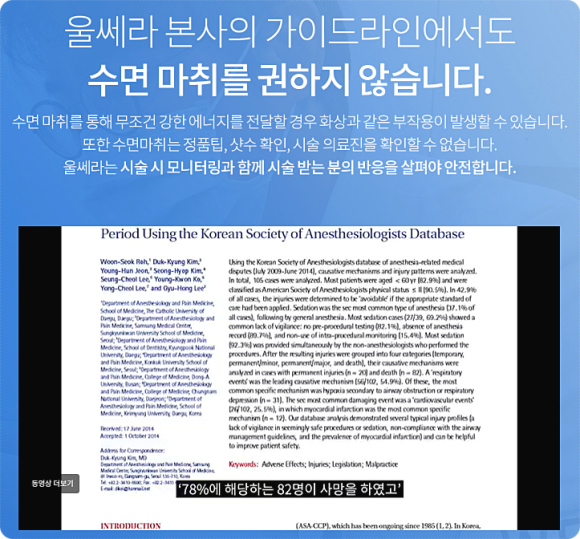
I do not think sleep anesthesia is a necessary option for Ultherapy.
Today, including the reason for that,
why Ultherapy is effective
why pain comes up as a topic
why I do not specifically recommend sleep anesthesia
when Ultherapy Prime Fit is a good option
I will explain these points one by one.
- The reason Ultherapy is effective is that its “depth” is different.
Ultherapy is not simply a lifting treatment that pulls on the skin surface.
The key is that it delivers energy precisely into the deeper layers of the skin.
Based on the currently widely used second-generation device, Ultherapy Prime,
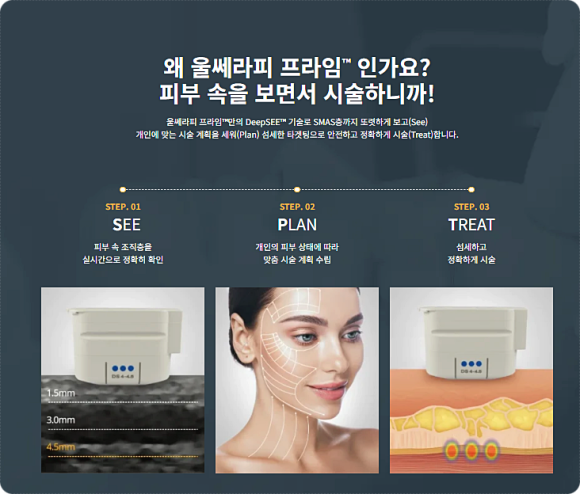
it focuses ultrasound energy at a specific depth within the skin,
and stimulates the SMAS layer.
To put it simply, the SMAS layer is a fascial layer that supports the facial structure beneath the skin.
So when the face begins to sag,
it is not just the skin that loosens;
the deep structural support itself moves downward.
Ultherapy uses ultrasound energy to focus on this layer in points,
causing the tissue to contract and tighten again.
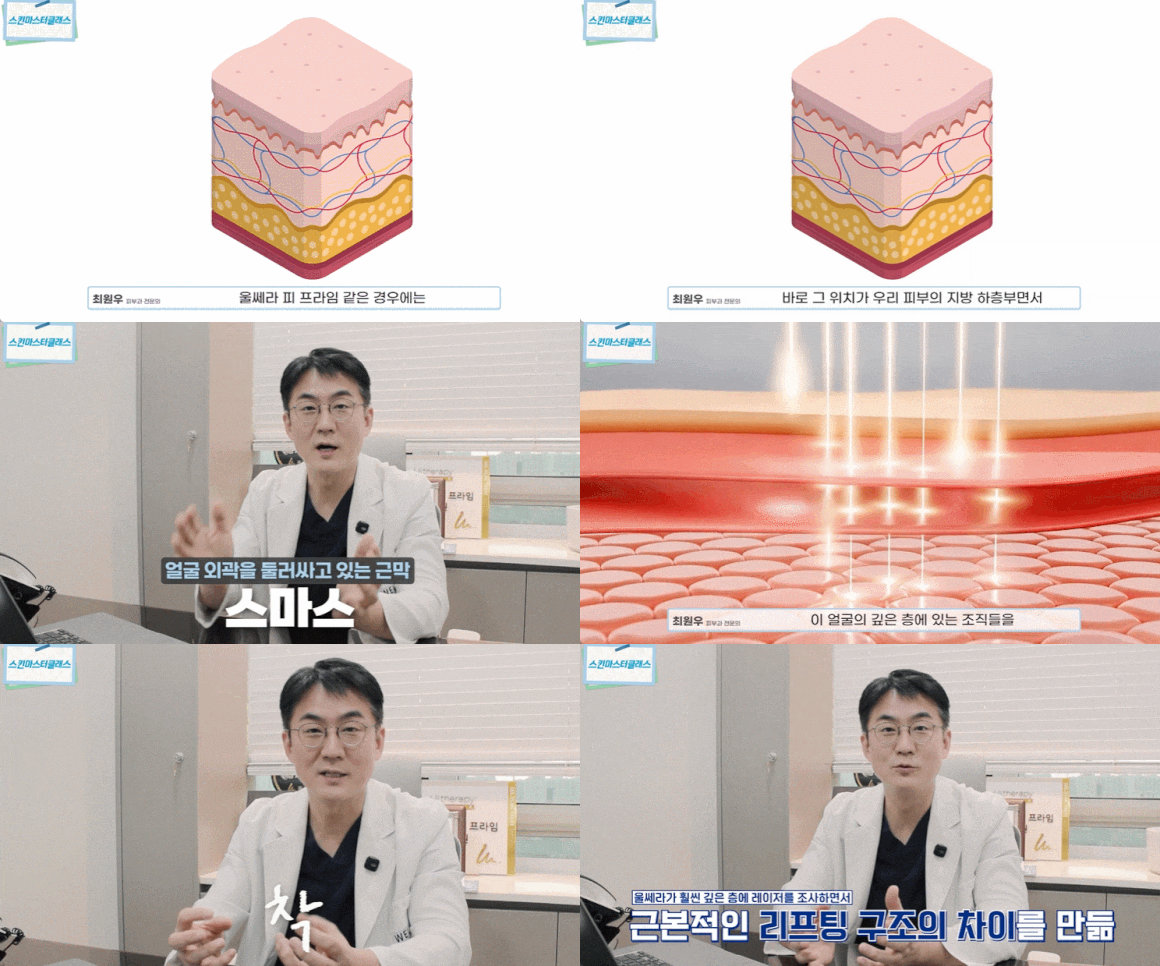
Rather than feeling like pulling from the outside,
it is closer to tightening the inner structure.
That is why lifting effects tend to appear relatively clearly in areas such as the jawline, sagging cheeks, and double chin.
Also, because the procedure is performed while checking the skin layers with real-time ultrasound imaging,
one of Ultherapy’s advantages is that energy can be delivered relatively accurately to the desired layer.
- What is Ultherapy Prime Fit?
Ultherapy Prime Fit is not really the name of a separate device,
but a combined treatment that uses Ultherapy together with fitting lifting.
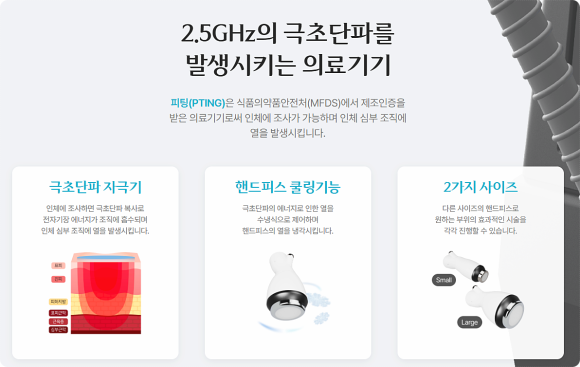
First, Ultherapy delivers ultrasound energy to the deep SMAS layer within the skin,
and plays a role in tightening sagging and structural changes in the deeper layers.
On the other hand, fitting lifting,
uses a radiofrequency method to once again refine the lower dermis and the upper fat layer above it.
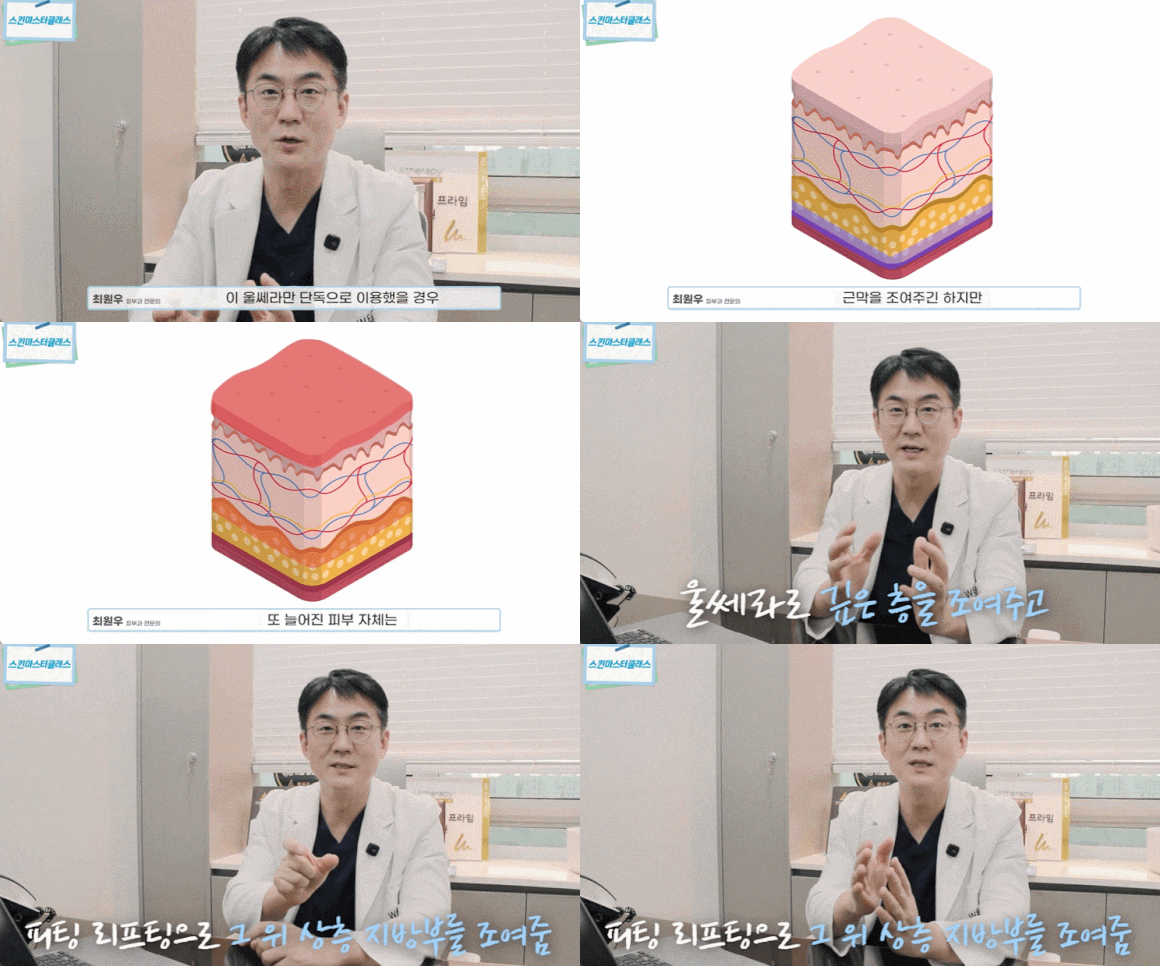
If Ultherapy tightens the inner structure,
fitting gives the impression of firming up the skin and fat layer above it again.
So compared with Ultherapy alone,
it may help improve
loose skin elasticity
upper fat layer
as well.
In particular,
when the skin itself lacks firmness
when cheek sagging is severe
when there is less fat but remaining skin
when both lifting and skin tightening are desired
the Prime Fit combination of Ultherapy and fitting tends to have high satisfaction.
- Why I do not recommend sleep anesthesia
This is the part people ask about most.
Of course, some dermatology clinics perform Ultherapy while the patient is under sleep anesthesia.
However, personally,
I believe sleep anesthesia should be approached carefully for cosmetic lifting procedures.
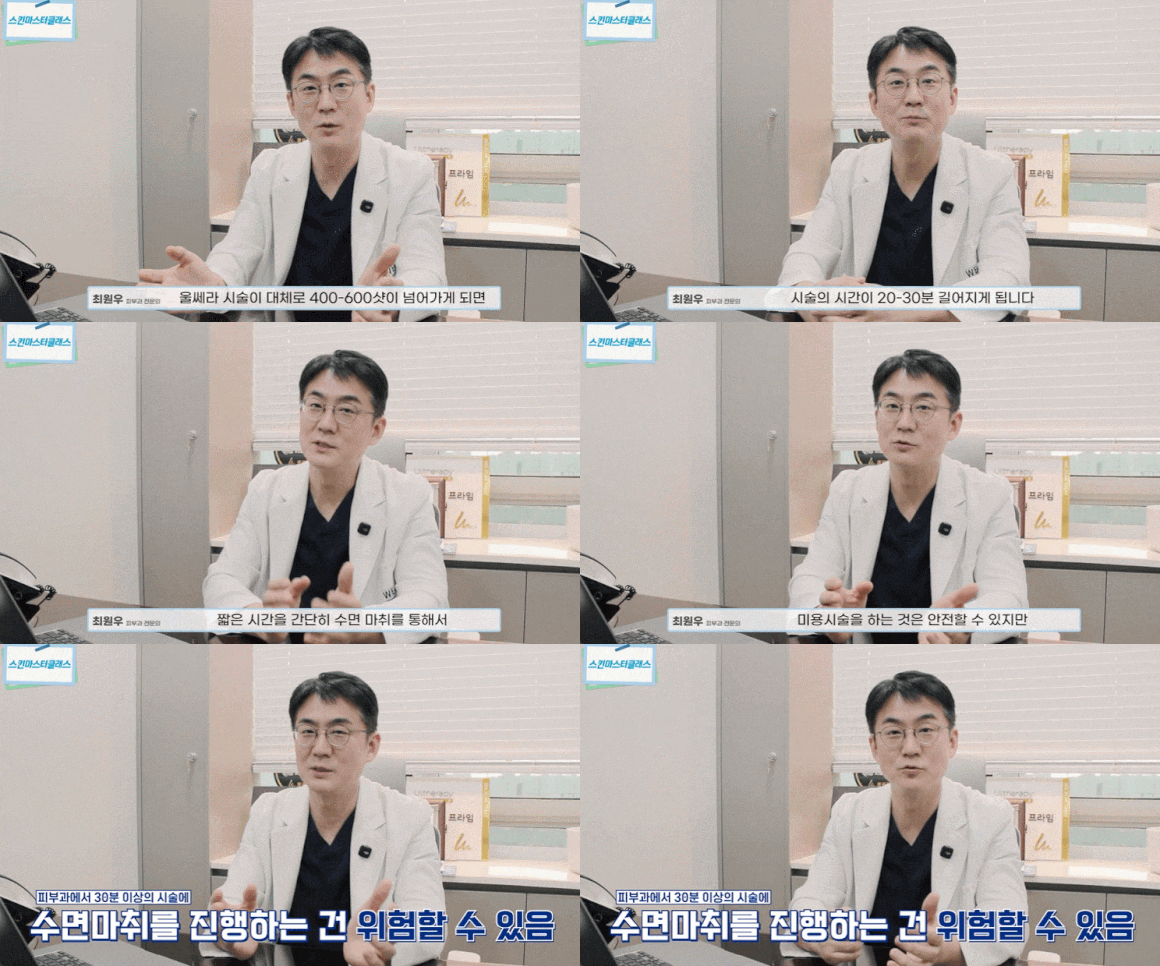
Ultherapy is usually performed with
400 shots
500 shots
and in many cases 600 shots or more,
and the procedure often takes about 20 to 30 minutes.
That can be a somewhat different concept from doing a short procedure under sleep anesthesia as a simple matter.
Of course, serious risks are not common.
But cosmetic procedures
must prioritize safety above all else.
And in practice,
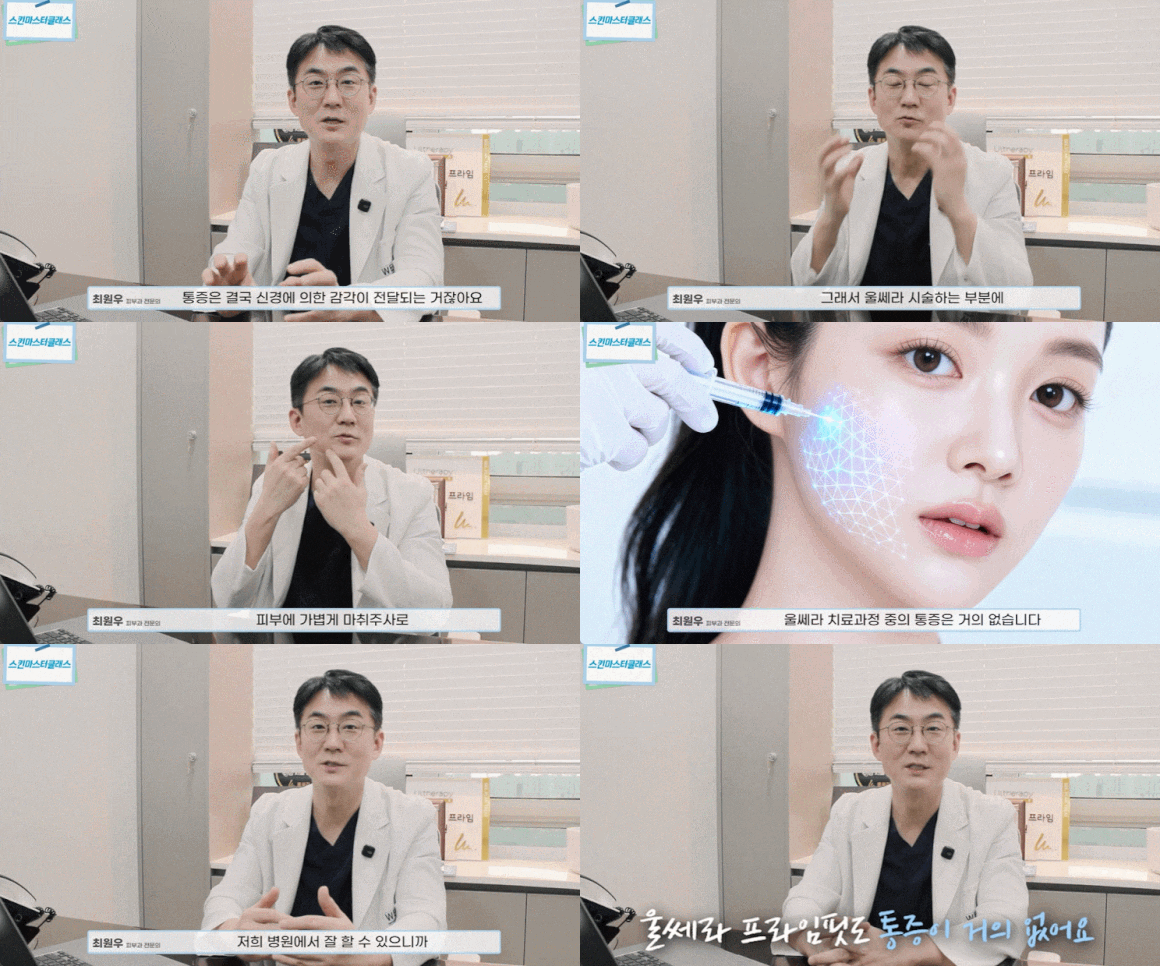
a numbing cream and local anesthetic injections alone
are enough to control pain for Ultherapy.
Pain is ultimately a matter of nerve transmission,
so if local anesthesia is applied well at the right points,
it often proceeds more comfortably than expected.
That is why, even without sleep anesthesia,
most cases can be managed within a sufficiently controllable range.
- How long does Ultherapy last?
This is also something many people ask.
6 months, 1 year
In fact, both are correct.
That is because the duration varies quite a bit from person to person.
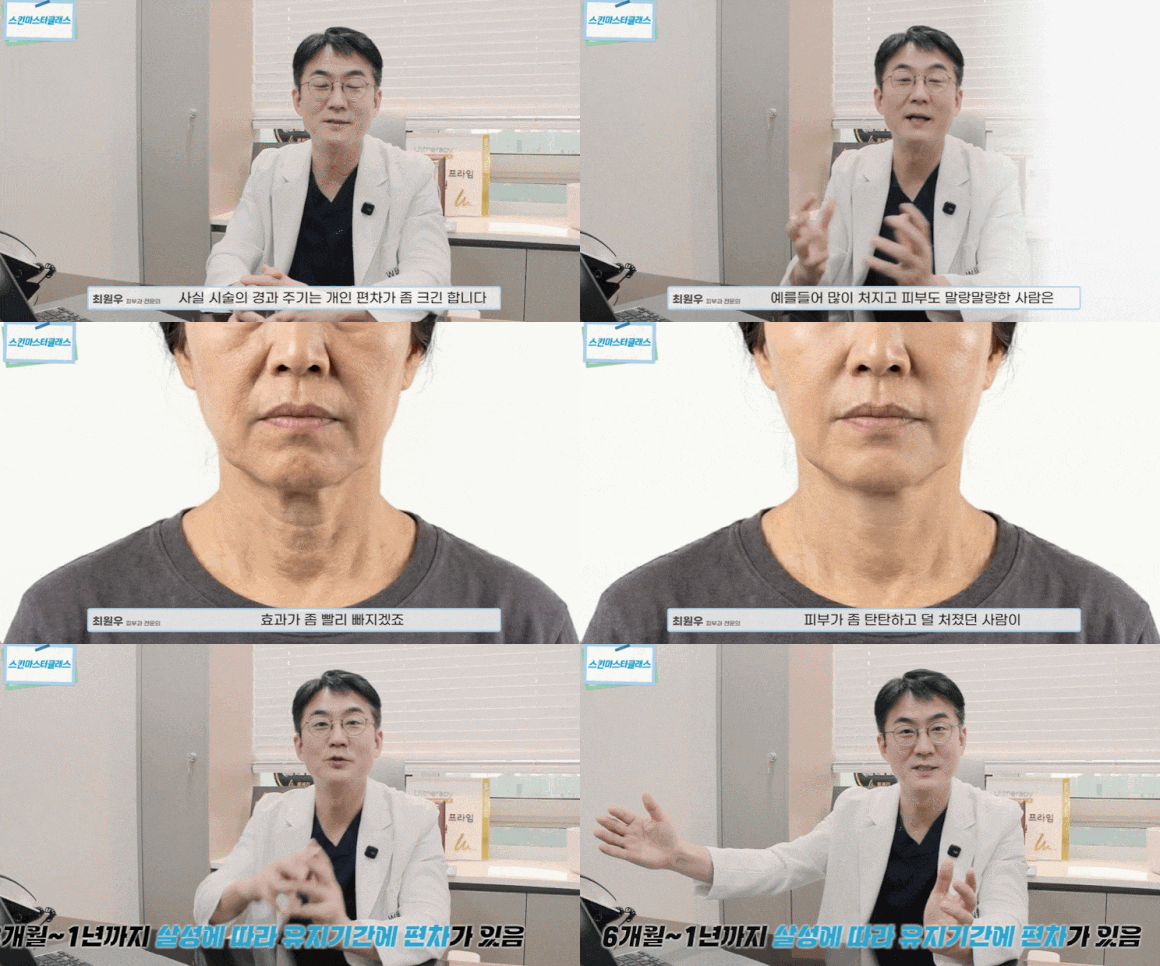
For example,
if the skin is very saggy
or if there is a lot of fat,
the effect may fade a little faster.
Conversely,
if the skin elasticity was originally good
or if the sagging was not severe,
the result may last close to a year.
Usually, we explain it as lasting within a range of about 6 months to 1 year,
and for most people, satisfaction is maintained for around 7 to 8 months.
In closing,
Ultherapy is a representative ultrasound lifting device that creates structural lifting
by accurately delivering energy to the deep SMAS layer of the skin.
In particular, it is one of the procedures with high satisfaction for concerns such as sagging along the jawline, drooping cheeks, and double chin, where deep-layer sagging is the issue.
However, the important thing is not to do it as strongly as possible,
but to approach it accurately according to the current condition of the skin.
And although some people think sleep anesthesia is absolutely necessary because of pain,
in many cases, it can be done comfortably enough with appropriate anesthesia and the right procedure method.
For cosmetic procedures, safety comes first, even more than the result.^^
I hope today’s post is of some help to those of you considering Ultherapy.
Thank you for reading this long post.
This was Choi Won-woo, chief director of Wells Dermatology Clinic.
[Articles worth reading together]
Best 1. Introductory post
Best 2. Detailed information on Ultherapy Prime Fit.
Best 3. Comparison of the difference between second-generation Ultherapy and Ultherapy Prime
| Wells Dermatology Clinic main phone number (click the number below to connect) |
|---|
| 02 - 542 - 2372 |
| Consultation hours |
|---|
| Weekdays 10:00 ~ 20:00 |
| Saturday 10:00 ~ 17:00 |
| Lunch break 13:00 ~ 14:00 |
| Closed on Sundays and public holidays |
This post was written directly by Wells Dermatology Clinic and complies with all laws regarding medical advertising, beyond Article 56, Paragraph 1 of the Medical Service Act.
All surgeries and procedures may be accompanied by side effects depending on the individual, so please make sure to receive sufficient guidance from medical staff and carefully decide whether to proceed.