
3 Recommended Areas for Botox and How to Receive Treatment Without Side Effects
<Advice from a Dermatologist with 23 Years of Experience>
Hello.
I am Choi Won-woo, a dermatologist with 23 years of experience.
Among dermatological treatments,
if I had to name the one that most people try first,
it would probably be Botox.
The treatment takes little time,
is relatively easy to undergo,
and its effects can be felt quickly,
so many people begin by thinking,
“Should I just try it once?”
However, there is one point I would really like to emphasize.
Botox is easy to access, but it is by no means an “easy treatment.”
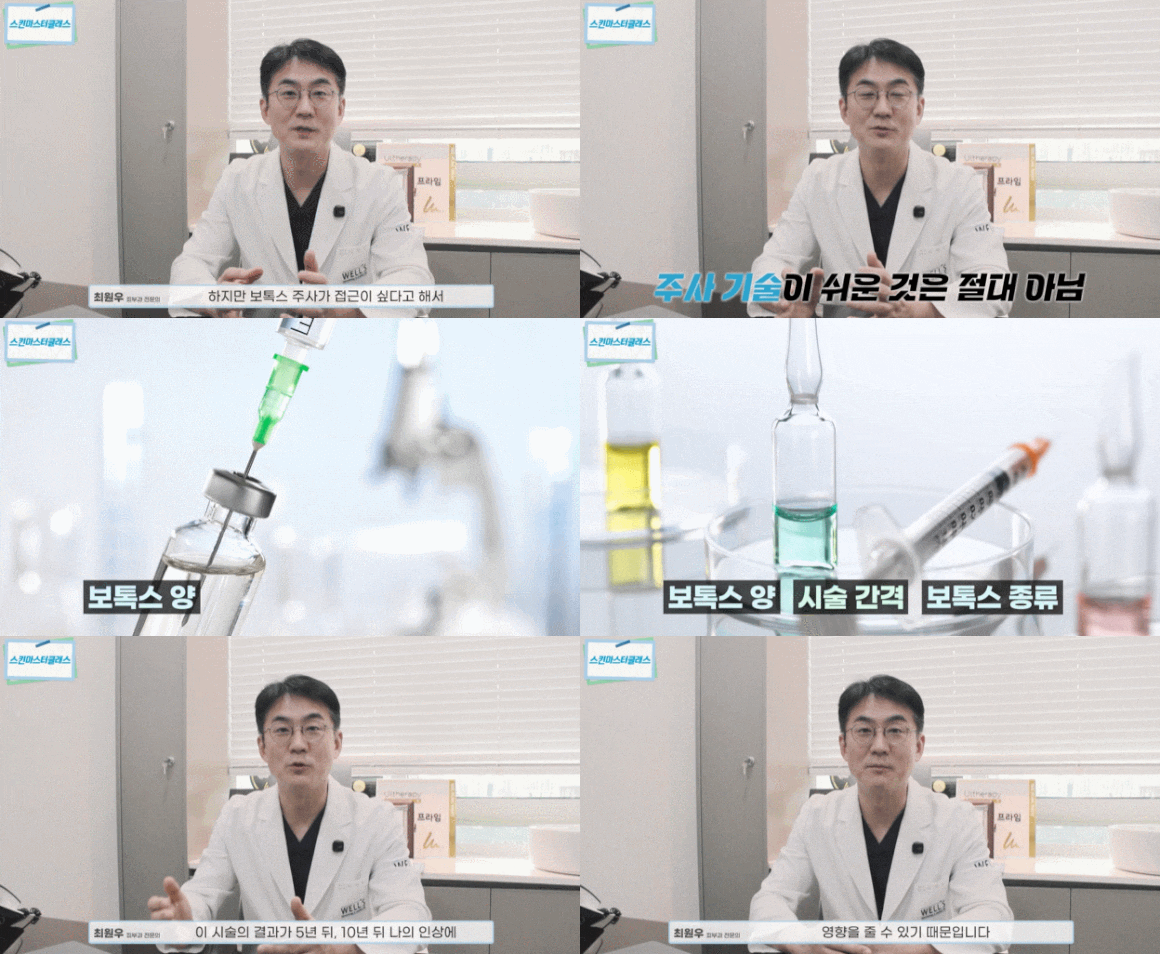
Where it is injected,
how much is used,
at what intervals,
and at what depth
can all affect the outcome.
In actual practice, I often see people return with concerns such as:
“My eyebrows feel heavy.”
“My expressions have become too unnatural.”
So today, based on treating patients for 23 years,
I would like to explain in a little more detail
how to improve satisfaction with Botox.
In particular, I will explain step by step in the following sections
which areas tend to receive the highest satisfaction,
why side effects occur,
and what is important for maintaining the results well over time.
- These are the three areas I most often recommend for Botox.
Botox can be used in a wide variety of areas.
However, judging by actual patient satisfaction,
I generally mention these three areas first.
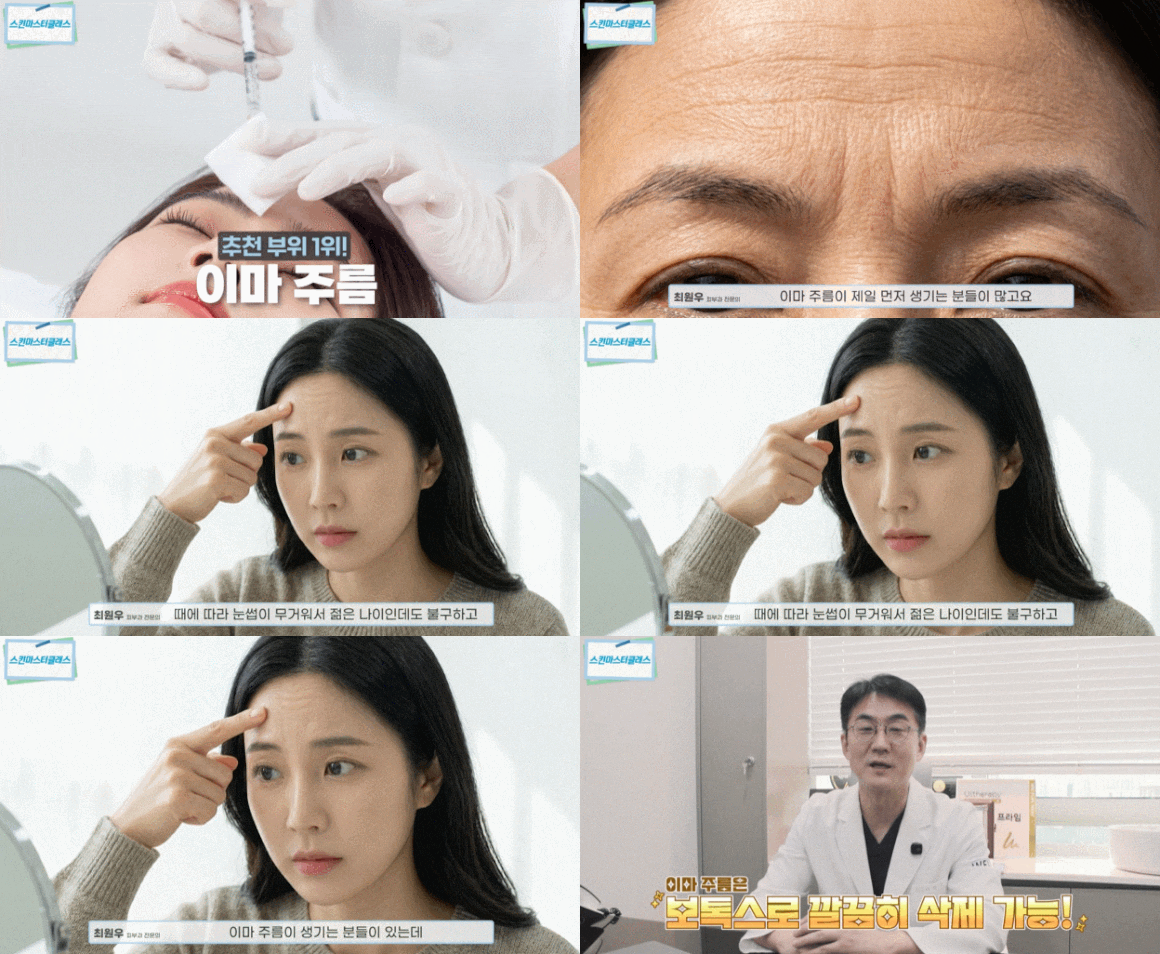
- The first is forehead Botox.
Forehead wrinkles often begin at an earlier age than people expect.
In particular, people with weak eyelid-opening strength or heavy eyebrows tend to unconsciously keep using their forehead muscles.
As a result, forehead wrinkles often become progressively deeper.
In such cases, Botox alone can often smooth out the wrinkles quite neatly.
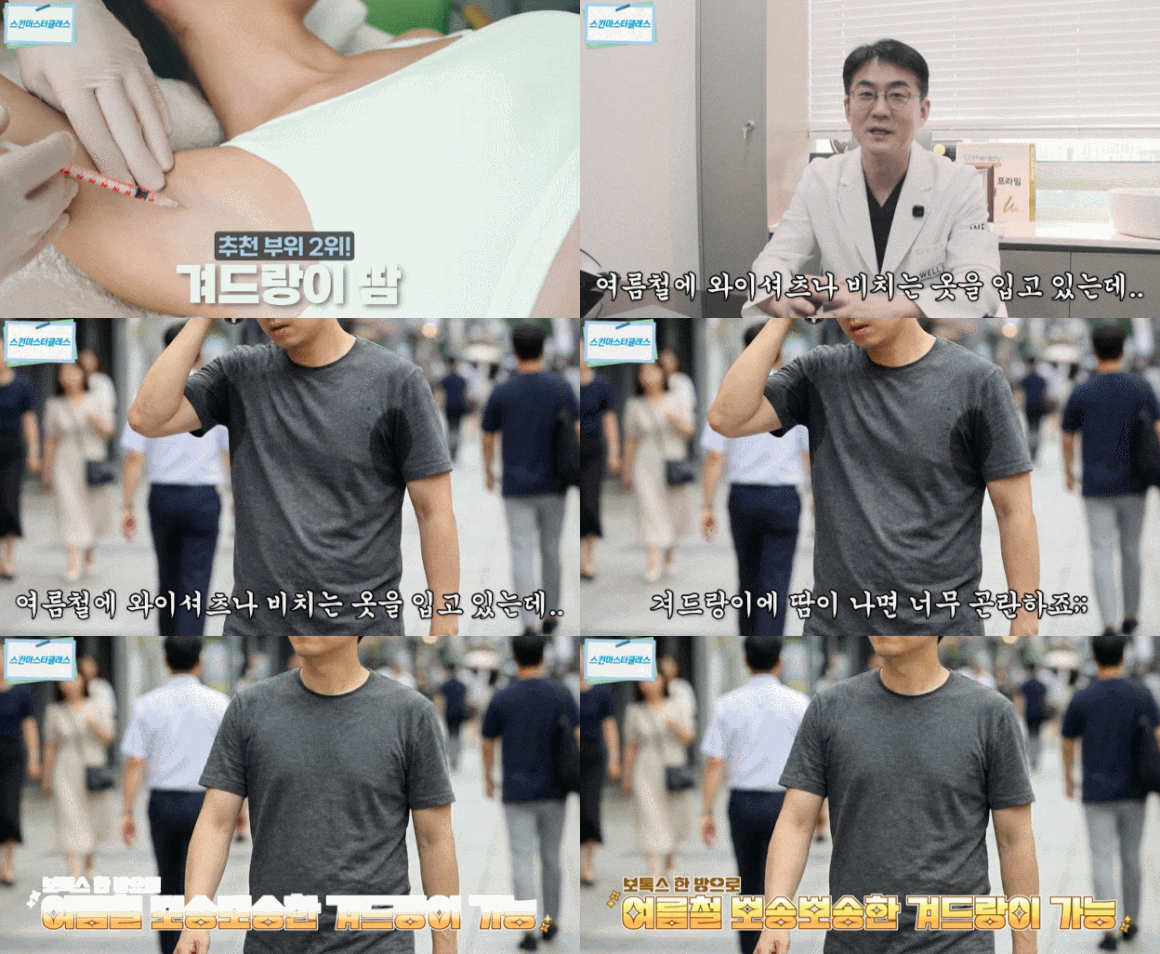
- The second is underarm Botox.
This is not merely a cosmetic treatment; satisfaction related to quality of life is particularly high.
Especially in summer, many people experience more inconvenience in daily life than expected because of the stress of sweat showing through their clothes or wetting their dress shirts.
Underarm Botox can help reduce excessive sweating, making it one of the treatments that tends to receive particularly high satisfaction during the summer.
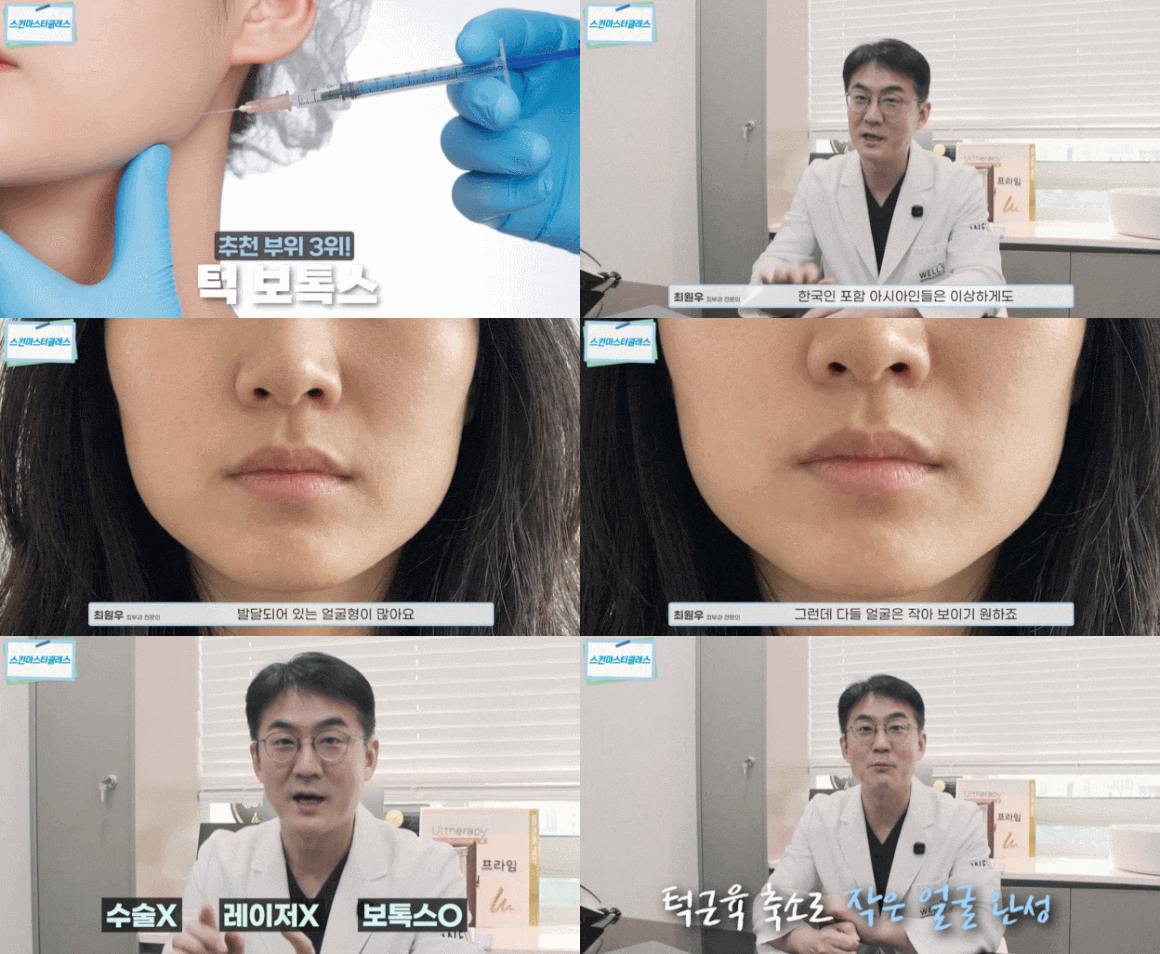
- The third is jaw Botox.
In particular, people of Asian descent, including Koreans, often have well-developed jaw muscles.
In such cases, the face may look wider because of the muscles rather than the bones themselves.
When jaw Botox is used appropriately,
it may make the facial contours appear more defined without surgery or major procedures.
That is why actual satisfaction tends to be very high.
- Botox side effects are often caused by “spread”
rather than the “product.”
Many people ask:
“Are there areas where Botox is dangerous?”
However, I explain this a little differently.
What matters is
not so much “where it is injected”
as “where the Botox spreads.”
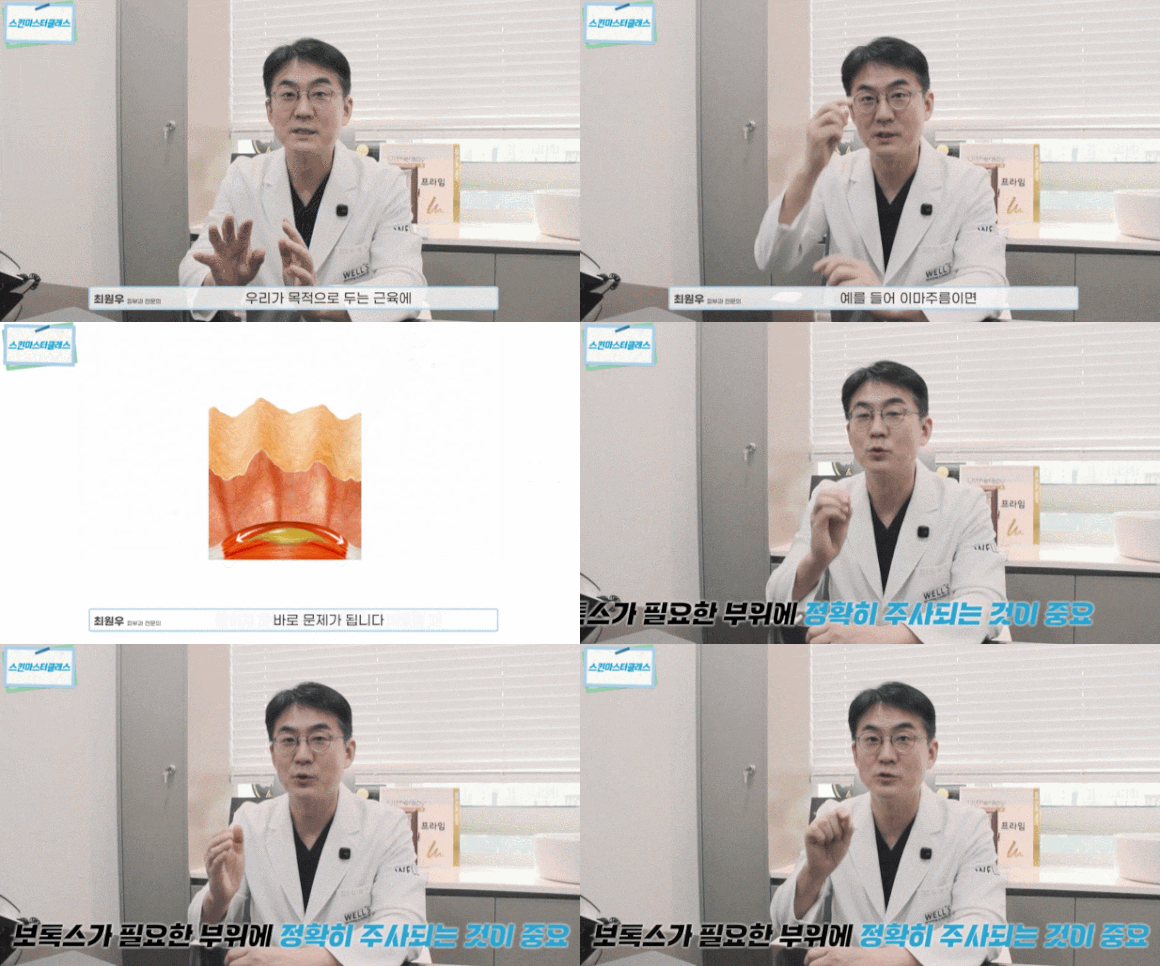
For example, if you receive forehead Botox
and it acts precisely on the intended muscle,
wrinkles can smooth out naturally and facial expressions can look softer.
However, if the Botox spreads downward,
it may affect the muscles that press down on the eyebrows,
which can make the eyes look heavy.
The same applies to glabellar Botox.
If the muscle balance is not adjusted precisely,
the ends of the eyebrows may rise excessively,
or facial expressions may appear unnatural.
Therefore, Botox is not simply a matter of “how many units to inject.”
You need to consider together:
which muscles to select,
at what depth to inject,
and how likely the product is to spread.
- “Dosage and intervals” are important for maintaining attractive results over time.
There is another question I often receive.
“Will I develop resistance if I receive Botox for a long time?”
To give you the conclusion first,
higher cost does not automatically mean less resistance.

Based on the scientific evidence available to date,
factors such as the structure and size of the Botox protein
are considered potentially associated with resistance,
but it is difficult to say that resistance is necessarily proportional to price.
Rather, what is more important is
“at what intervals you receive treatment.”
When Botox works well, people become accustomed to having fewer wrinkles,
so they often want to receive treatment again quickly even when the effects have diminished only slightly.

However, I generally recommend leaving an interval of about 3–4 months.
If you receive Botox for the first time and feel that the effect is weak,
it is necessary to consider together:
whether the dosage was insufficient,
whether you have particularly strong muscles,
and whether repeated treatments may have had an effect.
It is also important to avoid saunas or excessively hot environments immediately after treatment.
Because Botox is also a protein-based substance, prolonged exposure to high temperatures may affect how long the results last.
To conclude,
Botox is used in a wide range of areas, including not only wrinkle improvement,
but also facial contour definition, sweat control, and improvement in the appearance of the skin.
However, receiving a larger amount is not necessarily better,
and injecting it more strongly does not automatically make the results last longer.
What matters instead is
an appropriate dosage suited to the condition of your facial muscles,
and intervals that do not place undue strain on the treatment plan.
We are living in an era in which people can live healthily for a very long time.
That is why I believe that, rather than focusing only on short-term changes,
it is important to pursue a natural and comfortable appearance
even 10 or 20 years from now.
If you are considering Botox,
rather than simply following trends,
I recommend first determining the approach suited to your current facial expressions and muscle movements.
Thank you for reading this lengthy post.
I am Choi Won-woo, Medical Director of Wells Dermatology.
[Related articles]
Best 1. Introduction
Best 2. I have also summarized Botox resistance, dosage, and treatment intervals.
Best 3. Four cost-effective treatments frequently sought by men
| Wells Dermatology Main Phone (Click the number below to connect) |
|---|
| 02 - 542 - 2372 |
| Office Hours |
|---|
| Weekdays 10:00–20:00 |
| Saturdays 10:00–17:00 |
| Lunch Hours 13:00–14:00 |
| Closed Sundays and public holidays |
This post was written directly by Wells Dermatology Clinic and complies with Article 56, Paragraph 1 of the Medical Service Act and all other laws concerning medical advertising.
All surgeries and procedures may be accompanied by side effects depending on the individual. Please receive sufficient treatment guidance from a medical professional and carefully decide whether to undergo the procedure.