
Hello.
I am Choi Won-woo, a board-certified dermatologist with 23 years of experience.
Recently, I have been receiving many questions like these:
I feel stressed every time I look in the mirror because my melasma and dark spots have become noticeably darker after outdoor activities in summer.
I had a tattoo done a long time ago, and now I want to remove it, but I am concerned about pain and scarring."
Pigmentation conditions that quickly appear even after a brief lapse in caution under stronger UV rays are difficult to resolve with home care alone once they become established. Moreover, when considering the removal of stubborn pigmentation or tattoos, the first things you are likely to worry about are "skin irritation" and "pain."
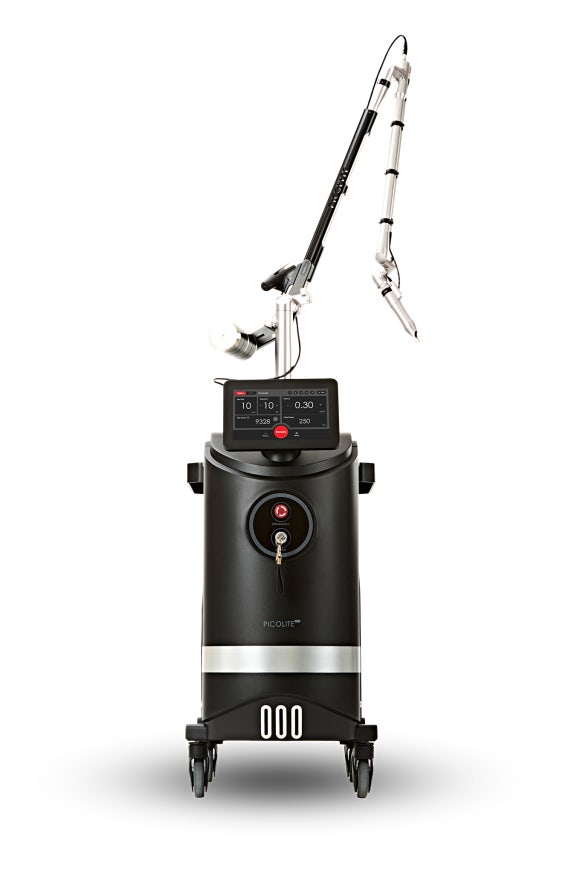
Today, we will take an in-depth look at the core principles and distinguishing features of the PicoLight Black laser, which goes beyond the limitations of conventional lasers by breaking down pigmentation into smaller particles more gently.
Table of Contents
-
Conventional laser toning vs. PicoLight Black: What is the difference?
-
Why does collagen build up beneath the skin even when the surface looks fine? The LIOB effect
-
We particularly recommend it for these individuals
-
Practical care tips for preserving the full effects after treatment
-
In closing
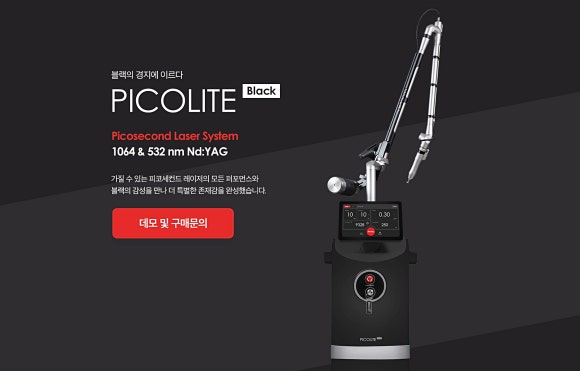
- Conventional laser toning vs. PicoLight Black: What is the difference?
The key to pigmentation treatment performed at a dermatology clinic lies in how cleanly the melanin pigment within the skin can be destroyed without damaging the skin's surface.
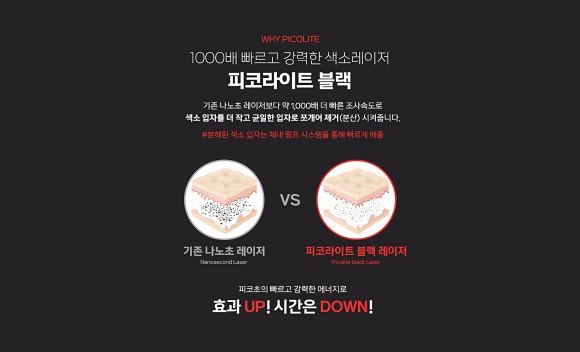
| Category | Conventional laser toning (nanosecond) | PicoLight Black (picosecond) |
|---|
| Treatment speed | One-billionth of a second (Nanosecond) | One-trillionth of a second (Picosecond) |
| Mechanism of action | Photothermal reaction | Photomechanical effect |
| Size of broken-down pigment | Pebble-sized | Grain-of-sand-sized |
| Damage to surrounding tissue | Relatively high due to heat transfer | Pain and damage minimized as the energy passes almost instantaneously |
Whereas conventional laser toning breaks a giant boulder down only to the size of pebbles, the PicoLight Black laser, operating at the remarkable speed of one-trillionth of a second, breaks those pebbles down into extremely fine grains of sand.
When pigment particles are as large as pebbles, it is difficult for the body's immune cells, or macrophages, to engulf and process them in one bite. In contrast, pigment broken down into particles as fine as dust or grains of sand can be naturally and much more rapidly eliminated through the body's lymphatic vessels. As a result, treatment efficiency can be maximized while reducing the number of treatment sessions.
- Why does collagen build up beneath the skin even when the surface looks fine? The LIOB effect
Another innovation of the PicoLight Black laser is the LIOB effect.
Many people are intrigued and ask, "How can skin become firmer and pores become smaller without scraping or injuring the skin?" The secret lies in this LIOB principle.
What is LIOB (laser-induced optical breakdown)? It is a technique that concentrates the laser's powerful energy only in the deeper dermal layer of the skin, creating tiny "bubble-shaped microcavities" without causing any damage to the skin's surface, or epidermis.
In other words, the outer surface of the skin remains perfectly intact and clean, while tiny micro-injuries are created in the dermal layer beneath the skin. When an injury occurs within the skin, our skin begins releasing large amounts of collagen and elastin to heal itself.
This process promotes natural skin regeneration, allowing you to expect multiple effects at the same time as pigmentation treatment, including pore reduction, improvement of fine lines, and the softening of scars.

- We particularly recommend it for these individuals
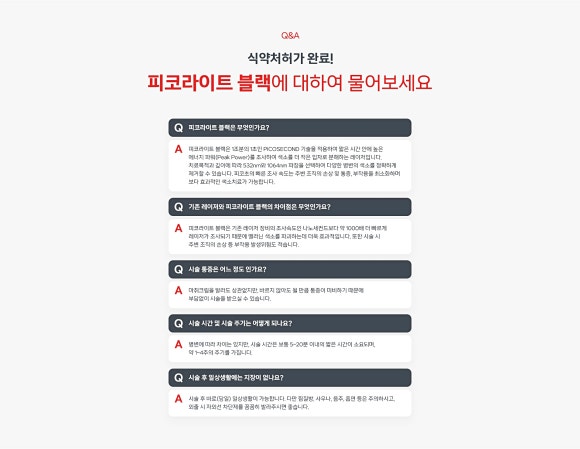
Because the PicoLight Black laser remains in contact with the skin for an extremely short time, it causes little unnecessary thermal damage to the surrounding healthy tissue. As a result, it may be a suitable alternative for people with the following concerns, with fewer concerns about side effects.
-
Those struggling with stubborn melasma and recurrent pigmentation: It offers precise targeted treatment for people who have not seen results from conventional toning or who have experienced the side effect of hyperpigmentation becoming darker.
-
Those who want to safely remove colored or large tattoos: Because different wavelengths can be used to control the depth of penetration, even difficult-to-remove colored tattoos in red or blue and deeply embedded tattoo particles can be effectively broken down while reducing concerns about scarring.
-
Those who have hesitated to undergo laser treatment because they are sensitive to pain: Because the pigment is shattered using an instantaneous shock wave, the burning sensation and pain caused by heat are significantly reduced, allowing even people who are sensitive to pain to approach treatment more comfortably.
- Practical care tips for preserving the full effects after treatment
Even if you receive precise treatment with an excellent device, the effects may be reduced if aftercare is not properly performed. Please be sure to remember the following three precautions.
-
Sunscreen is essential, not optional: After laser treatment, the skin is temporarily more vulnerable to irritation. Even indoors or on cloudy days, carefully apply sunscreen with SPF 30 or higher and PA+++ or higher. When going outside, reapply every 2–3 hours to help prevent the melanin-producing cells from becoming active again.
-
Focus on moisturizing, like an unending spring: While the regenerative response inside the skin, or the LIOB effect, is active, the skin may feel somewhat dry. Apply a gentle moisturizer containing ingredients such as hyaluronic acid or ceramides generously—at least 1.5 times more than usual—to protect the skin barrier.
-
Avoid irritating home care and excessive heat: For about one week after treatment, avoid using exfoliants such as peeling products or scrubs. It is also advisable to take a short break from functional cosmetics such as retinol and high-concentration vitamin C. In addition, avoid activities that raise facial temperature, such as saunas, Korean-style heated rooms, and strenuous exercise, to help prevent facial flushing and irritation.
- In closing
The uneven marks that have bothered you whenever you look in the mirror should no longer be treated by simply applying intense heat. Now is the time to gently and precisely break down the underlying causes deep within the skin.
An accurate diagnosis suited to your skin condition and the depth of the pigmentation should come first in order to improve treatment satisfaction. We hope that, through a thorough consultation, you can restore a clear and clean skin foundation.
Thank you.
[Related articles you may enjoy]
Apgujeong Dermatology PicoLight Black: What are the principles and effects of pico toning, which breaks pigmentation into fine particles?
The four most popular cost-effective dermatology treatments for men (including Botox and hair removal)
Wells Dermatology's laser treatment for dark spots, Dark Spot 119!