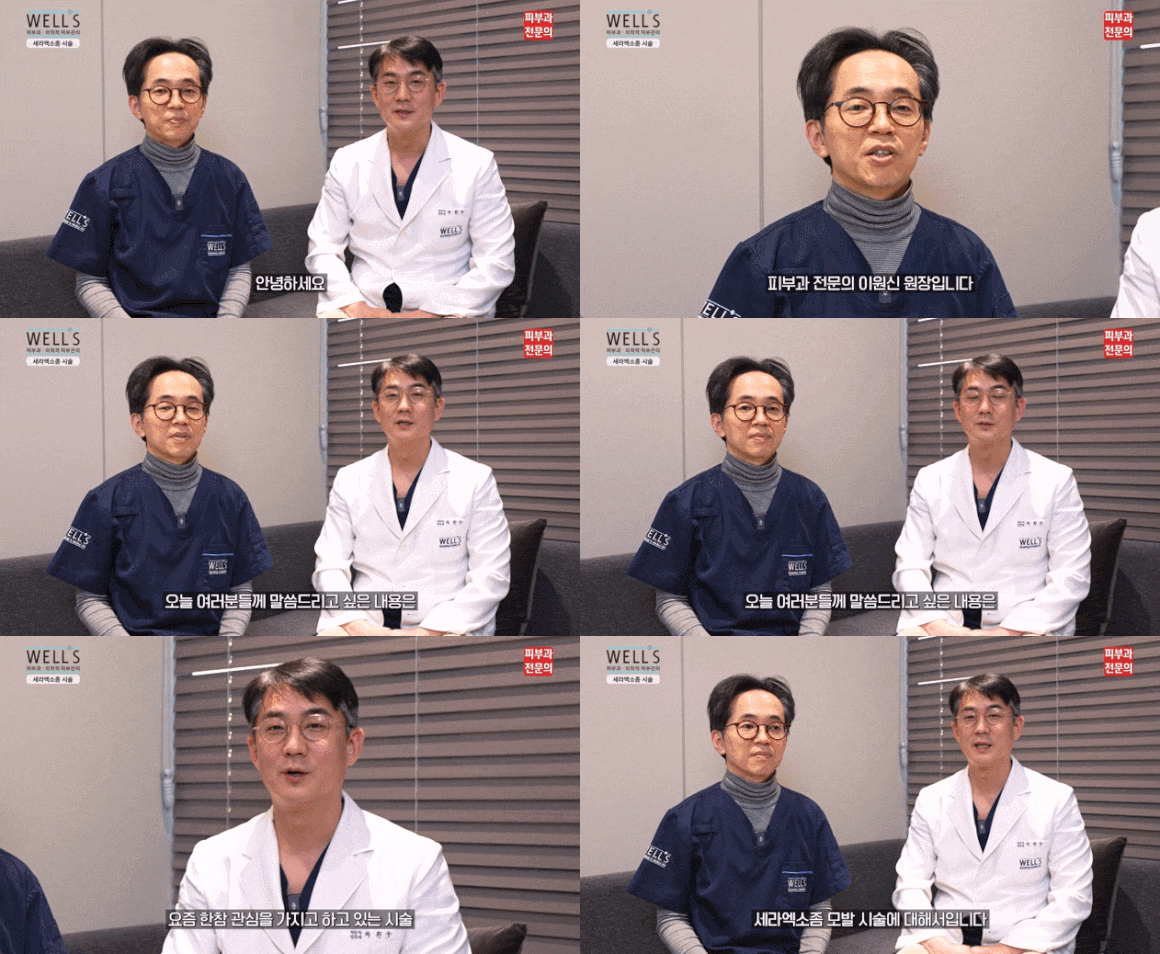
Hello.
I am Wonwoo Choi, a dermatologist with 23 years of experience.
When counseling patients about hair loss, I often hear them say things like this.
“My hair has less strength than it used to.”
“My crown looks thinner,
but I don’t think I’m actually losing a tremendous amount of hair.”
“I feel like my hair density is decreasing as I get older.”
When people think of hair loss, many first imagine a situation in which a large amount of hair is falling out.
However, the changes people notice after their 40s can be somewhat different from simple hair shedding.
Rather than the number of hairs suddenly decreasing, each strand often becomes thinner and loses strength, making the hair look less dense overall.
Just as the skin becomes thinner and loses elasticity with age, the scalp and hair follicles can also gradually lose function over time.
I believe these changes should be viewed from the perspective of “hair aging,” rather than simply as hair loss.
Today, I will explain why hair becomes thinner and how Sera Exosome is used in the treatment of hair aging.
Table of Contents
-
Thinning hair may be a sign of aging.
-
The key to hair aging is declining hair follicle cell function.
-
Sera Exosome is a treatment that delivers growth signals to the hair follicles.
-
How does Wells Dermatology apply Sera Exosome?
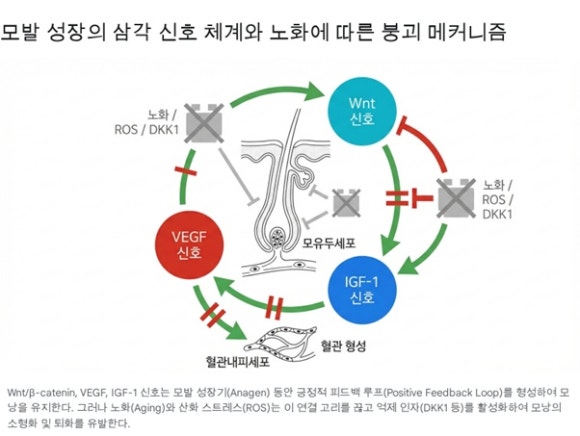
- Thinning hair may be a sign of aging.
Changes that occur in the skin with age are relatively easy to notice.
This is because visible changes such as wrinkles, reduced elasticity, and sagging facial contours appear.
However, hair aging progresses more slowly and subtly.
At first, it may feel as though the hair settles down more easily than it used to.
Even after blow-drying, the volume does not last as long, the crown looks particularly visible, and the part seems to be gradually widening.
At this point, it is important not to focus only on “how much hair is falling out.”
You should also consider how thickly the hair is growing, whether its growth rate is being maintained, and whether the hair is growing long and strong enough.
As hair miniaturization progresses and the strands become finer, overall density may appear lower even if the actual number of hairs has not decreased significantly.
Therefore, in hair loss after middle age, it is important to examine both hair thickness and the scalp environment.
- The key to hair aging is declining hair follicle cell function.
Hair is not simply a fiber that grows above the scalp.
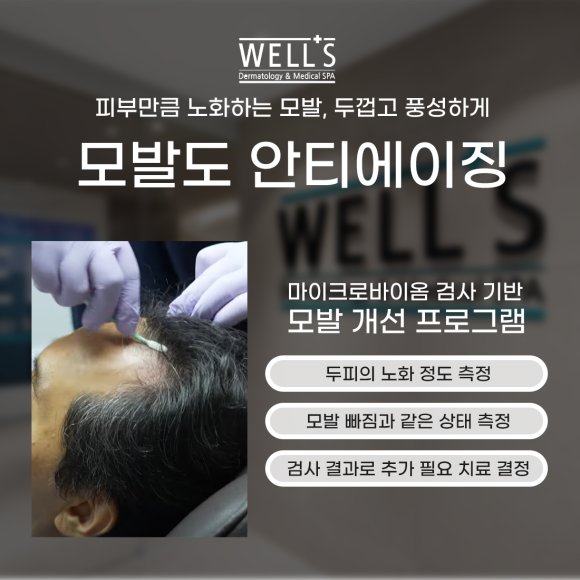
It is the result of hair follicle cells within the scalp producing hair while exchanging growth signals.
Young, healthy hair follicles remain in the growth phase for a sufficient period of time, producing thick and strong hair.
However, as oxidative stress, hormonal changes, inflammatory responses, and other factors accumulate with age, hair follicle cell function may gradually decline.
Signals that promote hair growth become weaker, the growth phase becomes shorter, and the follicles gradually become smaller.
As a result, newly growing hair becomes thinner, shorter, and weaker than before.
Simply put, it is similar to a state in which the seed is still present, but the soil has become too weak for it to take root fully.
Therefore, treatment for hair aging should not end with simply preventing hair from falling out.
It should also help restore the weakened follicle environment and ensure that the signals necessary for hair growth can be properly delivered.
- Sera Exosome is a treatment that delivers growth signals to the hair follicles.
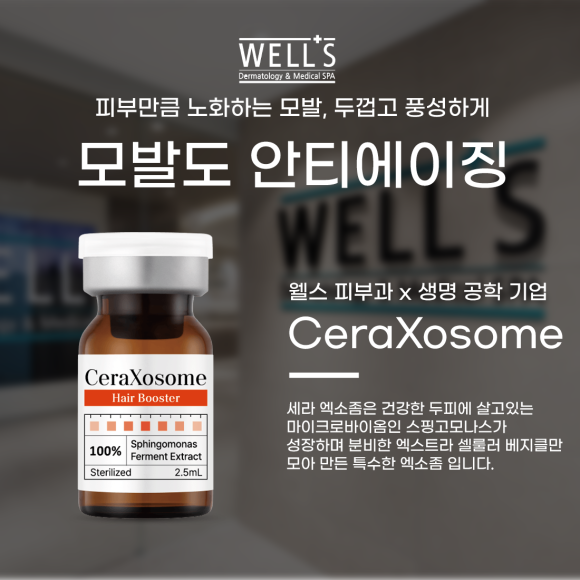
Sera Exosome is one of the substances we are focusing on in the treatment of hair aging.
Exosomes are small vesicles that transmit signals between cells.
Simply put, you can think of them as carriers containing messages that cells send to one another.
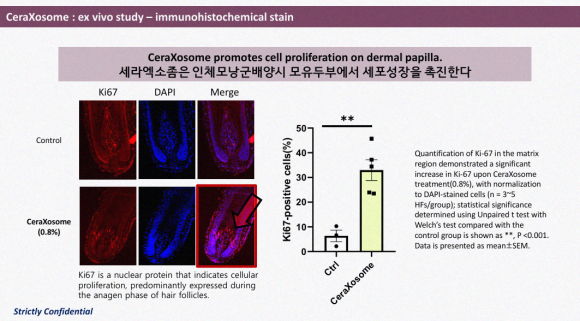
Sera Exosome is used to deliver signals needed for growth and regeneration to the scalp environment and hair follicle cells.
In particular, it is based on lipid components that are compatible with the scalp barrier and hair structure, giving it significance in helping support recovery responses around the hair follicles when applied to a weakened scalp environment.
While conventional hair-loss treatments have focused on hormone regulation or improving blood flow, Sera Exosome can be viewed as an approach that reexamines the function of the hair follicles themselves and their growth signals.
Of course, Sera Exosome alone cannot resolve every type of hair loss.
Hair loss can involve various causes, including genetic factors, hormonal changes, postpartum changes, changes after menopause, scalp inflammation, and lifestyle.
Therefore, it is necessary to first determine how the hair loss is currently progressing and then assess whether Sera Exosome may be appropriate for the condition.
- How does Wells Dermatology apply Sera Exosome?
At Wells Dermatology, we do not view Sera Exosome simply as a scalp application treatment.
We first assess the degree of hair aging, scalp condition, hair thickness, changes in density, and hair-loss pattern before creating a treatment plan.
The approach may differ depending on whether the person has reduced density at the crown, a receding hairline, or hair that has become thinner overall.
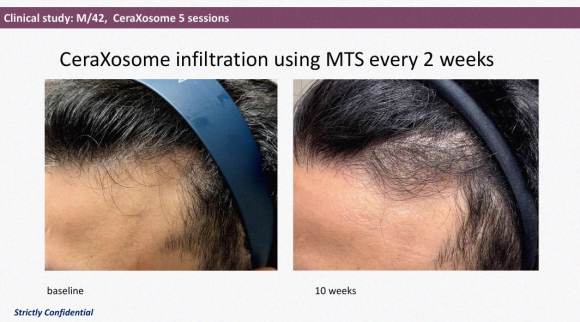
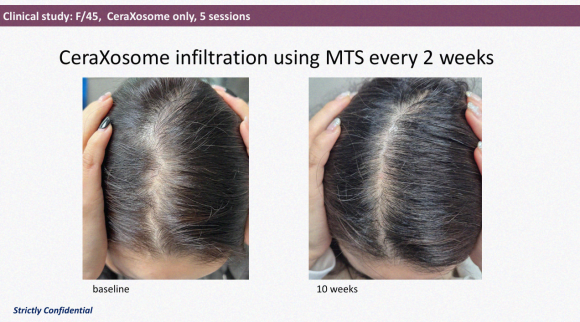
Treatment is generally repeated at regular intervals to create an environment in which the follicles can respond to growth signals again.
When necessary, scalp injection treatments, topical medication, oral medication, and home care may also be used together with Sera Exosome.
In particular, people whose hair has become thinner and weaker due to aging may consider combining Sera Exosome with hair anti-aging care such as Dithology NMN.
While Sera Exosome delivers growth signals to the hair follicles, NMN takes an approach aimed at helping aging cells use energy more efficiently.
In other words, the goal is to create an environment in which the follicles can respond again while also considering the cells’ energy metabolism within that environment.
However, hair is a tissue in which changes appear more slowly than they do in the skin.
Rather than judging all changes after one or two treatments, it is necessary to observe consistently over a certain period and check changes in hair thickness and density.
In Closing
Changes such as thinning hair and a visible crown should not simply be dismissed as an inevitable result of aging.
Like the skin, hair also ages, and the scalp and hair follicles may lose their ability to recover over time.
Sera Exosome is a treatment that may help restore the weakened follicle environment during this process of hair aging and deliver signals needed for hair growth.
Of course, the treatment approach should vary depending on whether the follicles can still respond, whether hormone treatment is also needed, or whether improving the scalp environment should come first.
If your hair has become thinner than before or you feel that the density at your crown has decreased, I recommend having your current scalp and hair condition checked before it is too late.
Identifying the cause of hair aging based on an accurate diagnosis and creating a hair anti-aging plan suited to you is the first step toward maintaining healthy hair for a long time.
Thank you for reading this lengthy post.
I am Wonwoo Choi, the director of Wells Dermatology.
[Recommended Related Reading]
Best 1. Introduction
Best 2. Effects and Principles of Sera Exosome
Best 3. Sera Exosome and Dithology NMN
| Wells Dermatology Main Phone (Click the number below to connect) |
|---|
| 02 - 542 - 2372 |
| Office Hours |
|---|
| Weekdays 10:00 ~ 20:00 |
| Saturdays 10:00 ~ 17:00 |
| Lunch Break 13:00 ~ 14:00 |
| Closed Sundays and public holidays |
This post was written directly by Wells Dermatology Clinic and complies with Article 56, Paragraph 1 of the Medical Service Act and all other laws concerning medical advertising.
All surgeries and procedures may be accompanied by side effects depending on the individual. Please receive sufficient information and consultation from a medical professional before carefully deciding whether to undergo a procedure.