Hello.
I am Lee Won-shin, a board-certified dermatologist with 23 years of experience.
"I made a big decision to get a lifting treatment, but I’m disappointed that there hasn’t been as much change as I expected."
"I’ve heard that some people around me experienced side effects such as hollow cheeks, so I don’t feel confident enough to go ahead."
These concerns, which occasionally appear among the many positive reviews, can make people hesitate before undergoing a lifting treatment. While some are satisfied with a noticeably smoother jawline, others may feel stressed by results that fall short of their expectations or by unexpected changes.
Why do results differ even when the same equipment is used? To give you the conclusion first, it is because of standardized treatments that do not take an individual’s skin characteristics into account. Rather than making a choice simply because “it worked for other people” or “the price is low,” a careful plan suited to your own face should come first.
Today, moving beyond predictable promotional information, I will explain from a medical perspective, in an easy-to-understand way, why results can inevitably differ from person to person even when the same equipment and number of shots are used. I hope this will be a small help in making a wise choice for your valuable skin.

Table of Contents
-
The Core Principles and Differences Behind the Effects of Ultherapy Prime
-
Personalized Design to Maximize the Effects of Ultherapy Prime
-
Safety and Attention to Detail Emphasized by a Specialist with More Than 20 Years of Experience
-
Conclusion
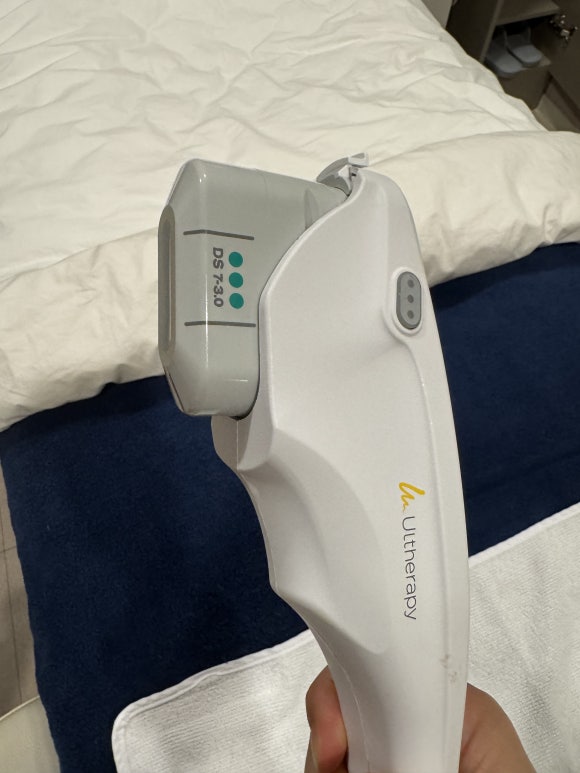
The Core Principles and Differences Behind the Effects of Ultherapy Prime
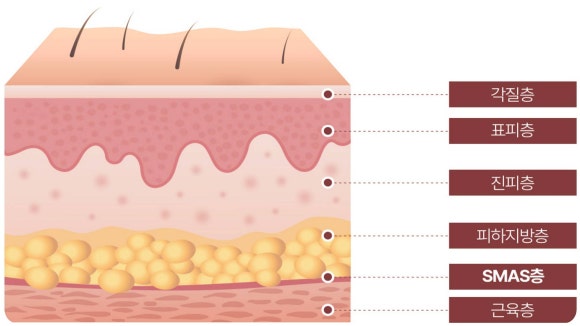
If you have even a little interest in lifting treatments, you have probably heard the term “SMAS (筋膜) layer.” Located deep within the skin, it is a type of tissue that firmly supports the outer skin and fat layers, much like a “rope.” As we age, this rope naturally becomes loose and stretched, causing the cheeks to sag and the jawline to become less defined.
The reason the effects of Ultherapy Prime attract attention is that it gently yet powerfully contracts the sagging fascial layer itself. High-intensity focused ultrasound (HIFU) energy is accurately delivered deep into the skin without stimulating the skin’s surface, forming microscopic thermal coagulation points. The core principle is that these heated tissue points contract, naturally lifting sagging tissue upward.
However, the truly differentiating feature lies in the “real-time ultrasound monitoring system (DeepSEE™).”
The thickness of the skin differs from one area of the face to another, and the thickness of the fat layer also varies. Without an ultrasound monitoring screen, it is impossible to see directly beneath the skin, so energy can only be delivered at an approximate depth based on general guidelines.
With this treatment, on the other hand, the medical professional proceeds while directly viewing the patient’s internal skin structures in real time. With every shot, they check whether the energy is entering a safe fat layer or the precise target—the fascial layer. The ability to focus energy by precisely adjusting the target layer without error is the valuable difference that many people trust.
Personalized Design to Maximize the Effects of Ultherapy Prime
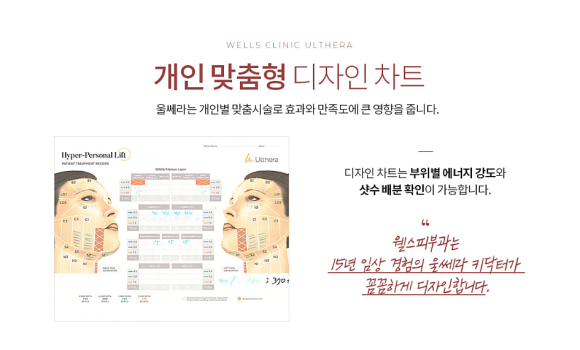
During consultations, I am often asked, “How many shots should I get for the best results?” To carefully give you the conclusion first, there is no broadly meaningful, standardized number of shots that can serve as a fixed answer because everyone has a different facial shape, rate of aging, and skin thickness.
Even when the same 300 shots are used, it is not advisable to distribute them across the entire face at identical intervals and with the same energy level. For example, if a person has little cheek fat and thin skin, delivering excessively deep and strong energy mainly to the cheeks may cause concerns such as hollow cheeks as the fat layer atrophies. Conversely, if a person has a thick fat layer around the jawline, using a very thin tip and applying treatment too weakly can easily lead to disappointing results.
Therefore, to achieve satisfactory changes, a personalized design process that carefully analyzes the balance of the entire face and the presence of left-right asymmetry before treatment is essential. The key points below may help you understand this better.
■ Checklist for Maximizing the Effects of Ultherapy Prime
- Applying tips according to skin thickness
4.5 mm tip: Care for the deep SMAS fascial layer, the fundamental cause of sagging (jawline and double-chin lifting)
-
3.0 mm tip: Care for the fat layer and upper dermal layer (gentle volume contraction and overall elasticity)
-
1.5 mm tip: Care for thin skin layers (improvement of fine lines around the eyes and skin texture)
-
Adjusting the energy level according to each area
In areas where hollow cheeks are a concern, the energy is carefully reduced or the depth is adjusted to protect volume.
-
In areas where sagging is pronounced, shots are placed intensively to induce an efficient thermal response.
-
Design for correcting left-right asymmetry
Depending on their usual lifestyle habits, everyone tends to have one side of the face sag slightly more than the other. The proportion of shots is flexibly adjusted toward the side requiring more detailed care to create balanced symmetry.

Safety and Attention to Detail Emphasized by a Specialist with More Than 20 Years of Experience
No matter how excellent the equipment’s functions may be, the depth of the results can vary depending on the skill of the medical professional operating it. Even when real-time monitoring is well integrated, the ability to accurately interpret the complex skin structures shown on the screen and handle the equipment precisely accordingly is refined through years of experience.
Side effects that may occur during a lifting treatment often arise when the patient’s skin thickness has not been precisely assessed or when the equipment has not been properly placed against the skin’s surface, causing thermal energy to be delivered to the wrong layer.
A specialist who has built expertise through more than 20 years of experience with a wide range of clinical cases carefully controls the angle and pressure even during subtle movements, guiding the treatment comfortably and safely. A systematic pain-care system must support the comfortable delivery of sufficient energy.
Strict and attentive management of the anesthesia process before treatment is fundamental. It is also important to apply a personalized anesthesia system suited to each individual’s sensitivity so that they can undergo the treatment comfortably. These differences in precision and consideration become the key to creating satisfactory results.
Conclusion
Lifting to restore skin elasticity is not simply a process of following a trend or copying someone else’s choice. It should be a delicate process that makes full use of the equipment’s beneficial functions while naturally highlighting the unique appeal of your own face. Even with the same 300 shots, the results you see over time will clearly differ depending on which medical professional designs the treatment and how they approach your concerns.
As we have seen today, it is only when personalized treatment is performed—clearly identifying the structures beneath the skin and carefully reflecting even subtle individual differences—that you can expect the healthy changes you hoped for.
An accurate diagnosis suited to your skin begins with meeting and speaking directly with an experienced medical professional. Rather than rushing into a decision because of attention-grabbing, flashy wording, I recommend beginning with a comfortable consultation with a medical professional who will listen carefully to your skin concerns and provide appropriate guidance.
Thank you.
[Related Articles]
Is Sleep Anesthesia Necessary for Ultherapy? A Dermatology Specialist Explains Pain-Control Methods
Ultherapy + Fitting Lifting Stimulate Different Layers: <Ultherapy Prime Fit>
Do Not Have Sleep Anesthesia for Ultherapy No Matter How Painful It Is! A Dermatology Specialist with 23 Years of Experience Explains Everything About Ultherapy