※ This article is content provided for medical information purposes.
It is not subject to review under Article 56, Paragraph 2 and Article 57 of the Medical Service Act,
and is not a post intended for advertising.
Liposuction Bio-Bond Management,
Why Does It Become Uneven?
Hello,
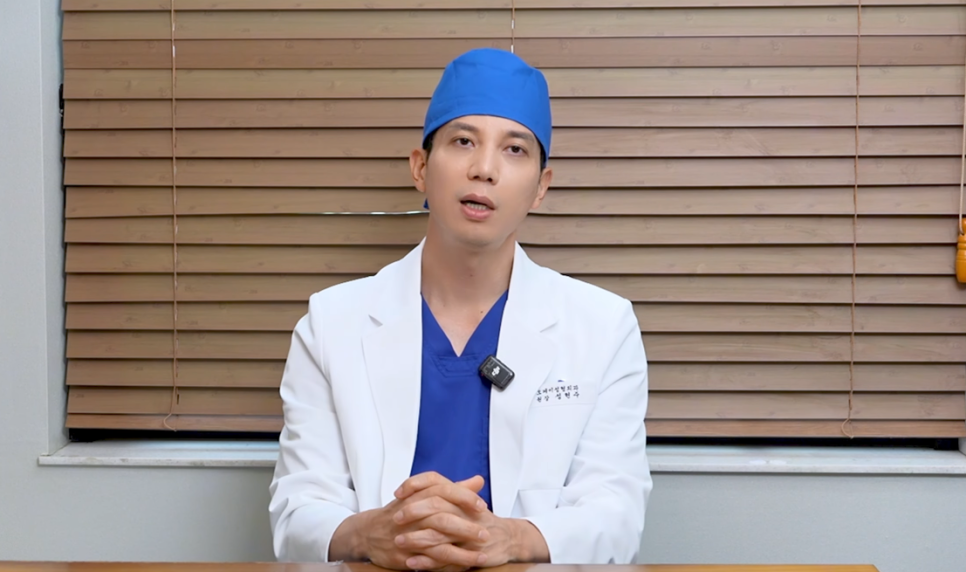
I am Director Seong Hyeon-ju of Cheongdam OK Clinic.
| ▶ Full member of the Korean Academy of Cosmetic Surgery (KACS) |
|---|
| ▶ Full member of the Korean Society for the Study of Obesity (KSSO) |
| ▶ Full member of the Korean Academy of Obesity and Aesthetic Treatment (KAAM) |
| ▶ Full member of the Korean Society of Liposuction Surgery (KSSL) |
| ▶ Full member of the Korean Society of Aesthetic Surgery (KSAS) |
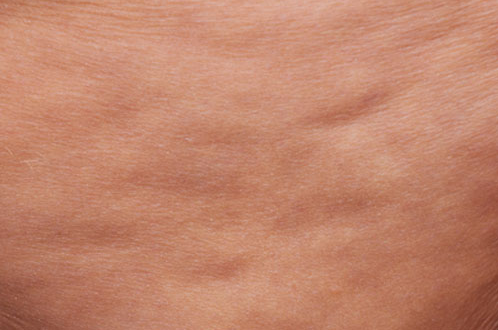
After liposuction, when you look in the mirror, many people are surprised to see that the surface does not look smooth but uneven.
Many people describe it by saying, “Isn’t this a bio-bond?”
Liposuction Bio-Bond Management
The exact name for this phenomenon is
Bio-bond.
Rather than being the result of something going wrong,
it is a natural reaction that appears during the body’s recovery process.
| Table of Contents |
|---|
| 1. Why bio-bond forms 2. Why it looks uneven 3. How to manage bio-bond 4. What to check during recovery |
- Why bio-bond forms
After fat is removed, the body creates fibrous tissue to fill the space,
and this tissue is what bio-bond refers to.
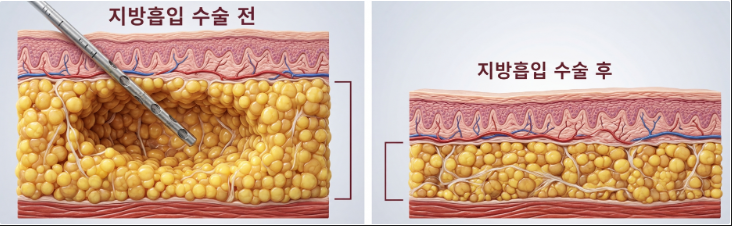
Simply put, you can think of it as the process in which the skin and the underlying tissue reattach and settle into place.
However, if this process does not proceed evenly,
it may feel hard to the touch or seem clumped together.
- Why it looks uneven
Rather than being a problem with bio-bond itself,
swelling, tissue recovery, and compression status all have an effect.

Liposuction Bio-Bond Management
In the early stage in particular, swelling remains,
so the lines can easily look uneven,
and if bio-bond forms during this period,
it can feel even more uneven.
Also, if the compression garment is not worn properly,
there are cases where the tissue does not settle evenly.
- How to manage bio-bond
The key is not to “remove” it,
but to gently release and organize it.
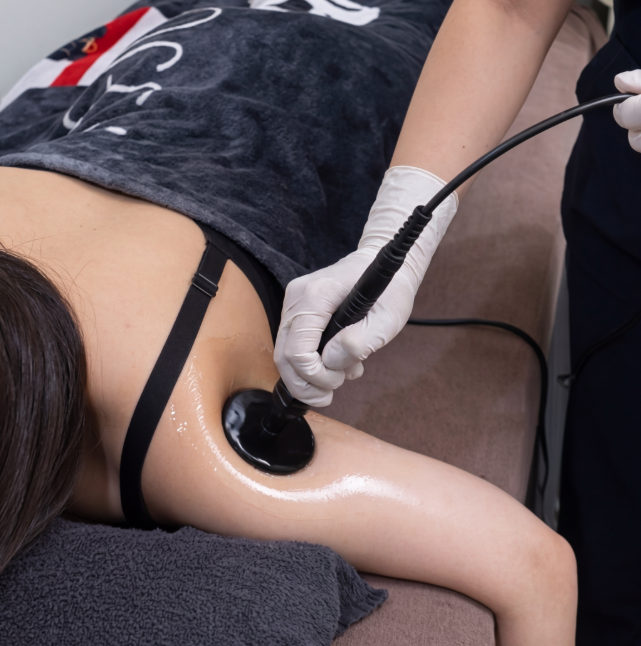
Gentle massage to loosen the tissue can be helpful,
and radiofrequency or ultrasound care can also help soften the tissue.
Liposuction Bio-Bond Management
What matters here is not pressing hard,
but managing it gently and consistently.
Keeping the compression garment on for a certain period also plays an important role in refining the line.
- What to check during recovery
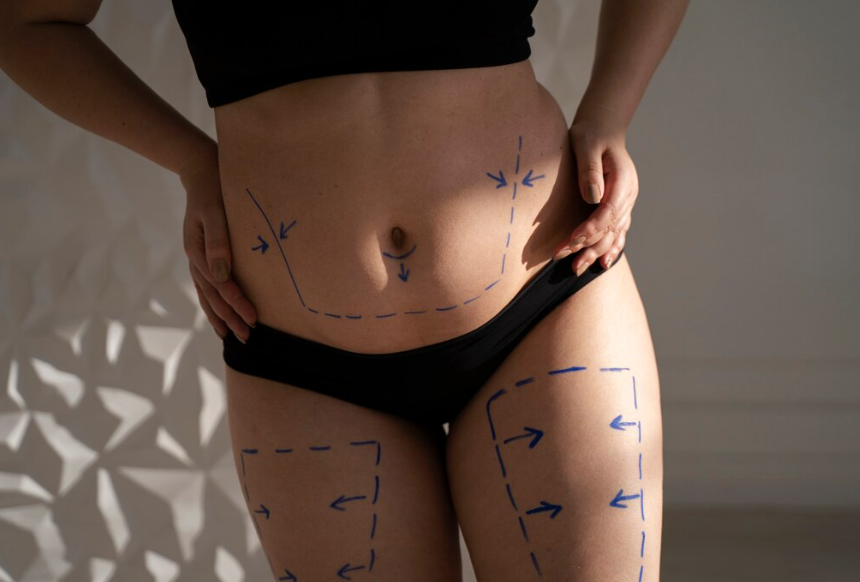
Bio-bond often becomes softer over time.
Liposuction Bio-Bond Management
Usually, changes appear over a period of weeks to months,
and applying strong stimulation too hastily during this time may actually interfere with recovery.
If only a specific area remains unusually hard for a long time,
or if pain is accompanied by it,
that area should be checked separately.

Liposuction Bio-Bond Management
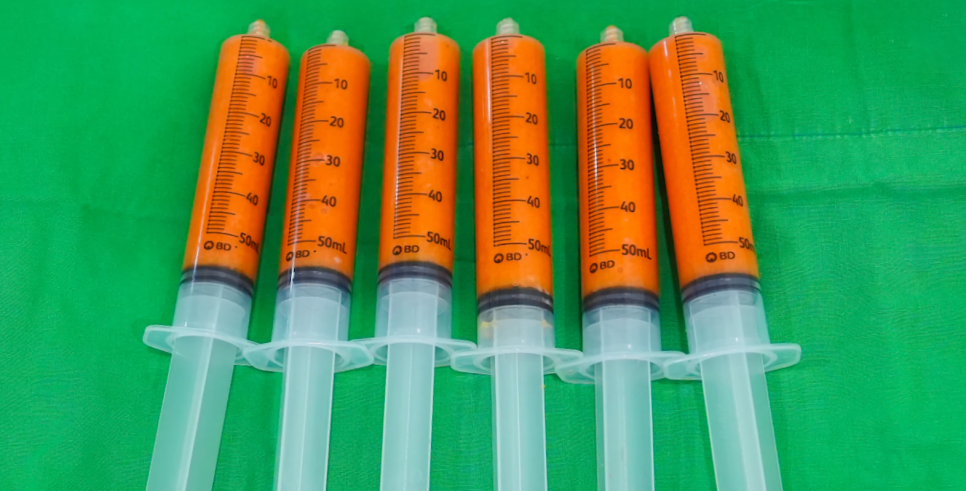
The result after liposuction does not simply end with fat removal,
but depends on how the tissue settles afterward.
So rather than seeing bio-bond as only a problem,
it is much more important to understand it as part of the recovery process
and manage it appropriately.
↓↓↓ Related content worth reading ↓↓↓
-Office Hours-
| Weekdays 10:00 ~ 19:00 (Reception closes at 18:30)Saturday 10:00 ~ 16:00 (Reception closes at 15:30)Closed on public holidays / Wednesdays and Sundays on a regular basis |
-Contact-
| ▶ Cheongdam OK Clinic |
|---|
| Consultation phone: 02-3446-7588 Inquire via KakaoTalk |
-How to get here-
Liposuction Bio-Bond Management