※ This article is content provided for medical information purposes.
This content is not subject to review under Article 56, Paragraph 2 and Article 57 of the Medical Service Act,
and we would like to inform you that it is not a post intended for advertising purposes.
Hello,
I am Sung Hyun-joo, director of 청담오케이의원.
| ▶ Full Member of the Korean Academy of Aesthetic Plastic Surgery (KACS) |
|---|
| ▶ Full Member of the Korean Society for the Study of Obesity (KSSO) |
| ▶ Full Member of the Korean Association for Aesthetic Medicine (KAAM) |
| ▶ Full Member of the Korean Society of Liposuction Surgery (KSSL) |
| ▶ Full Member of the Korean Society of Aesthetic Surgery (KSAS) |
Many people look into calf liposuction because their calves appear thick.
In actual consultations, quite a few people visit because
their calves look particularly thick,
or because they are dissatisfied with the shape of their legs
when wearing pants.
However, unlike the abdomen or thighs,
the calves are an area that is difficult to assess
simply by checking the amount of fat.
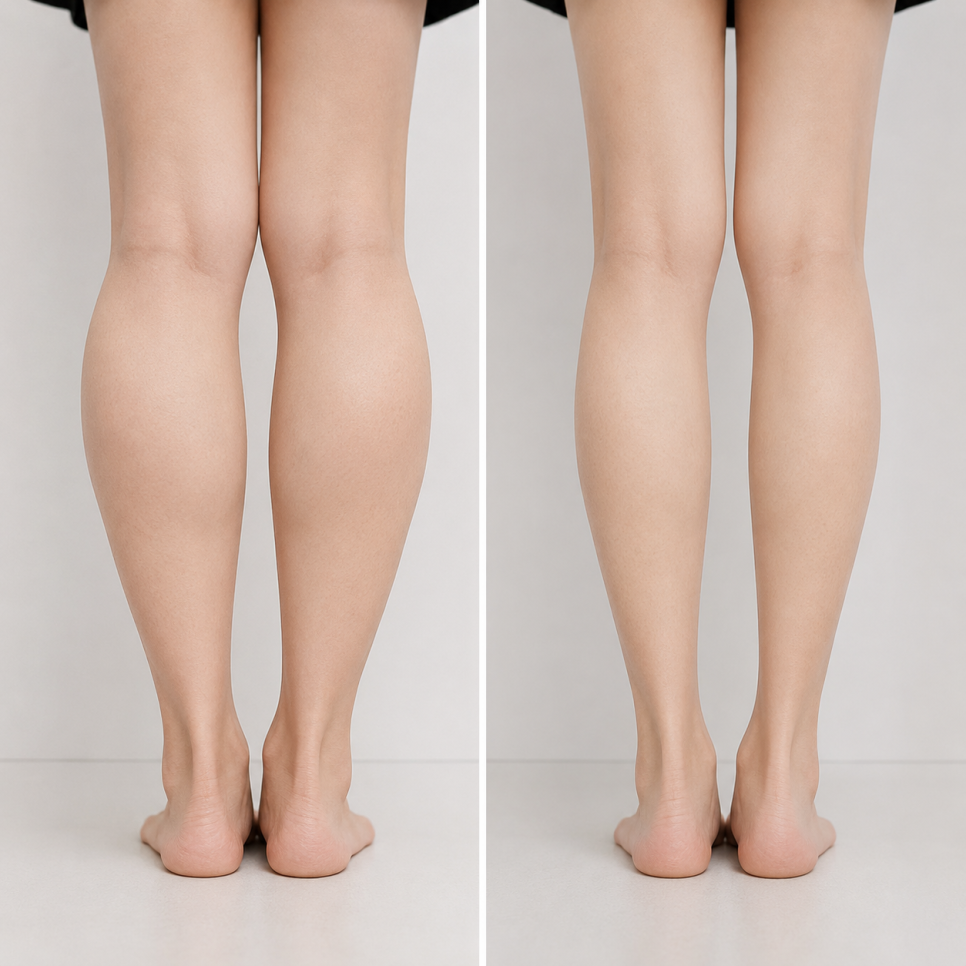
This is because the cause can differ depending on whether the same calf thickness is due to fat,
muscle, or swelling.
Therefore, in calf liposuction,
there are several things that should be checked first
rather than focusing on how much fat can be removed.
| TABLE OF CONTENTS |
|---|
| The calves are not made up of fat alone Factors that determine the calf line Skin elasticity and tissue condition, which are more important than the amount of fat Points to check for a natural-looking result |
- The Calves Are Not Made Up of Fat Alone
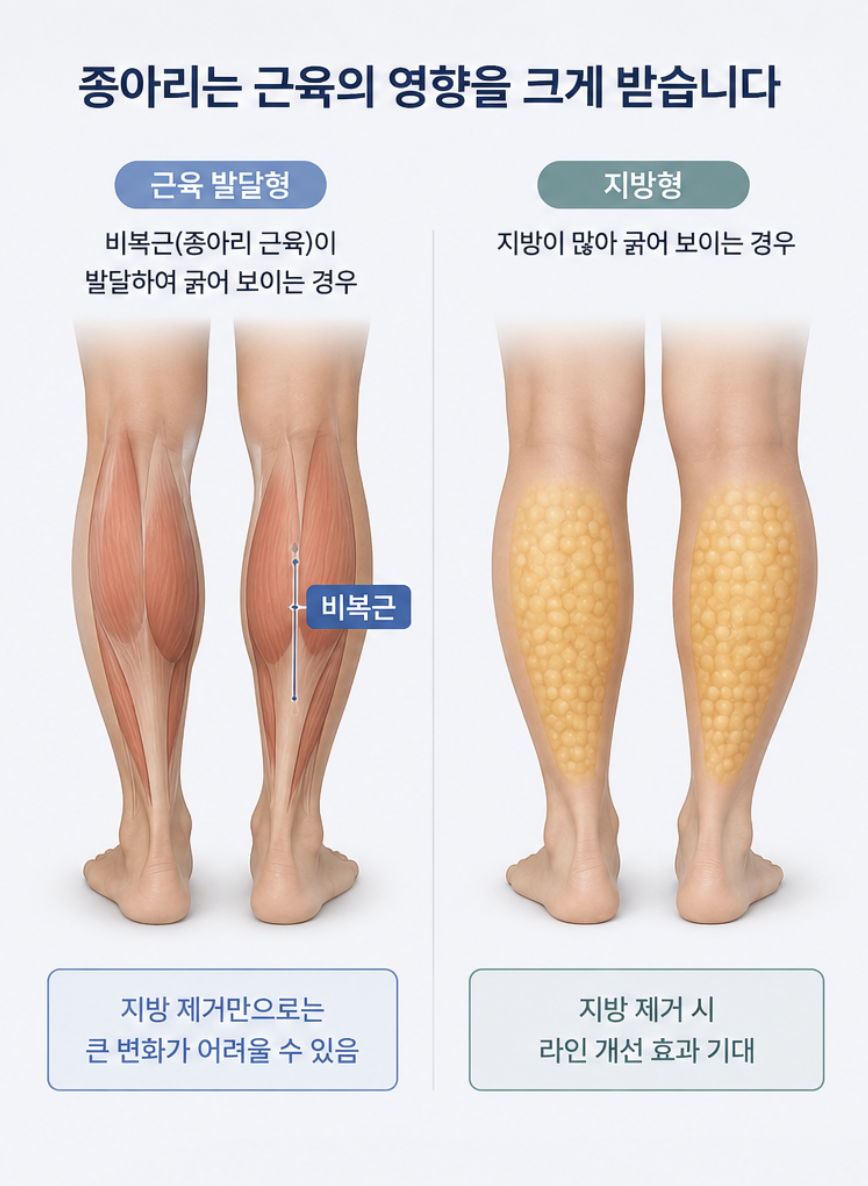
Compared with other areas of the body,
the calf area is strongly influenced by muscle.
Especially when the gastrocnemius is well developed,
even removing fat
may not produce as much change
as expected.
In fact, calves that appear thick do not necessarily contain a large amount of fat.
For people who exercise frequently
or use their lower-body muscles extensively,
muscle may also affect calf thickness.
In addition, people who work standing for long periods
may find that their calves appear thicker
because of recurring swelling.
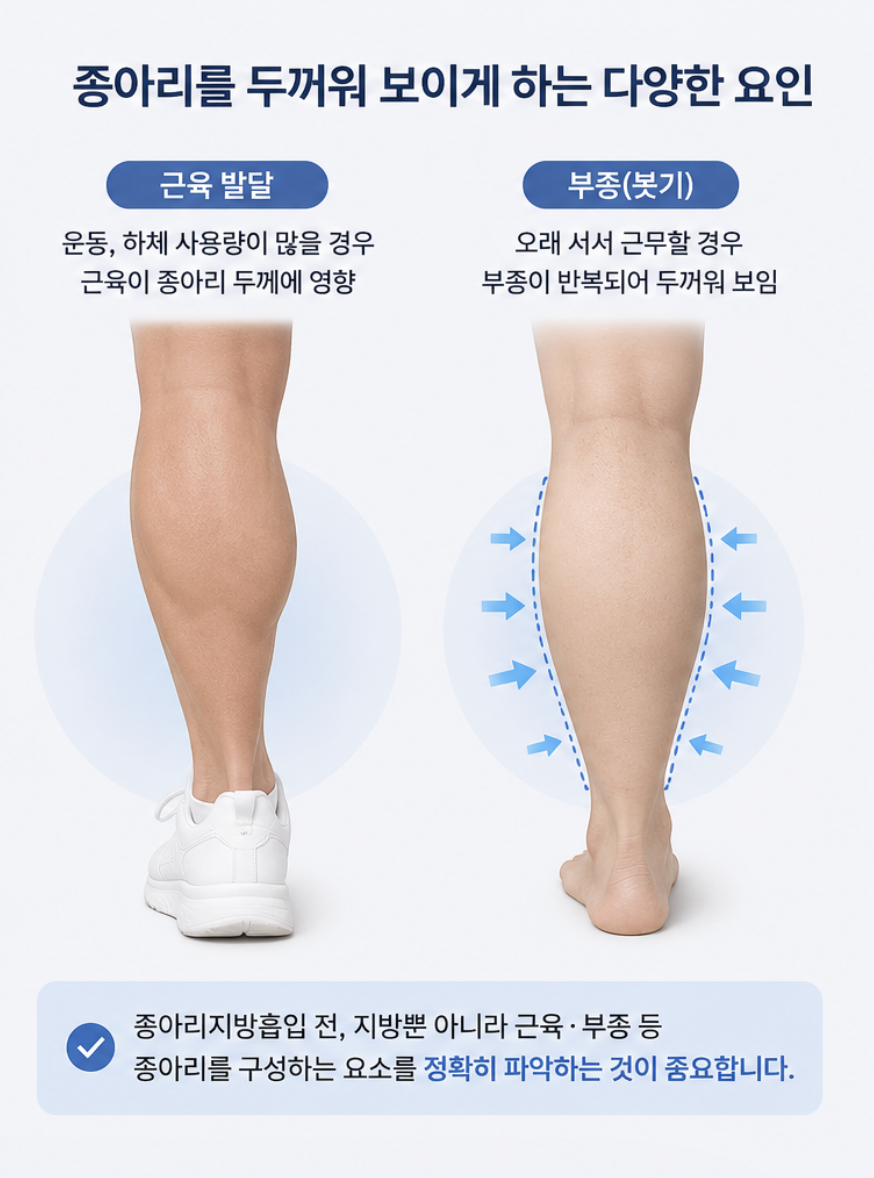
Therefore, when planning calf liposuction,
it is important not only to examine the fat layer
but also to first identify the factors currently making up the calves.
- Factors That Determine the Calf Line
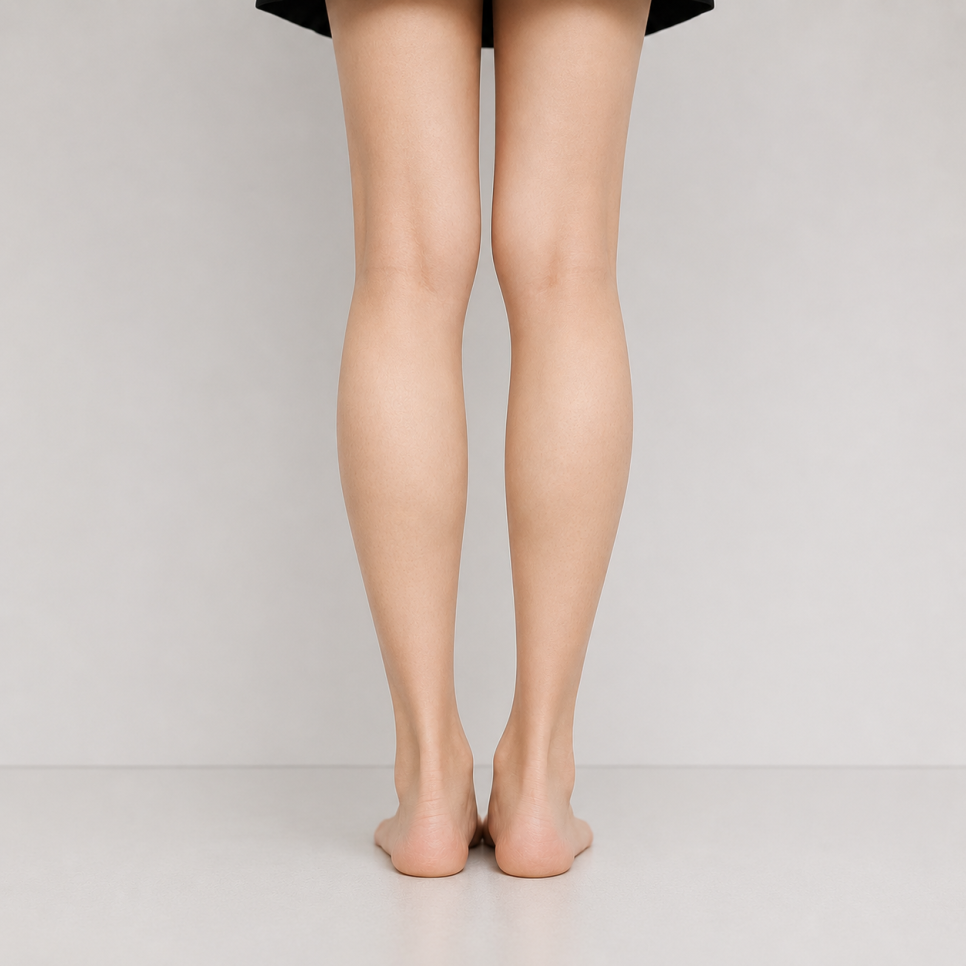
Many people expect only the calf circumference to decrease,
but in reality, the overall leg line is more important.
The transition from below the knee to the ankle
needs to look natural
to create a slim appearance.
For example, if a large amount is removed only from the center of the calf
and the transition to the area around the ankle is not natural,
it may actually look unnatural.
Conversely, even if the reduction in circumference is not substantial,
smoothing the overall curves can create a much slimmer impression.
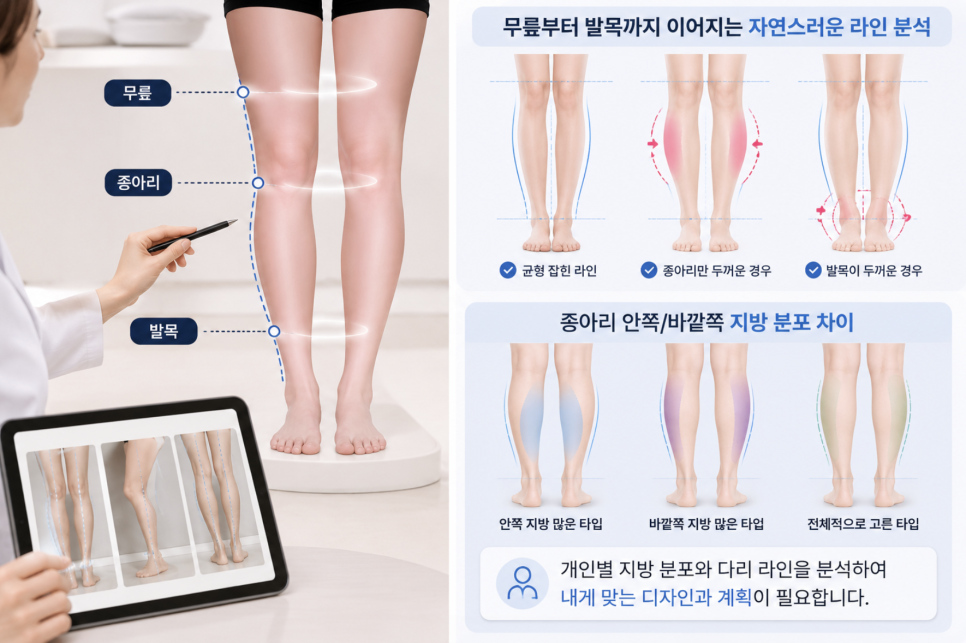
For this reason, during the consultation,
we do not look at the calves in isolation.
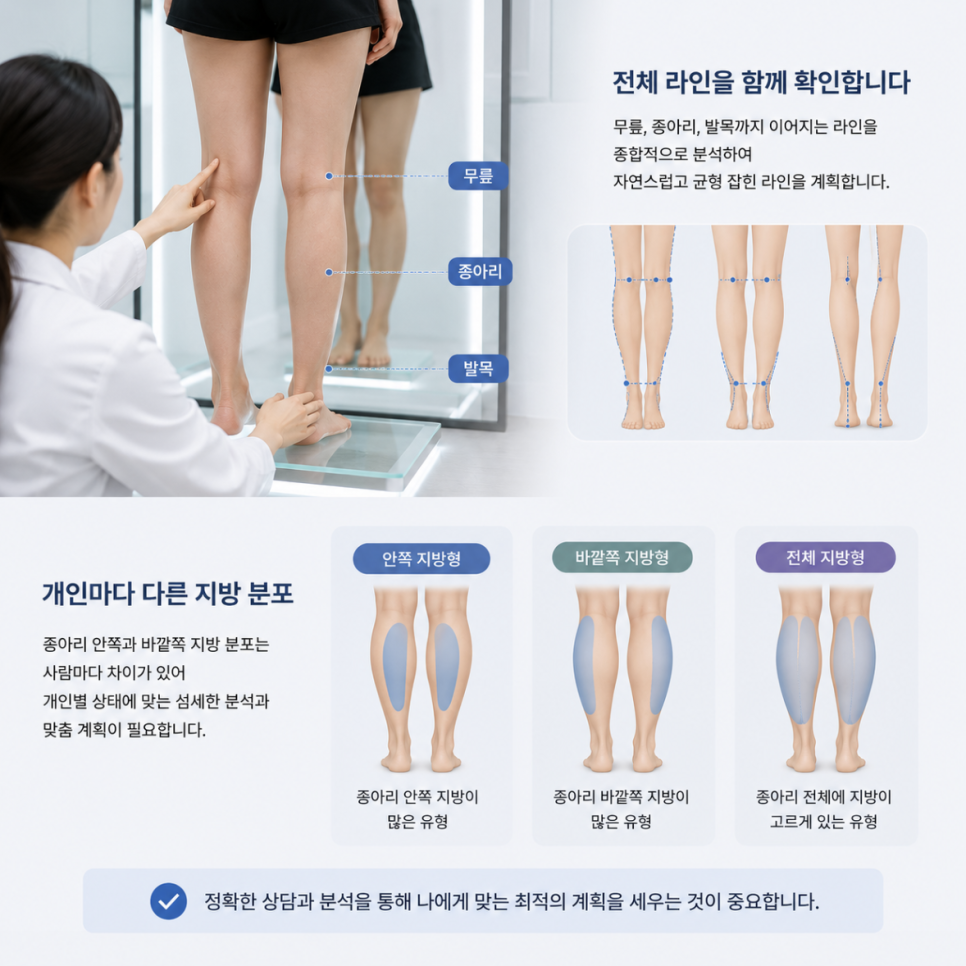
We also examine the line extending from the knees through the calves to the ankles.
In particular, the distribution of fat on the inner and outer calves
differs from person to person,
so an analysis tailored to each individual’s condition is necessary.
- Skin Elasticity and Tissue Condition Are More Important Than the Amount of Fat
One aspect that is easy to overlook in calf liposuction
is skin elasticity.
The presence of fat does not mean that removing as much as possible
will necessarily lead to a good result.
If too much is removed when the skin does not have sufficient elasticity,
the contours may not look smooth.
In addition, if there is a history of previous procedures
or repeated weight fluctuations,
the condition of the tissue should also be assessed.
Because skin thickness and elasticity,
as well as the distribution of the fat layer,
differ from person to person,
the results can vary even when the same amount is removed.
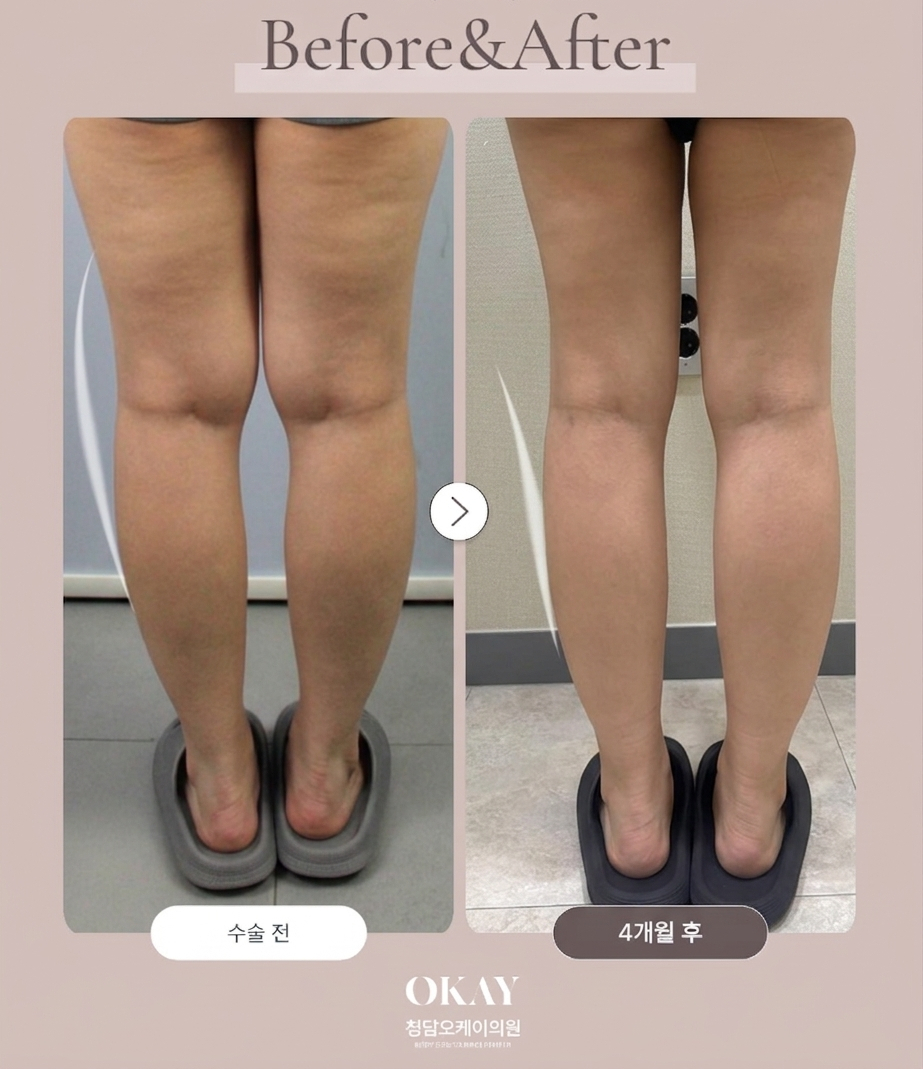
When looking at cases with high satisfaction,
many involve a plan appropriately established
for the individual’s current condition,
rather than focusing on the amount removed itself.
Since the calves are not a large area,
even small differences can be noticeable.
That is why a detailed assessment is important.
- Points to Check for a Natural-Looking Result
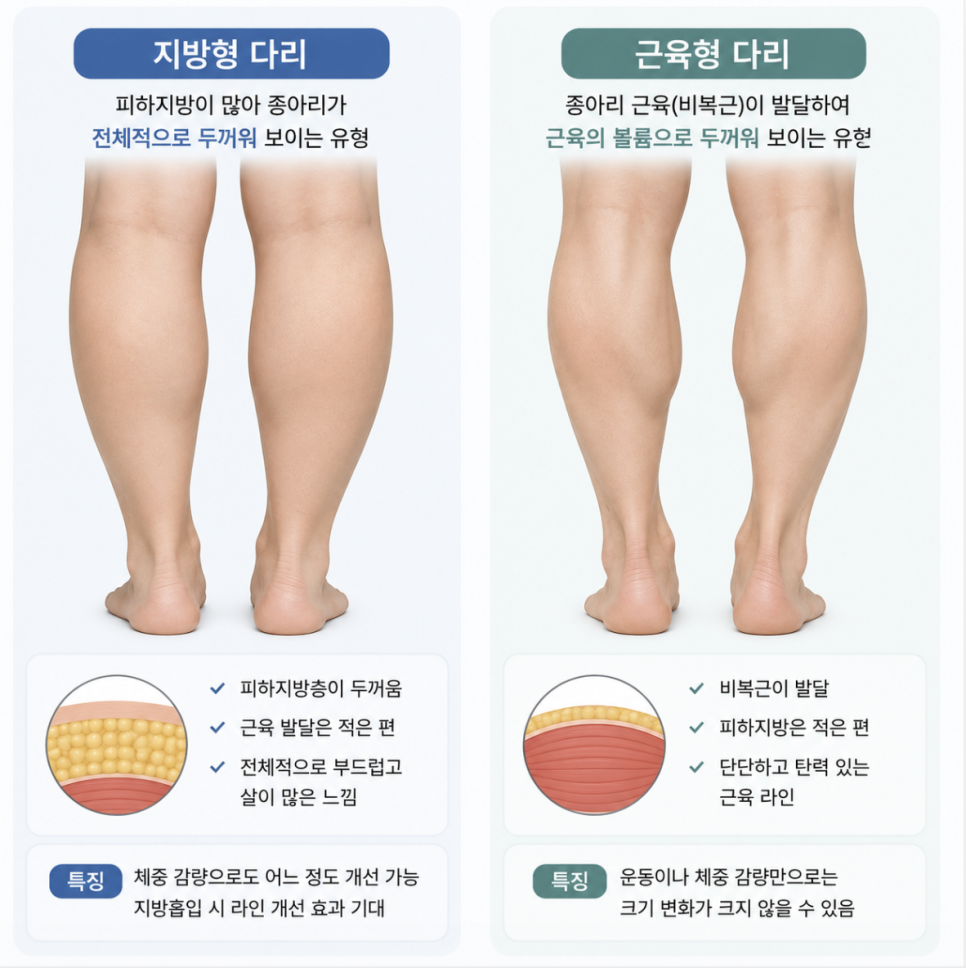
If you are considering calf liposuction,
it is first necessary to determine whether your calves are fat-dominant or muscle-dominant.
You should also examine skin elasticity, fat distribution,
and left-right balance together.
It is also important to assess whether reducing only the calves
would create a harmonious result for your current body shape.
The appropriate approach may differ depending on the ratio of the thighs to the calves, ankle thickness,
and the overall leg silhouette.
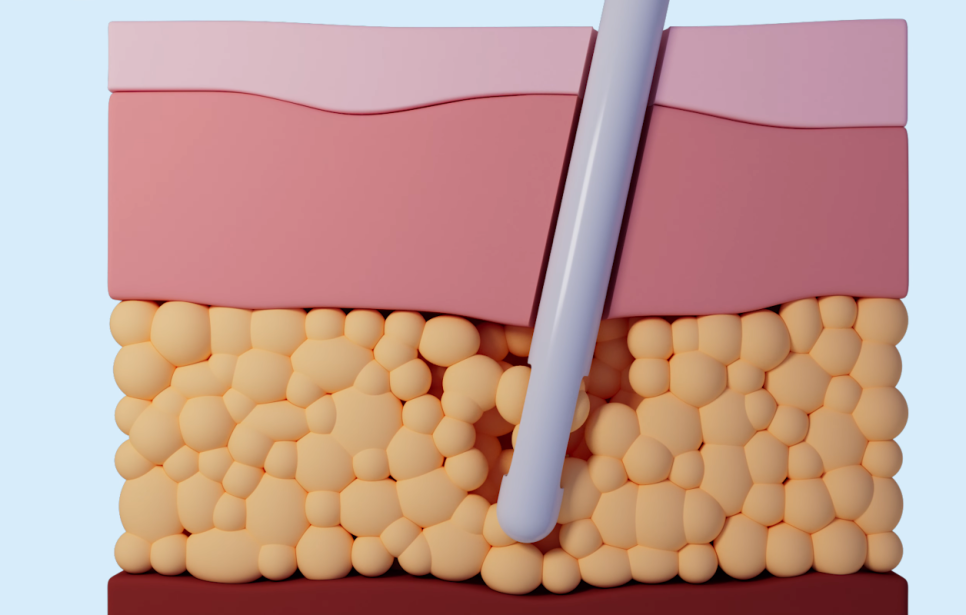
Even during an actual consultation,
we do not check only the calf circumference.
We analyze which factors
make the calves appear thick,
and review together what changes are needed
within the overall leg line.
The calves are an area where design has a greater influence
than the amount of fat removed.
Therefore, if you are looking into calf liposuction,
rather than asking how much can be removed,
please check how accurately your current condition is analyzed.
↓↓↓ You may also find the following content helpful ↓↓↓
https://naver.me/GahMlf7y
-Operating Hours-
| Weekdays 10:00–19:00 (last registration at 18:30)Saturdays 10:00–16:00 (last registration at 15:30)Closed on public holidays / Wednesdays and Sundays |
-Inquiries-
| ▶ 청담오케이의원 |
|---|
| Consultation: 02-3446-7588 KakaoTalk inquiries |
-How to Get Here-